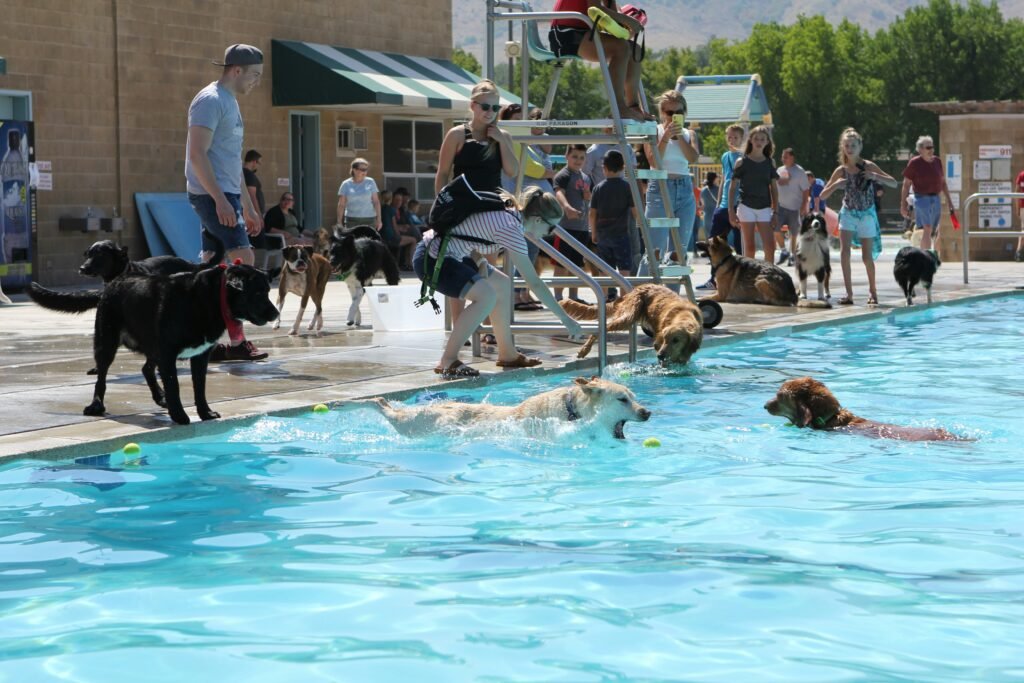
At the end of Toronto’s outdoor swimming season, selected City pools temporarily open their gates to dogs. These free sessions give pets a rare opportunity to swim in a full-size public pool before it closes for the year.
Toronto dog swims can be entertaining, but they are not suitable for every animal. A crowded pool may include excited dogs, unfamiliar people, slippery surfaces and pets with very different swimming abilities.
Owners should review the current City rules, honestly assess their dog’s temperament and prepare to leave if the experience becomes stressful or unsafe.
What Are Toronto’s End-of-Season Dog Swims?
Dog-only swims are special sessions held after regular public swimming has finished at participating outdoor pools. They are normally scheduled near the end of summer, often on the final day that a pool operates for the season.
Only dogs enter the water. Their accompanying adults supervise from the pool deck rather than swimming beside them.
The events are different from ordinary public swimming, dog beaches and off-leash areas. They take place only at selected locations and during designated hours.
Participating pools and dates can change annually. Residents should use the City’s current swimming and water-play information instead of relying on a list from a previous year.
Are the Dog Swims Free?
The City has traditionally offered these sessions without an admission fee. Advance reservations have not normally been required, with owners arriving and signing in at the participating pool.
However, free admission does not guarantee immediate entry. Staff may need to control access when a pool deck or swimming area becomes crowded.
Check the current event information before leaving home. Confirm the date, session hours, admission process and whether weather or maintenance has affected the pool.
What Are the Main Admission Rules?
City rules have generally required each dog to be accompanied by an adult aged 18 or older. One adult can bring a maximum of two dogs, and the adult must remain on the pool deck to supervise them.
Proof of current rabies vaccination may be required at check-in. Bring an official vaccination certificate or another record accepted by the City. A dog tag alone may not show all the information staff need to verify.
Dogs displaying aggressive behaviour can be asked to leave. Pool staff may also provide instructions about entry points, leashes and which areas of the pool are available.
Rules can be updated from one season to the next. Read the current Dog-Only Swim information and follow directions given by staff at the facility.
Should Every Dog Attend?
No. Access to the event does not mean the environment will be appropriate for every dog.
A dog may be better off skipping the swim if it:
- Becomes fearful or defensive around unfamiliar dogs
- Guards toys, food, water or people
- Has a history of fighting or biting
- Becomes overwhelmed in crowded off-leash spaces
- Has never been near deep water
- Has an illness, open wound or contagious condition
- Has a medical or mobility issue that makes swimming risky
- Cannot be recalled or handled reliably
A dog that enjoys a quiet lake or backyard pool may not enjoy sharing a public pool with many energetic animals. The crowd, echoes and splashing can change the experience considerably.
If you are uncertain whether swimming is appropriate for your dog’s health, ask a veterinarian before attending.
Dogs Are Not Automatically Natural Swimmers
Some dogs enter the water confidently, while others panic when they cannot feel the bottom. Breed, body shape, age and previous experience may affect how easily a dog remains afloat.
Do not throw, push or pull a reluctant dog into the pool. Allow the animal to approach at its own pace and use the designated entry area.
Watch how your dog breathes and moves. A dog that is struggling may hold its head unusually high, splash vertically, fail to move forward or repeatedly attempt to climb out.
Because people generally remain on the deck, owners should not rely on being able to jump into the pool to help. If your dog needs physical assistance, remove it from the event rather than encouraging it to continue.
Practise Around Water Before the Event
A crowded City pool should not be your dog’s first exposure to water.
Before attending, observe how the dog responds to shallow, calm water in a permitted setting. Do not assume that enjoyment of sprinklers or puddles means the animal can swim safely.
Practise responding to simple cues around distractions. Your dog should allow you to approach, attach the leash and guide it away without becoming defensive.
Owners who regularly explore green spaces with their pets can also review our guide to Toronto ravine trail safety. Rivers and streams are very different from supervised pools and can become dangerous during or after rain.
What Should You Bring For Toronto Dog Swims ?
Pack lightly because the pool deck may be busy and storage may be limited.
Useful items include:
- The dog’s leash and secure collar or harness
- Proof of rabies vaccination
- Waste bags
- Fresh drinking water and a portable bowl
- Towels
- A familiar toy, if permitted
- Any necessary identification
- A change of footwear or clothing for the owner
Mark personal toys clearly and do not bring an item your dog is likely to guard. Some locations may restrict toys when they cause conflict or interfere with other dogs.
Avoid glass containers and leave unnecessary valuables at home. Confirm whether lockers are available, and never leave a dog unattended while retrieving something from a change room or vehicle.
Keep the Leash Attached Until Staff Allow Entry
Dogs should arrive on a leash and remain controlled while waiting. Do not release a dog in the parking lot, on the street or in another part of the park unless it is a designated off-leash area.
The entrance may be the most stressful part of the event. Dogs can become crowded together while owners sign in, present records and wait for access.
Give other dogs space and avoid allowing face-to-face greetings in a narrow line. A friendly dog may still react defensively when restrained and approached by several unfamiliar animals.
Follow staff instructions about where leashes can be removed and where they must be reattached.
Supervision Continues From the Pool Deck
A dog-only swim is not an opportunity for owners to socialize while their pets disappear into the crowd.
Remain where you can see your dog clearly. Watch both its swimming ability and interactions with other animals. Be ready to call it back, redirect it or attach the leash.
Do not depend on pool staff to supervise individual pets. Staff manage the facility and general event safety, but every owner remains responsible for monitoring their animal.
If you bring two dogs, consider whether you can supervise both effectively. Two dogs moving in different directions may be difficult for one adult to manage, even when the rules permit it.
Respect Dogs That Need Space
Not every dog at the event wants to play. Some may be interested only in the water or their owner.
Do not allow your dog to repeatedly chase, mount, corner or climb over another animal. A dog trying to move away is communicating that it wants space.
Early signs of discomfort may include a tucked tail, stiff posture, repeated lip licking, hiding behind an owner, attempting to leave or avoiding eye contact.
Intervene before the behaviour becomes a growl or snap. Calmly collect your dog and create distance rather than blaming the other owner or waiting to see what happens.
Be Careful With Toys and Treats
Balls and floating toys can make swimming enjoyable, but they can also cause competition.
Do not throw a toy into a group of unfamiliar dogs. Another animal may retrieve it, and your dog may react badly when attempting to take it back.
Food should be handled carefully as well. Giving treats in the middle of a crowd can attract dogs from several households and create conflict.
If rewards are necessary, move to a quieter area and confirm that food is permitted. Never feed another person’s dog without permission because the animal may have allergies, dietary restrictions or behavioural concerns.
Know When Your Dog Is Tired
Swimming can require more effort than ordinary walking. Excitement may prevent a dog from stopping even when it needs a break.
Give your dog regular opportunities to rest away from the water. Offer fresh drinking water instead of allowing it to drink from the pool.
End the session if the dog appears unusually tired, uncoordinated, distressed or unwilling to continue. Leaving early is better than waiting for a problem.
Older dogs, puppies and animals that rarely swim may need particularly short sessions. The public event does not have to last as long as its advertised operating hours for your dog.
Prevent Dogs From Drinking Pool Water
Bring fresh water and encourage your dog to use its own bowl.
A dog may swallow some water while retrieving a toy or swimming, but repeatedly drinking from the pool should be discouraged. Move the animal away from the edge and offer clean water.
If a dog consumes a large quantity of water or appears ill after swimming, seek appropriate veterinary guidance. Do not rely on online comments to diagnose concerning symptoms.
Watch the Pool Entry and Exit
Steps, ramps and ladders designed for people may be unfamiliar to dogs. Show your dog where it can enter and leave safely.
Do not block the exit while taking photographs or talking with another owner. Dogs should be able to leave the water without climbing over one another.
A nervous dog may panic if several animals gather around the only obvious exit. Move your dog away after it leaves the water so the area remains available to others.
Pool decks can also be slippery. Walk carefully and prevent your dog from running into people standing near the edge.
Clean Up After Your Dog
Bring waste bags and clean up immediately, whether the incident happens in the surrounding park, on the deck or near the entrance.
Notify staff if contamination enters the pool. Trying to conceal it can create health concerns and delay an appropriate response.
Do not leave used waste bags beside a fence or on the pool deck. Place them in the designated garbage container.
Responsible cleanup helps the City continue offering these community events.
Photography Requires Consideration
A pool filled with swimming dogs creates appealing photographs, but owners should remain focused on supervision.
Do not step into a restricted area, block an exit or stop monitoring your dog to obtain a video. Follow facility rules about cameras and phones.
Avoid posting identifiable images of other owners without their permission. If another person asks you not to photograph their dog, respect the request.
The most dramatic moment is not necessarily the safest one to record. Put the phone away when dogs are crowding, competing for a toy or showing signs of tension.
What If Your Dog Becomes Aggressive?
Attach the leash and create distance immediately. Do not wait for staff to intervene or insist that the dog was only playing.
If a bite or injury occurs, exchange contact information with the other owner and follow staff directions. Provide accurate information about what happened.
Toronto has rules and procedures addressing dog bites and dangerous acts. Current information is available through the City’s dogs in Toronto guidance.
An owner may be asked to leave even when no bite occurs. Treat that request as a safety decision rather than an invitation to argue about the dog’s personality.
What Should You Do After the Swim?
Dry your dog before travelling home, particularly if the weather is cool. Pay attention to the ears, paws and areas beneath a collar or harness.
Rinse the dog with fresh water if appropriate and inspect its skin and paws for irritation or small injuries. Remove wet equipment and allow it to dry fully.
Monitor the dog’s behaviour after the event. Temporary tiredness may be expected after vigorous activity, but concerning physical or behavioural changes should be discussed with a veterinarian.
Wash shared toys and bowls before using them again.
Check for Schedule Changes Before Leaving
Outdoor events can be affected by weather, maintenance or operating changes. Check the City’s pool page on the day of the event, even if you confirmed the schedule earlier.
The City may close outdoor pools during thunderstorms or other unsafe conditions. A delayed pool closure may also move the associated dog session to a different date or remove it entirely.
Do not assume another participating pool will accept arrivals after its session has started. Confirm the location and travel time before changing plans.
The wider City swimming schedule can be reviewed through the Toronto drop-in swimming page.
Leave While the Experience Is Still Positive
A successful dog swim does not require staying until the session ends. Ten calm minutes in the water may be better than an hour that finishes with exhaustion or conflict.
Pay attention to the dog in front of you rather than comparing it with confident swimmers around the pool. Leaving when your pet has had enough protects your dog, other animals and the people managing the event.
Toronto’s end-of-season dog swims are unusual community activities that can be enjoyable when owners arrive prepared, supervise closely and respect the limits of every animal sharing the pool.
Note: Participating pools, dates, admission procedures and dog-swim rules can change annually. Confirm current requirements through the City of Toronto before attending. This article provides general information and is not a substitute for veterinary advice.