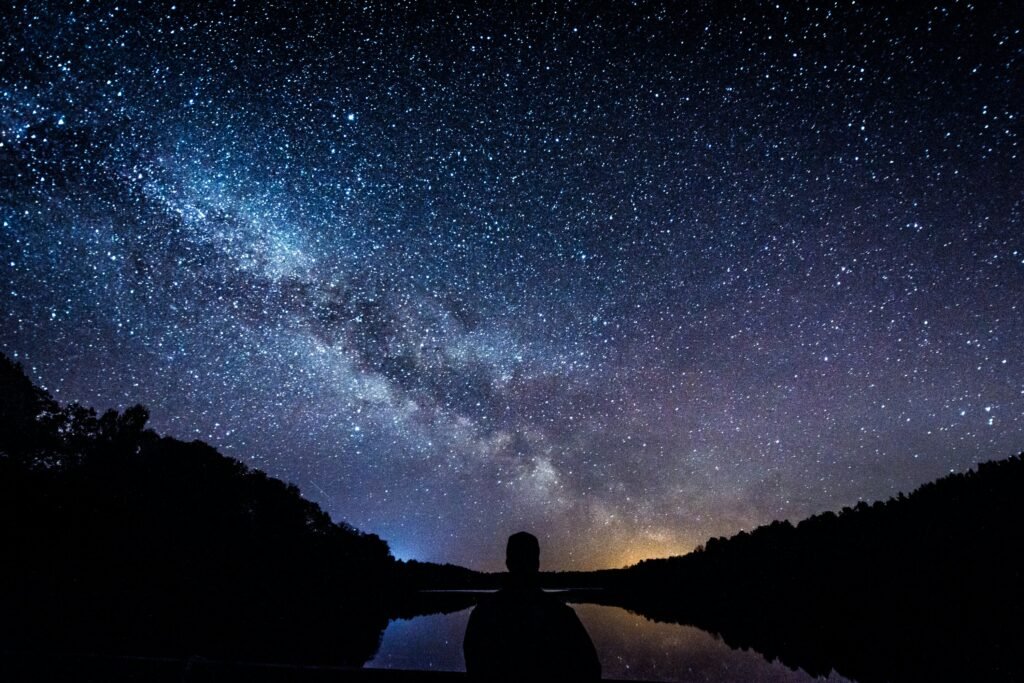
Toronto’s bright skyline can make stargazing seem like a hobby that requires a long drive out of the city. Yet your first rewarding observation might happen close to home: recognizing a constellation, watching the Moon change shape or spotting the International Space Station crossing the sky.
The key is choosing something suited to your surroundings. An urban evening will rarely resemble photographs taken beneath a remote, dark sky, but it can still offer plenty to discover.
Toronto stargazing for beginners works best as a simple, repeatable activity. Start with one target, an accessible location and a short viewing session. You can build your knowledge before deciding whether equipment or longer trips would improve the experience.
Choose One Target for Your First Evening
Avoid beginning with a list of ten objects to find. Choose one sight and learn where and when to look.
The Moon is an approachable starting point when it is above your local horizon. You can observe its shape with your eyes and compare its position over several evenings. Bright stars and recognizable star patterns offer another way to become familiar with the sky.
Use a sky chart set to Toronto’s location, date and observation time. A diagram prepared for a different season or hour may leave you searching in the wrong direction.
The Canadian Space Agency’s stargazing tips introduce naked-eye observation, sky maps and other beginner tools. Its guidance also explains how artificial light obscures dimmer objects.
Make your first goal identification rather than seeing as much as possible. Knowing which object you observed is more satisfying than returning with several uncertain guesses.
Find a Usable View Near Home
A suitable viewing spot needs an open view in the direction of your target. It does not need to be the darkest location anywhere in Toronto.
Begin by checking a permitted outdoor space near home. Notice which parts of the sky buildings and trees block, and whether a nearby lamp shines directly into your eyes.
A balcony may be convenient but face the wrong direction. A waterfront location may offer an open horizon while still having substantial lighting. A neighbourhood park may work for a high object but have trees obstructing a low one.
Scout an unfamiliar location during daylight. Check the walking surface, entrances, seating and route back to transit. For a beginner, an easy journey home can matter more than a modest improvement in darkness.
Stay in public areas where access is permitted. Do not enter private rooftops, closed grounds or restricted spaces to obtain a better view.
Check Park Hours Before Planning a Late Session
Astronomy advice often suggests observing late at night, but local access rules still apply.
The City’s park and trail rules state that Toronto parks are closed between midnight and 5:30 a.m. Check posted information and any location-specific restrictions before making plans.
A meteor shower or other event peaking overnight does not automatically permit you to remain in a closed park.
Choose a target and time that fit lawful access. If you attend an organized event, follow the organizer’s instructions about the venue and departure arrangements.
Also check your return journey. The transit connection available when you arrive may operate differently later in the evening. Set a departure time before settling into the observation session.
Match Moonlight to Your Goal
Moonlight can help or hinder an observation depending on what you want to see.
If the Moon is your target, its presence is welcome. If you are searching for fainter objects, a bright Moon can make them more difficult to detect.
The Canadian Space Agency recommends considering nights around a crescent or new Moon when the Moon itself is not the focus. Its getting started in astronomy guide also recommends checking conditions in advance and dressing warmly.
Check moonrise and moonset as well as the phase. A Moon that has not yet risen affects your viewing window differently from one shining above your observation spot.
For a simple comparison, revisit the same location on evenings with different lunar conditions. Keep the target and approximate viewing time similar so you can notice what changes.
Check Clouds Before Leaving
A promising location cannot compensate for a cloud-covered target.
Review the local forecast shortly before departure, then look outside. Pay attention to cloud cover during your intended session rather than relying on a general daily weather symbol.
If clouds are passing through, a short observation near home may still be worthwhile. A longer journey calls for more confidence in the conditions.
Wind and temperature affect comfort even when the sky is clear. Standing still can feel colder than walking to the location, so plan your clothing for the observation itself.
Bring only what you need: suitable layers, a charged phone, water and something comfortable to sit on where appropriate. Keep the session short enough that returning another evening feels appealing.
Give Your Eyes Time to Adjust
Arriving from a brightly lit street and immediately looking upward can make the sky appear emptier than it really is.
The Canadian Space Agency advises allowing approximately 15 to 20 minutes for your eyes to adjust and avoiding bright lights during observation.
Check your chart before beginning, lower your screen brightness and avoid repeatedly opening bright messages or photographs.
A dim red light can be useful for reading notes, but safe movement comes first. Use enough light to see steps, uneven surfaces and other people when walking.
Choose a position that reduces direct glare without blocking a pathway or concealing you from other users. Never switch off or interfere with public lighting.
Try an International Space Station Pass
The International Space Station offers a specific observation goal with a predicted time and direction.
The Canadian Space Agency explains that the ISS can be bright enough to see despite urban light pollution. Its Space Station viewing guide links to tracking resources that help you find upcoming passes.
Select Toronto or your nearby location and check the prediction close to the viewing date. Note the start time, direction and expected height above the horizon.
Arrive early enough to identify the relevant part of the sky. A low pass may disappear behind buildings, while a higher one can be easier from an enclosed urban location.
If you miss it, review the conditions before concluding that the prediction failed. Clouds, an obstructed horizon or looking in the wrong direction can explain an unsuccessful attempt.
Attend a Public Astronomy Event Before Buying Equipment
A telescope introduces choices about size, stability, storage and transport. Trying public observing first can help you understand what using one involves.
The University of Toronto’s AstroTours program combines public astronomy activities with opportunities to learn from graduate students. The program’s FAQ states that its activities are free. Confirm the current event details and observing arrangements before attending.
Check accessibility information for the actual venue rather than assuming every component uses the same space. Telescope viewing also depends on suitable conditions.
Bring one question you would like answered. You might ask how to identify a bright object or what to expect through binoculars from your neighbourhood.
If you already own binoculars, you can explore their usefulness before considering another purchase. Never point binoculars or a telescope at the Sun without appropriate specialist solar equipment and guidance.
Build a Small Observation Routine
Keep a brief record of each session: date, time, location, target and what you noticed.
Describe the view in your own words. “Three stars visible above the roofline” is useful even if you have not yet identified the pattern. You can compare your notes with a chart afterward.
Return to a convenient spot rather than constantly searching for a better one. Familiarity helps you recognize obstructions and plan future observations.
Toronto Blog’s guide to finding an affordable weekly hobby offers broader ideas for fitting an activity into your schedule and budget. For stargazing, a flexible routine works well: prepare a short plan, then use a clear evening when conditions allow.
Note: Astronomy event arrangements, park access and observing conditions may change. Check current venue information, City rules and local forecasts before leaving. Visibility depends on the target, timing, cloud cover, moonlight and surrounding buildings; no urban location guarantees a clear view.