
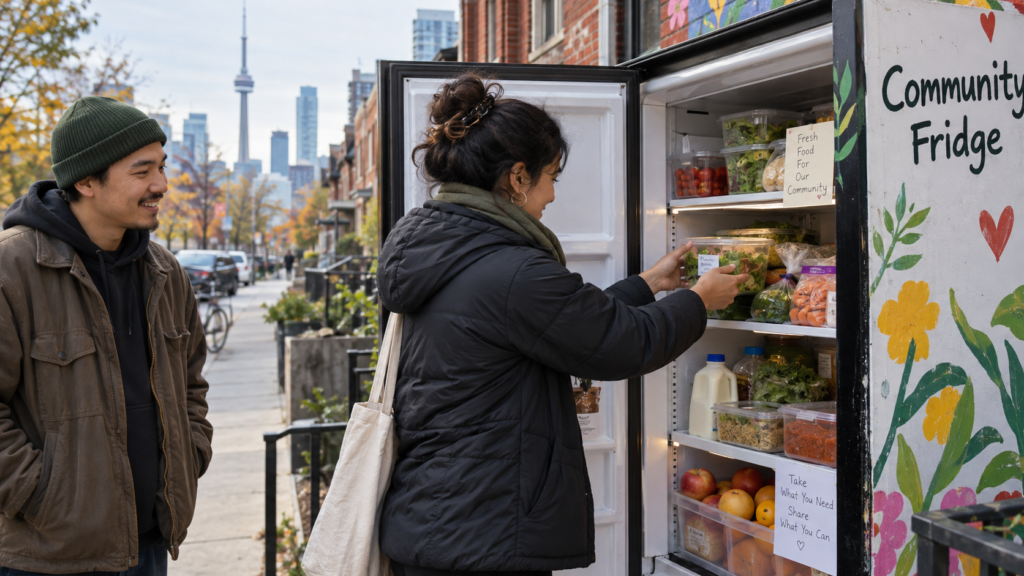
A community fridge gives neighbours a direct way to share food. Someone can leave groceries, while another person can take what they need without having to explain their circumstances.
A useful donation takes more thought than bringing whatever is left in your kitchen. Volunteers need to keep shared food safe, labelled and accessible, and each fridge operator sets its own guidelines.
Before visiting a Toronto community fridges, check what that location accepts, how the food should be packaged and where it should be placed. A few minutes of preparation can help your donation reach someone in good condition.
Check the Operator’s Current Guidelines
Start by identifying who manages the fridge you plan to visit. A community fridge may be run by a neighbourhood group, nonprofit or another local organization, and its rules may differ from those at another location.
Community Fridges TO describes its network as a mutual-aid initiative maintained by volunteers and community members. Its published guidelines list accepted items and items that should not be donated.
Look for the operator’s current location information before leaving home. A fridge may be temporarily unavailable for maintenance, cleaning or another reason.
Read notices at the site as well. If a sign conflicts with something you saw in an older social-media post, ask the operator which instruction is current.
Choose Food That Is Ready to Use
Think about the person receiving the donation. Food should be in good condition and practical for someone to take home or use soon.
Depending on the location’s rules, useful contributions might include fresh produce, bread, sealed dairy or dairy alternatives, canned meals and packaged pantry foods.
Community Fridges TO’s accepted list includes fresh fruit and vegetables, packaged foods, bread, dairy products and prepared meals from restaurants or grocery stores. Check its full guidelines before choosing items, since acceptance depends on their condition and packaging.
Consider whether an item requires equipment or extra ingredients. A pull-top can, for example, may be easier for someone without a can opener. Smaller, individually packaged portions may also be convenient for people travelling on transit or carrying groceries by hand.
These are suggestions, not requirements. The main check is whether the item meets the specific fridge’s rules.
Keep Original Packaging and Labels Intact
Before placing food in a donation bag, check that the package is closed, clean and readable.
Community Fridges TO says packaged food must be labelled and does not accept unlabelled bulk bags. It also lists opened items and packaged items without a use-by date among those it does not accept.
Leave the original ingredient and date information visible. This helps someone assess whether the food suits their dietary needs and allows volunteers to check the package.
Do not divide a large bag of rice or cereal into smaller unlabelled bags, even if the original product was unopened. If you want to contribute smaller portions, choose items already packaged and labelled that way, or ask the operator whether another arrangement is accepted.
Check Dates and Condition Before Donating
Review the date and the food’s condition at home, while there is still time to choose something else.
Community Fridges TO’s guidelines say not to donate expired, rotten or opened items. Follow the operator’s stated policy rather than deciding that an item is acceptable simply because you would be willing to eat it yourself.
Inspect cans and containers for damage, leaks or compromised seals. For produce, remove any item that is visibly spoiled rather than leaving volunteers or fridge users to sort through it.
If the wording on a package is unclear, contact the operator before donating. A community fridge is not a place to leave questionable food in the hope that someone else will decide whether it is safe.
Do Not Assume Homemade Meals Are Accepted
A home-cooked dish can be a generous gesture, but it is not accepted by every food-sharing program.
Community Fridges TO does not accept homemade food or leftovers. Its guidance says prepared food must come from a commercial kitchen and be labelled with the date and ingredients.
That means a carefully sealed container of food cooked at home should not be left at one of its locations. If you want to prepare meals for a community program, contact an organization first and ask about its kitchen, labelling and delivery requirements.
Similarly, ask before donating a large quantity of prepared food from an event. The coordinator needs enough information to determine whether the food can be accepted and handled appropriately.
Plan the Journey for Chilled or Frozen Food
Perishable food needs appropriate temperature control before it reaches the fridge.
Plan your route and timing before taking chilled food out of storage. Use an insulated bag and cold packs where appropriate, and avoid leaving food in a warm vehicle while completing other errands.
Check that the destination has the space and equipment needed for the item. A location with a fridge may not have a freezer, and a full freezer may not have room for a large donation.
If the equipment appears not to be working, do not leave perishable food there. Contact the operator and ask for instructions. When you cannot confirm that the food has remained safely chilled, do not donate it.
Put Items in the Correct Place
A community food-sharing location may include a fridge, freezer and pantry. Each has a different purpose.
Place shelf-stable items in the area designated for pantry goods and refrigerated items inside the fridge. Follow any signs about how to organize donations.
Community Fridges TO asks donors to put newer donations toward the back of shelves so earlier donations can be used first. Follow that direction only when there is room to do so safely and without crushing other food.
Avoid overcrowding shelves or blocking the door. If there is no suitable space, take the items with you and contact the operator about another drop-off option.
Ask Before Bringing a Large Donation
A few grocery items and several boxes of food create different demands on a volunteer-run location.
If you represent a restaurant, workplace, community garden or event, contact the operator before collecting or delivering a large amount. Describe the items, quantities, packaging and proposed delivery time.
Ask whether the location can receive everything at once and whether volunteers need advance notice. The group may suggest smaller deliveries or another arrangement.
For gardeners considering sharing a harvest, our guide to Toronto community garden waitlists explains how some local growing projects also contribute produce to community food initiatives. Check the fridge’s produce guidelines before making a delivery.
Leave the Area Clean and Accessible
Take empty bags, boxes and other packaging away with you unless the location provides a designated place for them.
Community Fridges TO notes that its locations do not have on-site trash or recycling and asks donors to dispose of waste elsewhere. It also asks people to report a dirty area or a large amount of expired food through the posted QR code or by email.
If you cause a spill, clean it up when possible. Leave the fridge door closed and the surrounding path clear for the next person.
Be considerate of neighbours and anyone using the fridge. Do not photograph people taking food or ask them to explain why they need it.
Consider Other Ways to Help
Food is one part of operating a community fridge. Volunteers may also help clean, monitor supplies, communicate updates or coordinate donations.
Ask the organization what assistance it currently needs and what a volunteer commitment involves. A regular, manageable contribution may be more useful than offering a large amount of time that you cannot maintain.
Some locations also accept particular personal care or household items. Confirm the current list before bringing anything that is not food; acceptance at one fridge does not mean every location has room for the same supplies.
Note: Community-fridge locations, accepted items and donation procedures can change. Check the rules for the specific fridge before delivering food. For a helpful local resource, review Community Fridges TO’s donation guidelines.