
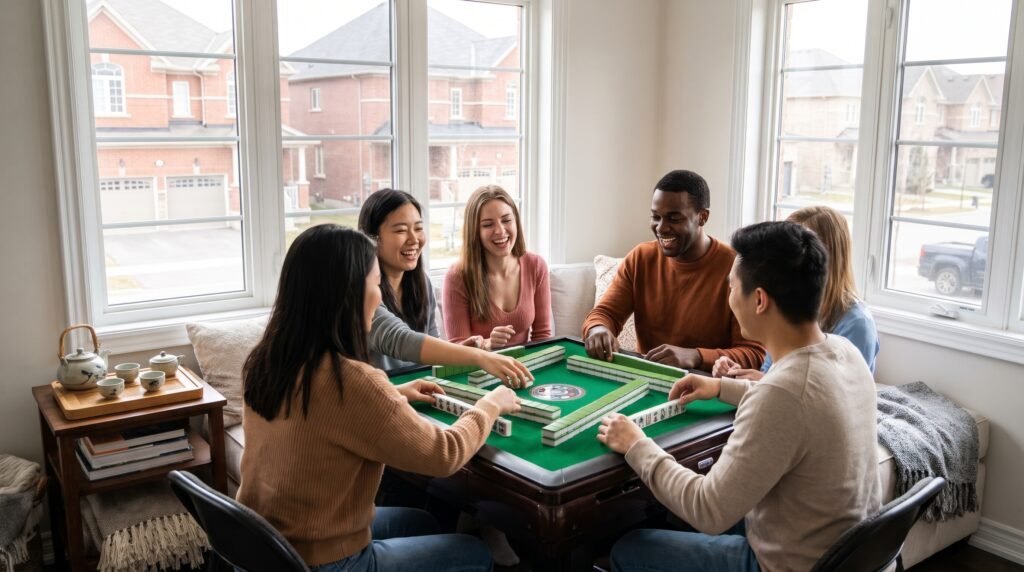
Joining a mahjong group can give you a regular opportunity to learn, concentrate on a shared activity and get to know people in Markham. However, finding a session labelled “mahjong” does not tell you everything you need before attending.
Groups can use different rules, teach at different levels and have their own membership requirements. Someone who has played with relatives may still encounter an unfamiliar scoring system, while a complete beginner may need a teaching session rather than an ordinary games afternoon.
Before visiting, confirm the format and explain your experience. These checks will help you find appropriate Markham mahjong groups without buying equipment or making commitments too early.
Start With the Organization Running the Session
Identify whether the activity is operated by a club, a community organization or the City. A programme held inside a community centre may still have separate club registration and payment arrangements.
The City of Markham partners with five nonprofit older-adult clubs. Its directory lists mahjong among the activities at Angus Glen Older Adults Club and provides contact information for the participating organizations.
Use the directory as a starting point, then contact the relevant organizer for current session details. An activity list confirms an area of interest; it does not guarantee that a particular date has space or accepts beginners.
Ask who coordinates mahjong specifically so your questions reach someone familiar with the tables.
Confirm Which Mahjong Variant Is Played
Mahjong is not one uniform set of rules. Different groups may use different scoring systems, winning-hand requirements and equipment.
Before attending, ask for the name of the variant and whether the group follows additional house rules. If you already play, describe how you learned rather than assuming the organizer uses the same terminology.
For example, the Markham Seniors Activity Centre’s February 2026 newsletter described separate beginner arrangements for what it called the “Asian” and “National” methods. Those are the programme’s own descriptions, so prospective participants should ask what they mean and confirm the current arrangements.
A previous session with another group may still provide useful experience, but expect some differences.
Distinguish Lessons From Social Play
Ask whether someone will teach new players or whether participants are expected to know the basics already.
A social session may offer occasional explanations without providing enough instruction for someone who has never handled the tiles. A beginner programme may instead cover the rules in a planned sequence.
Explain your starting point clearly. You could say:
“I have played casually with family, but I do not know formal scoring. Is there a suitable table for me?”
Or:
“I have never played before. Do you offer an introductory session, and do I need to attend from the beginning?”
If teaching happens on certain dates, book the appropriate one. This avoids arriving at an experienced table and discovering that no instructor is available.
Check Age and Membership Requirements
Do not assume that every community-centre activity is open to all ages.
Markham’s older-adult club directory identifies age requirements for particular clubs. For example, it lists Angus Glen Older Adults Club and Markham Seniors Activity Centre as serving adults aged 55 and older.
Ask whether you need membership before attending, whether visitors can try a session and whether any residency conditions apply. Younger adults should look for a group that explicitly accepts their age category.
Confirm what identification or membership record you need to bring. Markham Seniors Activity Centre’s membership guidance encourages members to carry their cards because these may be checked for attendance or registration.
Establish Whether You Can Arrive Alone
Contact the coordinator before your first visit and say that you will be attending by yourself.
Ask how players are assigned to tables. Some sessions may organize everyone on arrival, while others may rely on established groups or advance bookings.
Useful questions include:
- Will the coordinator find a table for one new participant?
- Is there a beginner table?
- What happens when attendance does not fill the available tables?
- Can I observe briefly before joining?
- Should I arrive early for introductions?
These questions address the practical arrangements without assuming you need to recruit other players first.
If the session is full, ask about another date rather than turning up hoping a place will become available.
Confirm the Complete Cost
Request the current membership fee, session charge and any separate teaching cost.
Also ask whether you need a personal reference card, printed materials or other supplies. If a particular rules system uses an annually updated card, confirm the correct edition before buying one.
Check the accepted payment method and whether a missed session is refundable. Avoid applying the community centre’s general admission price to a separately operated club activity.
Include transportation and any optional social spending in your budget. Our guide to finding an affordable weekly hobby explains how to compare the full cost of a recurring activity.
A trial visit, where offered, can help you decide whether the group suits you before taking on a longer commitment.
Ask What Equipment Is Supplied
Find out whether the group provides tiles, racks, dice and other materials needed for its version of the game.
Do not buy a set simply because it is labelled “mahjong.” Its contents may not match the group’s requirements, and the venue may already have everything available.
If you are asked to bring equipment, request a precise description. Keep personal items identifiable so they can be separated from shared supplies after play.
Bring any requested glasses, hearing assistance or other items that help you follow the table comfortably. A small notebook may be useful during instruction, but ask before using notes at a regular game.
Learn the Table’s Etiquette Before Starting
Ask how the group handles turns, questions, scoring and corrections.
Tell the table that you are learning the rules they use. Listen to the explanation and avoid interrupting another player’s turn with a long discussion.
If you are uncertain about a move, ask before committing where possible. Do not move another person’s tiles to demonstrate a point without permission.
Also clarify whether play is purely recreational and whether any payment beyond the stated participation fee is involved. You should understand the arrangement before sitting down.
Keep phones quiet, follow the venue’s food rules and respect anyone who prefers not to be photographed.
Consider Language, Comfort and Accessibility
Ask which language is normally used for teaching and table conversation. You may be comfortable socializing in one language but prefer rule explanations in another.
Find out whether instruction can be provided in a form you can follow. Do not assume that a bilingual participant will be available to interpret an entire session.
If relevant, ask about step-free access, washrooms, chair options, lighting and the room’s noise level. Mention any adjustment that would help you participate.
Check the likely session length and whether breaks are built in. A long seated activity can still require planning for comfort and transportation.
Finish at an Appropriate Point
Before beginning, tell the coordinator if you must leave by a fixed time. Ask how departures are handled so you do not unexpectedly disrupt a table.
At the end, return shared equipment and ask when the next suitable session takes place. Note which rules you want to review, rather than trying to remember every detail immediately.
Assess the experience realistically. Did the pace suit you? Were questions welcome? Was the journey manageable?
You may need another introductory session, a different variant or a group with a more relaxed style. Finding the right fit is more useful than trying to keep up at an unsuitable table.
Note: Mahjong schedules, variants, teaching arrangements, fees and eligibility can change. Confirm the details with the specific organizer before attending or purchasing equipment. For a helpful public starting point, see the City of Markham’s older-adult club directory.