
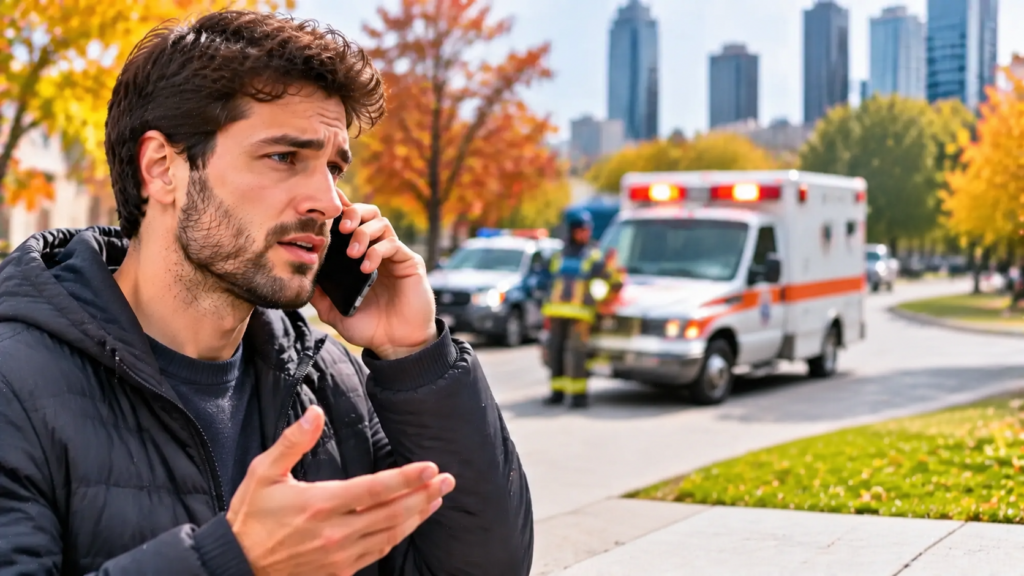
An emergency can make familiar words difficult to remember. For someone who has recently moved to Mississauga, explaining a dangerous situation in English may feel especially difficult under pressure.
You do not need to speak fluent English before calling for emergency assistance. Peel Regional Police advises callers who do not speak English to dial 911, remain on the phone and identify the language they need. An emergency communicator can connect the call to a telephone interpretation service.
Preparing a few words and accurate location details beforehand can make that conversation easier. The purpose is to help you communicate with the call-taker, even when you cannot explain everything independently.
Recognize When to Call 911
Call 911 when you need immediate police, fire or ambulance assistance. A fire, a serious medical emergency or an immediate threat to someone’s safety should not wait while you search for a person who speaks English.
Peel Region’s emergency guidance identifies situations such as a crime in progress, choking, chest pain and serious breathing-related concerns as reasons to seek emergency help. The call-taker will ask which emergency service you require and connect you appropriately.
Avoid delaying an urgent call to contact a settlement worker, relative overseas or community volunteer first. Those people may be helpful in everyday life, but they are not substitutes for emergency dispatch.
For a routine question, an appointment or a situation without an immediate safety risk, use the appropriate non-emergency channel instead.
Request Your Language Early
State the language you need as soon as you can. You do not have to give a long explanation of your English ability.
A short phrase to practise is:
“Punjabi interpreter, please.”
Replace Punjabi with the language you speak most comfortably. If you can manage a little more English, add the type of assistance and your location:
“Ambulance. Urdu interpreter, please. I am at [address].”
These are preparation examples, not a script you must follow perfectly. Say the information you can communicate and listen for the call-taker’s response.
If your language has regional varieties, explain your preferred variety when possible. Once interpretation begins, tell the interpreter if you are having difficulty understanding them rather than agreeing to something unclear.
Give the Location Where Help Is Needed
Your home address is useful only if the emergency is happening there.
If you are visiting a friend, shopping or travelling through Mississauga, describe the location of the incident. If you are calling about someone elsewhere, explain that you are not physically with them.
For an apartment or condominium, useful details include:
- The street number and street name.
- The unit or suite number.
- The floor, if known.
- The building entrance nearest the person needing help.
- Relevant entry instructions or access barriers.
In a public place, look for a street sign, business name, park entrance or nearby intersection when it is safe to do so. Explain where you are within a large property rather than naming only the shopping centre or park.
Peel Regional Police specifically asks callers to be ready with their location, address, closest major intersection and telephone number.
Distinguish Your Mailing Address From Your Entrance
Some properties have several entrances, rear units or access from a different street. Prepare a simple explanation of how to reach your door.
For example, a basement apartment may use a side entrance that is not visible from the road. Knowing that detail can help you answer access questions accurately.
Do not leave a person who needs immediate assistance simply to investigate the building. Follow the emergency communicator’s directions.
Explain What You Can Observe
Describe what is happening in direct, concrete terms. You do not need to know the medical diagnosis or the legal name of an incident.
For a medical emergency, explain what you can see and what the person has told you. For a safety incident, describe the immediate danger and whether it is continuing.
If you do not know an answer, say so. Guessing a person’s age, the contents of a container or the cause of an injury can introduce confusion.
Separate what you witnessed from what someone else reported. An interpreter can help communicate uncertainty as well as facts.
Keep your answers focused on the question being asked. A detailed account of earlier events can wait until the call-taker requests it.
Allow Time for Interpretation
An interpreted conversation involves more than two people. Short statements and pauses give everyone a better opportunity to understand.
Speak to the emergency communicator through the interpreter. Answer one question at a time and avoid speaking over the interpretation.
If an instruction is unclear, ask for it to be repeated. Do not pretend to understand because you are embarrassed or worried about slowing the conversation.
Background noise can also interfere. If safe, reduce television volume or move the phone away from competing conversations. Avoid changing locations if doing so would expose you to danger or interrupt necessary care.
The aim is accurate communication, not polished English.
Stay Connected During Questions and Transfers
A transfer or a pause does not necessarily mean the call has failed.
Peel’s paramedic guidance explains that an ambulance communications officer may pause to update responding paramedics. It also notes that information gathering can continue while help is being arranged for a life-threatening situation. Remain on the line and follow the officer’s instructions.
Keep the phone available so you can hear further questions. If the situation changes, tell the communicator promptly.
For example, report a change in the person’s condition or a new hazard at the location. Do not assume the original description still gives responders an accurate picture.
Prepare a Small Language and Address Card
A short reference card can reduce the amount you need to remember during a stressful moment.
Include your preferred language, full address, unit number and a nearby major intersection. Add your telephone number and a brief explanation of an unusual entrance if necessary.
Keep the card somewhere household members can find it. A copy on your phone may help, but a paper version is useful when another person must make the call.
For broader household preparation, our emergency contact planning guide explains how to organize trusted contacts and essential information. Its Toronto-specific service details should be distinguished from the Peel guidance used for Mississauga.
Practise Without Calling Emergency Services
Read the address aloud together and practise saying the language request. Show family members where the phone and reference card are kept.
Never call 911 simply to test interpretation or rehearse a conversation. Use an imaginary call with the device disconnected from the calling process.
Children should understand that they can request emergency help, but adults should not build their entire communication plan around a child interpreting complicated information.
Separate Language Support From Accessibility Support
Telephone interpretation addresses a language barrier. Someone who is deaf, hard of hearing or has a speech-related communication need may require a different arrangement.
Peel publishes information about accessible emergency communication, including TTY and registered text-access arrangements. Do not assume that sending an ordinary text to 911 will work as a general alternative to calling. Review the current accessibility instructions before an emergency occurs.
Prepare around the needs of the person who may have to make the call. Their plan should be usable without depending on a particular family member being present.
Frequently Asked Questions
Can I call 911 in Mississauga if I speak very little English?
Yes. Request your preferred language and stay connected. Peel Regional Police advises callers who do not speak English to remain on the phone for telephone interpretation.
Should I find my own interpreter before calling?
Do not delay an emergency call to locate one. Call 911 and identify the language you need so the emergency communicator can arrange language assistance.
What should I say if I cannot remember a full English sentence?
Start with your language name and the information you can communicate, such as “ambulance” and the address. You do not need to complete a prepared sentence perfectly.
Is calling 911 free?
Peel Region states that the 911 call is free. That does not mean every service resulting from a call, such as ambulance transportation, is necessarily free.
What should I do if I call 911 accidentally?
Stay on the line and explain that the call was accidental. Hanging up leaves the emergency communicator needing to establish whether someone requires help.
Note: This article provides general preparation guidance. During an emergency, follow the emergency communicator’s instructions. For current local language assistance and calling information, consult Peel Regional Police’s emergency guidance.