
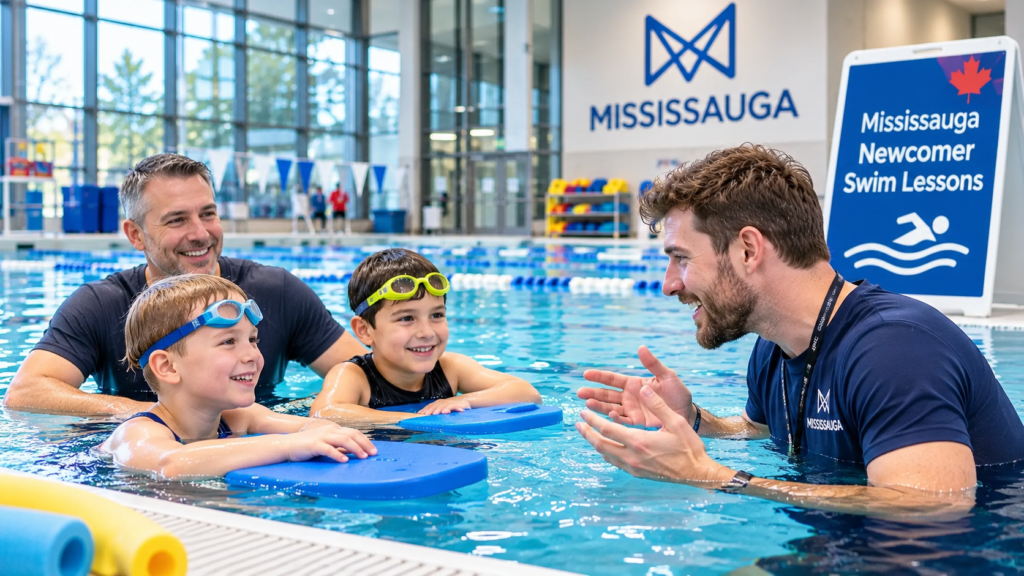
Your child completed swimming lessons before moving to Canada, but the levels listed in Mississauga look unfamiliar. You remember the colour of a badge or the name of a class, yet neither tells you which program to choose now.
Start with the swimmer’s current skills rather than trying to match level names. Mississauga offers a free assessment when a child or adult is unsure which level to register for. That gives newcomers a practical way to ask about placement before paying for a session.
Planning Mississauga newcomer swim lessons also means checking age requirements, class expectations and the arrangements for visiting the pool. A suitable level should give the swimmer something to learn without asking them to perform skills they have not yet developed.
Describe What the Swimmer Can Do Today
Before contacting the pool, write a short description of the swimmer’s recent experience. Include when they last attended lessons, how regularly they practised and which skills they worked on.
Be specific where you can. “Practised floating on their back and swimming short distances without support” gives staff more information than “finished intermediate swimming.”
Also explain the setting. Lessons in a shallow pool, practice with a flotation aid and independent swimming in deeper water are different experiences. State what happened without treating one as proof of another.
For adults returning after several years, mention the gap. You may remember a stroke but feel less comfortable putting your face in the water or moving away from the pool edge. That is useful information for the assessment.
Bring Earlier Reports as Background
Gather any progress report, certificate or instructor comments you already have. A list of assessed skills is more useful than a badge with only a level name.
Mississauga encourages swimmers to bring their previous report card for the new instructor to review. Use it to explain earlier learning, while allowing staff to assess what is appropriate now.
If the report is in another language, ask whether a brief explanation of the skills will help. Do not pay for a certified translation unless the program specifically requires one.
Keep the original record and bring a copy or a clear image. If no report is available, describe the lessons as accurately as you can. Missing paperwork is a reason to ask about assessment, rather than guess at a level.
Contact the Pool Before Arriving for an Assessment
Ask your nearest pool how its assessment arrangements work. Confirm when an appropriate staff member will be available and whether you need to book.
Useful questions include:
- Should we attend a particular recreational swim?
- Does the swimmer need to pay admission for that visit?
- What should a parent or accompanying adult bring?
- How will the recommended level be recorded?
The assessment itself is described as free, but confirm the arrangements surrounding the visit. Do not assume that this also settles admission, supervision or access to the pool.
Explain any practical needs when making the inquiry. If you prefer instructions in simpler English, need an accessible route or want to discuss the swimmer’s comfort in the water, raise that before the visit.
Check Age and Prerequisites Alongside the Level
Once staff recommend a level, open the description for the exact class you are considering. Check the age range, prerequisites, location and whether an adult participates in the water.
Two programs can develop related skills while serving different age groups. An adult learner should check adult options rather than select a child’s class simply because its skill description sounds familiar.
For siblings, choose each child’s placement independently. Registering both together may be convenient, but their experience and confidence may differ.
If the recommended class is full, ask staff about suitable alternatives. A different day or pool may work better than choosing a harder level to secure a space.
Distinguish Lesson Placement From Recreational Swim Rules
A lesson recommendation does not replace the pool’s recreational admission standards. Before a separate practice visit, check the rules for the swimmer’s age and supervision needs.
Mississauga publishes age-based admission requirements and uses swim testing and wristbands as part of its recreational pool procedures. Review those instructions before deciding whether an accompanying adult needs to swim or remain in the pool enclosure.
Tell staff if you are unsure which rule applies. A child who has completed lessons elsewhere may still need to follow the local test and supervision process.
Plan the visit around what the family can manage safely. If one adult is bringing several children with different abilities, clarify the arrangement before everyone changes into swimwear.
Make the First Lesson Easier to Navigate
Check the facility address, entrance and changing arrangements before leaving home. Allow time to find the pool and ask where learners meet their instructor.
Pack swimwear, a towel and any items the program tells you to bring. Mississauga’s pool guidance also states that children who are not toilet trained must wear swim diapers designed for pool use.
Give your child a simple picture of the visit: change, meet the instructor, follow the lesson and return to the agreed meeting place. Avoid promising a particular activity before you know the lesson plan.
Parents who are also learning local recreation routines may find our guide to using community recreation centres as a newcomer helpful. Check Mississauga’s own program details for the booking you make.
Raise Placement Concerns With a Clear Example
After the lesson, ask the swimmer what they were able to try and what felt difficult. Listen for specific experiences rather than relying only on whether the class was described as easy or hard.
If you have concerns, speak with the instructor or appropriate aquatics staff. For example: “My child could follow the floating activity but did not understand where to wait between turns. Who should we speak with about that?”
Distinguish unfamiliar instructions from unfamiliar skills. The response might involve clearer directions, more practice or a discussion about placement.
Before requesting a transfer, ask how changes are handled and whether space is available. Keep any updated level recommendation with your registration details for the next session.
Frequently Asked Questions
Can adults request a swimming assessment?
Yes. Mississauga’s lesson guidance offers free assessments when adults or children are unsure which level to choose. Contact the pool to confirm the visit arrangements.
Does a swimming certificate from another country guarantee a matching level?
Do not assume a direct match. Bring the certificate or progress report as background and ask staff how it relates to the available programs.
Should I register for a higher level if the recommended class is full?
Ask staff about alternatives first. Look at another time or location rather than choosing a level solely because it has space.
Does lesson placement determine whether my child can swim without close supervision?
No. Check the pool’s recreational admission standards separately, including any age, supervision and swim-test requirements.
Note: Assessment arrangements, program availability and admission requirements can change. Consult the City’s swimming lesson information and contact your chosen pool before registering.