
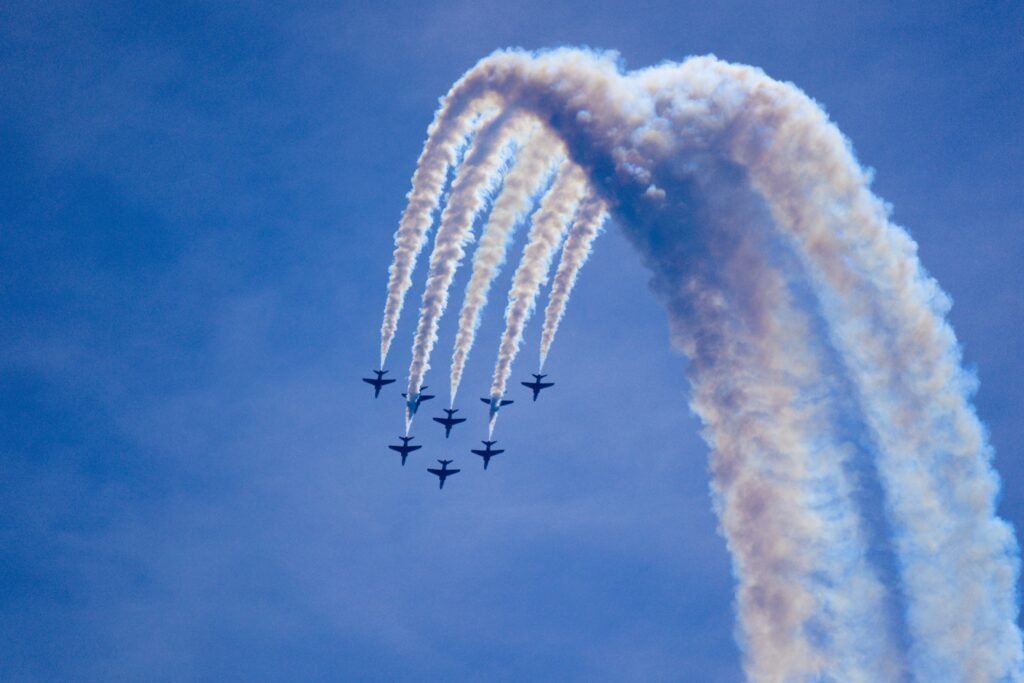
Every Labour Day weekend, high-speed aircraft fly above Toronto’s waterfront during the Canadian International Air Show. Thousands of spectators enjoy the performances, but the sudden noise can be difficult for nearby residents, pets, young children and people who are sensitive to loud or unexpected sounds.
The noise can also confuse newcomers who do not know an airshow is taking place. Military aircraft may be heard during practice sessions before the official event begins, sometimes from neighbourhoods well beyond the waterfront.
Preparing for Toronto Airshow Weekend does not require leaving the city. Knowing the schedule, understanding where the sound originates and making a plan for vulnerable household members can make the weekend considerably easier.
When Does the Toronto Airshow Take Place?
The Canadian International Air Show is normally held over the Labour Day long weekend as part of the closing days of the Canadian National Exhibition.
Performances generally take place during the afternoon on Saturday, Sunday and Monday. A practice session is usually scheduled for the preceding Friday, meaning residents may hear aircraft before the advertised public performances begin.
Dates, hours and aircraft can change each year. Check the current community notice from PortsToronto and the official event schedule before making plans.
Aircraft participating in the show may also arrive, depart or reposition outside the main performance window. The published show hours therefore indicate when the demonstrations are expected—not necessarily every moment when aircraft could be heard.
How Far Does the Aircraft Noise Travel?
The performances take place above Lake Ontario near the Canadian National Exhibition grounds. Noise is usually most noticeable around the waterfront and communities near Billy Bishop Toronto City Airport.
However, jet noise can travel much farther depending on the aircraft, altitude, flight direction, wind and surrounding buildings. Residents outside the immediate waterfront area may hear brief but powerful sounds without being able to see their source.
Toronto’s tall buildings can reflect sound in unexpected directions. One apartment may experience considerable noise while another unit in the same neighbourhood hears much less.
People should not rely exclusively on distance from the waterfront when deciding whether preparation is necessary. If previous airshows, fireworks or thunderstorms have disturbed someone in your household, it is sensible to prepare.
Why the Noise Can Feel Unexpected
Airshow aircraft do not sound like ordinary commercial flights. Some approach quickly, change direction suddenly or become audible only moments before passing overhead.
That unpredictability can be more startling than continuous city noise. Someone may understand that an event is scheduled and still react strongly when an aircraft appears without warning.
New residents may mistake the activity for an emergency. Let household members know about the event and practice period in advance. Sharing the schedule in a building or neighbourhood group may also prevent unnecessary alarm, particularly among people who recently arrived in Toronto.
Preparing Your Home Before the Weekend
Identify the quietest room in your home before the practice session begins. An interior room with fewer windows may reduce the intensity of outside noise.
Keep windows and balcony doors closed during performance hours. Curtains will not block jet noise, but heavier window coverings and ordinary household sounds may make sudden changes less noticeable.
A fan, television, radio or white-noise machine can provide consistent background sound. Keep the volume at a reasonable level; trying to overpower aircraft noise with extremely loud indoor audio can create an additional hearing risk.
Plan errands, walks and outdoor exercise for the morning or evening when possible. If you need to work, study or sleep during the afternoon, headphones or properly fitted hearing protection may help.
Residents who experience frequent noise beyond the airshow can read our separate guide on dealing with apartment noise in Toronto. Remember, however, that aircraft noise is treated differently from ordinary neighbour, construction or amplified noise complaints.
Helping Pets Cope With Aircraft Noise
Dogs, cats and other animals may not understand where the sound is coming from. Some pets hide, shake, bark, pace or attempt to escape. Even an animal that usually tolerates traffic and thunderstorms may react differently to low-flying aircraft.
Keep pets indoors during practice and performance periods. Close doors, windows and balcony access before the noise starts. Confirm that identification tags and microchip contact details are current in case a frightened animal escapes.
Create a familiar indoor space containing the animal’s bed, water, toys or blanket. Allow the pet to choose whether to hide rather than pulling it out of a secure location.
Exercise dogs earlier in the day so they are not outside during the loudest period. Use a secure leash even if the dog is normally calm and obedient. A sudden aircraft pass can cause an animal to run toward traffic or pull free unexpectedly.
Remain calm and behave normally. Punishing an animal for hiding, barking or showing fear can increase its distress.
If your pet has previously experienced severe noise anxiety, consult a veterinarian before the weekend. Do not give human medication or an unfamiliar calming product without appropriate professional guidance.
Supporting Children During the Airshow
Some children find aircraft exciting, while others are frightened by the volume and vibration. Explaining the event before the first aircraft appears can reduce uncertainty.
Tell children that the planes are part of a scheduled public performance and that loud sounds may begin suddenly. Show them the approximate time and let them choose a comfortable indoor activity.
Child-sized hearing protection may be helpful for children watching near the waterfront. Ordinary headphones without suitable hearing protection should not be assumed to provide adequate protection from intense sound.
Do not force a frightened child to watch from a balcony, park or waterfront location. Moving indoors, closing the windows and providing reassurance may be more helpful than repeatedly explaining that the sound is harmless.
Families looking for a more comfortable community viewing experience at another time can consult our guide to free public sports screenings in Toronto, which discusses crowd preparation, accessibility and family considerations for public events.
Supporting People With Noise Sensitivity
Aircraft noise may be especially difficult for people with sensory sensitivities, post-traumatic stress, migraines, anxiety or health conditions affected by sudden sound.
Ask the person what type of support would be useful instead of assuming. They may prefer advance reminders, hearing protection, a quiet room, time away from the waterfront or no discussion of the event beyond the schedule.
A simple preparation plan might include:
- Knowing the practice and performance hours
- Preparing a quiet indoor space
- Charging headphones or communication devices
- Rescheduling calls, appointments or rest periods
- Choosing a quieter place to spend the afternoon
- Letting trusted people know that support may be needed
If leaving home is the best option, select the destination in advance. Do not assume every library, shopping centre or indoor public space will be quiet, particularly if it is close to the waterfront or beneath an aircraft route.
Working From Home During the Airshow
People working remotely may find that brief aircraft passes interrupt meetings or recordings.
Check the schedule before arranging important calls. Close windows, move away from balconies and use a room that does not directly face the waterfront when possible. A headset with a directional microphone may reduce some background noise, although it cannot eliminate every interruption.
Let colleagues know that a scheduled public event may produce occasional aircraft noise. Muting the microphone when you are not speaking is often more practical than attempting to soundproof a room for one weekend.
Avoid placing pets in a separate room without checking on them. An animal experiencing distress may damage a door, knock over objects or attempt to escape.
Should You Leave Toronto for the Weekend?
Leaving is not necessary for most residents, but spending the afternoon elsewhere may be reasonable when someone in the household has severe sound sensitivity or a pet with a history of extreme fear.
You do not necessarily need to travel far. A prearranged visit with friends or relatives in a less affected part of the region may be enough. Confirm that pets are welcome and that transportation will not require travelling through heavy CNE traffic.
If you stay in a hotel or short-term accommodation, verify its pet rules, cancellation terms and location before booking. Being several kilometres from the waterfront does not guarantee complete silence.
Plan around all scheduled days, including Friday’s possible practice session. Leaving only during the official weekend performances may not address the earliest noise.
If You Want to Watch the Airshow
Residents who choose to attend should expect large crowds, limited parking and loud sound around the waterfront.
Check the weather, TTC service information and current event schedule before travelling. Take drinking water, sun protection and appropriate hearing protection. Keep children close and agree on a meeting location in case members of the group become separated.
Do not enter restricted waterfront areas or attempt to obtain a better view from railway property, closed rooftops or unsafe shoreline locations.
Watching from farther away may provide a less intense experience, but aircraft can still be extremely loud. Move back or leave if anyone experiences pain, ringing in the ears, dizziness or distress.
Health Canada explains that both the volume and duration of sound affect hearing risk. Its information about protecting your hearing can help residents make informed decisions about loud recreational events.
Can You Make a Noise Complaint About the Airshow?
Aircraft noise is generally outside the scope of Toronto’s municipal Noise Bylaw. The City’s noise information page identifies aircraft noise among the sounds that City bylaw officers do not regulate in the same manner as neighbourhood parties, construction or amplified music.
Calling 311 is therefore unlikely to stop scheduled airshow aircraft activity. Before submitting a complaint, confirm whether the sound is actually coming from an aircraft rather than an unrelated event, construction site or neighbouring property.
PortsToronto community notices normally identify where questions or concerns connected to that year’s airshow can be directed. Use the current notice because contact details may change.
Call 911 only when there is an immediate emergency. A loud or low-looking aircraft participating in a publicly scheduled performance is not, by itself, a reason to contact emergency services.
What If You Did Not Receive Advance Notice?
Residents do not always see event advertisements, particularly if they are not interested in attending the CNE. Newcomers, international students and people who recently moved close to the waterfront may hear the practice session without recognizing it.
Check official sources before sharing speculation online. Look at PortsToronto community notices, City announcements and current event information. Old social-media posts may contain dates from a previous year.
Property managers and condominium boards can also help by circulating the schedule before practice begins. A short factual notice is more useful than assuming every resident already knows about the event.
Preparing for Future Toronto Airshow Weekends
Make a note of what worked for your household. Record which rooms were quietest, how your pet responded and whether leaving during certain hours was helpful.
Before the following Labour Day weekend, check the new schedule rather than relying on the previous year’s times. Aircraft, practice arrangements and performance hours may change.
Toronto Airshow Weekend is a celebration for some residents and a significant disturbance for others. Both experiences can exist at the same time. Advance notice, hearing protection and a practical plan can help households manage the event without dismissing the needs of people and animals affected by the noise.
Note: Event schedules, flight arrangements and contact information can change. Confirm current details through official sources before making plans. Anyone experiencing a medical emergency or immediate danger should call 911.