
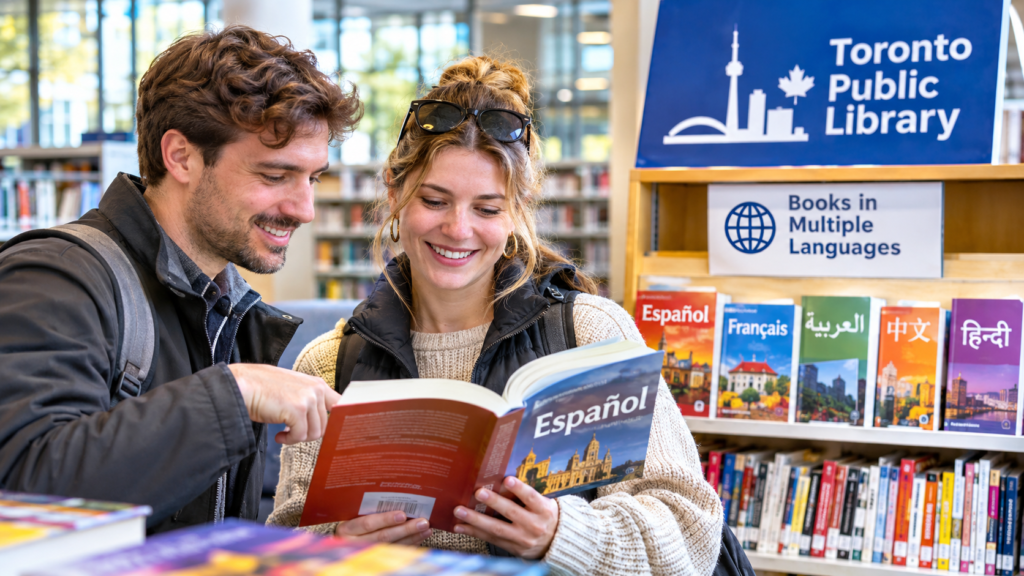
You’ve found your nearest Toronto library branch, but the children’s shelves don’t seem to have books in the language you read at home. Before making a trip across the city, check the library catalogue. The book you want might be available at another branch and eligible for pickup closer to home.
Toronto Public Library has materials in more than 40 languages, including books and digital content. Finding Toronto library books in your home language comes down to three separate checks: whether the library carries the language, whether it has something suitable for your reader, and whether that copy can be borrowed or reserved.
Start With the Language, Even If You Don’t Know a Title
The library’s “Material in Your Language” page is a useful starting point if you know what language you want but don’t have a particular book in mind. The page lists languages such as Bengali, Arabic and Urdu, with links for browsing available materials.
Give yourself a simple search goal. For a preschooler, it might be “a Bengali picture book we can finish before bedtime.” For an older child, it might be “an Arabic comic they can read on their own.” A specific goal makes a long list of results easier to sort through.
If you’re looking for a familiar story, try the author’s name or a different spelling of the title. A title you remember from a bookshop abroad may appear under a different spelling or in another script. If the search still comes up empty, show a librarian the title, author or a photo of the cover if you have one. That gives staff more to work with than an English translation of the title alone.
Check the Edition Before Requesting It
A familiar cover can lead you to the wrong edition. Open the full catalogue record and check the language, format and audience. A book by the author you wanted could be an English translation, an audiobook or a volume intended for older readers.
For a bilingual book, find out whether both languages appear in the story itself. A translated title in the record doesn’t necessarily mean the pages contain both languages. If you’re choosing a book for two caregivers who read different languages, ask staff to help confirm how the text is presented when the record is unclear.
Also consider how you’ll use the book at home. A picture book with a short text can work well when a child understands the language but doesn’t read it independently. A child who reads confidently may prefer a mystery, comic or sports story at their level. Ask what they’d enjoy reading before choosing a book based on language alone.
Choose a Branch for Browsing or a Branch for Pickup
Toronto Public Library’s language collection directory shows where different collections are located. Some listings identify whether a branch’s materials are intended for adults or children, so check the entry before planning a family visit.
If your child likes choosing books by looking through them, it can be worth visiting a branch with a children’s collection in your language. Check the branch hours and make sure the collection listing refers to books if that’s what you want.
If you already know which title you want, check the catalogue for a hold option. An eligible book can be sent to your preferred pickup branch, even if that branch doesn’t carry a collection in the language. Check the status before setting out: a copy shown as available at another branch isn’t the same as a hold ready for you to collect. Some items are available on a shelf but cannot be placed on hold.
Get the Right Library Card for Print Books
If you’ve only registered for a Digital Access Card, check your account before trying to reserve a print book. Toronto Public Library directs users to visit an open branch with current name and address identification to get a card that supports borrowing and holds for both physical and digital materials.
This matters when you’re staying with family or have just moved and don’t yet receive bills in your name. Review the library’s identification list before visiting. If you’re unsure whether your documents are enough, ask branch staff what they accept in your situation. Our guide to building proof of address after arriving in Toronto explains why the documents accepted by one organization may differ from those accepted by another.
Track Holds Around Your Family’s Schedule
When placing a hold, choose a branch you can reach during its opening hours. A branch near work or a regular school pickup may be easier to reach than the one nearest your home.
Check your account or wait for the library’s pickup notice before making the trip. If you request several books together, they may become available on different days. Look at each pickup deadline before deciding whether to make one trip or collect the books as they arrive.
If your plans change, check your hold status before trying to switch branches. Toronto Public Library advises contacting the branch for help moving a hold that is already in transit or ready for pickup. Adult cardholders can also face a charge for an uncollected hold, so cancel a book you no longer need by the library’s stated cutoff.
Try Another Format When the Exact Book Is Unavailable
If you need something to read this week, keep the original hold and look for a substitute you can use sooner. Search for a different book by the same author, a familiar story told by another writer or a title on the same subject.
You can also check whether the library offers a digital edition or audiobook in the language you need. Check the format and availability separately; a record for a print book does not tell you whether a digital version is available. An audiobook may be a good choice for a family that wants to listen together during a commute or while preparing dinner.
If an exact title matters and you can’t find it in the catalogue, ask staff whether it’s eligible for an interlibrary loan. Toronto Public Library accepts requests through branch staff from people with a valid library card. Treat this as an option to check, since asking for a title doesn’t guarantee it can be supplied.
Make the Next Borrowing Trip Easier
Start with a few books you’re likely to finish. After reading them, save the names of authors, illustrators or series your child wants to try again. Those names give you better search terms than starting from the entire language collection each time.
Check each due date when you borrow, especially if you take home a mix of formats. Toronto Public Library’s policy says loan periods and renewals can vary, and borrowed materials can be returned to any branch in the system. You can browse where the selection suits your family and return the books where it fits your week.
Note: Collections and availability can change. Use Toronto Public Library’s Material in Your Language directory to browse by language and check branch collection locations before visiting.