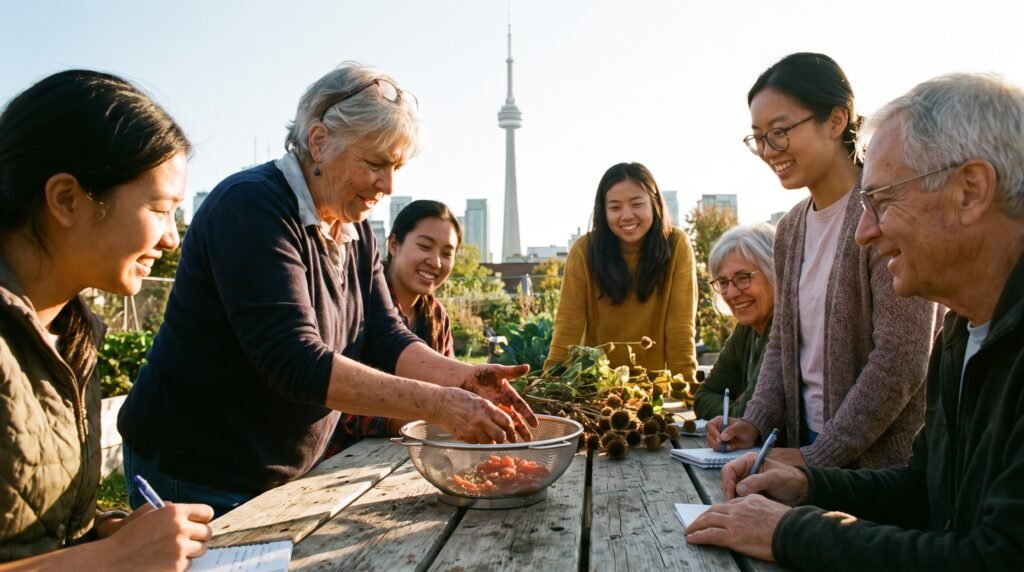
A small envelope of seeds can start a conversation that lasts longer than a growing season. Someone shares a bean variety their family enjoys, another gardener explains what survived on a windy balcony, and a beginner leaves with both seeds and practical advice.
Toronto seed swaps offer a way to connect through gardening without needing a large yard or an established collection. However, sharing responsibly takes more than dividing seeds into packets. The recipient needs to know what the plant is, where the seeds came from and which growing conditions it requires.
A useful exchange begins with clear information. These checks can help you prepare seeds for sharing and choose packets you can realistically grow.
Check the Event’s Participation Rules First
Before attending, read the organizer’s current instructions.
Ask whether the event accepts home-saved seeds, leftover packaged seeds or both. Find out whether people can participate without bringing anything and whether there are limits on the number of packets they may take.
Some gatherings may include plants, bulbs or cuttings alongside seeds. Do not assume those materials are accepted simply because they relate to gardening.
Confirm the date, location, registration arrangements and any requested labelling format. If you need an accessible entrance or seating, ask about the actual venue.
Bring what the event can accommodate. An organizer who expects small, labelled envelopes may not have space to sort a large container of mixed material.
Identify Every Seed You Offer
Start with the plant’s common name and variety, where known. For flowers and less familiar plants, a botanical name can help distinguish species that share similar common names.
Avoid inventing a variety name from a photograph or memory. If the precise variety is unknown, say so clearly.
For example, “bean, variety unknown, saved from my garden in 2026” communicates uncertainty more honestly than assigning a familiar name because the seeds look similar.
Keep original packaging when sharing leftovers from a labelled packet. It can preserve useful information that would otherwise disappear during repacking.
If you cannot identify the plant confidently, keep the seeds out of the exchange until you can establish what they are.
Distinguish Home-Saved Seeds From Original Packaged Seeds
Explain whether you harvested the seeds yourself or are sharing unused seeds from their original package.
This matters particularly for hybrids and plants that cross-pollinate. Seeds saved from a hybrid may produce plants with different characteristics from the parent. Open-pollinated varieties can also cross with compatible plants, affecting the next generation.
The University of Minnesota’s public vegetable seed-saving guide explains these differences and identifies beans, peas, tomatoes and peppers as approachable starting points for seed saving.
If you saved seeds without controlling pollination, describe the source plant’s characteristics without promising identical results.
A packet can still be interesting as a growing experiment. The important step is telling the recipient what is known and what remains uncertain.
Make the Label Useful to Another Gardener
Prepare labels before arriving so you are not trying to reconstruct details at a busy table.
A practical label includes:
- Plant name and variety, if known.
- Harvest year or original packet date.
- Whether the seeds are home-saved or leftover packaged seeds.
- Relevant growing observations.
- Any uncertainty about identity, pollination or germination.
Describe your observations precisely. “Grown in a south-facing Toronto container” provides more context than “easy to grow.”
Separate experience from general advice. A plant thriving in your garden does not establish that it will suit every balcony or shaded yard.
Keep the writing legible and attach it securely. Loose labels can become separated from packets when people browse.
Share Seeds From Healthy Plants
Select seed material carefully rather than treating a swap as a place to empty every old gardening container.
University extension guidance recommends saving seeds from healthy plants and warns that some plant diseases can be carried through seed. A clean-looking seed does not guarantee freedom from disease.
If the source plant showed signs of disease, do not share its seeds while describing them as healthy.
Discard visibly mouldy or damaged material. Do not attempt an improvised chemical treatment to make questionable seeds suitable for exchange.
Clean envelopes and containers also make sorting easier. Keep each identified seed lot separate so recipients do not accidentally receive a mixture.
Record Age and Storage Conditions Honestly
A harvest date helps recipients decide how to use a packet. If you do not know the age, mark it as unknown.
Keep seeds cool and dry, and ensure home-saved vegetable seeds are properly dried before storage. University extension guidance notes that older seeds can have reduced germination and vigour.
Do not promise a germination percentage unless you have actually tested a representative sample.
If you conduct a small trial, record how many seeds you tested, how many germinated, the date and the conditions used. Present it as a limited observation rather than a guarantee for the entire packet.
Use small quantities for sharing so more people can try a variety. Retain enough information with each portion to keep its origin clear.
Screen for Invasive Plants Before Exchanging
A plant being attractive or vigorous does not make it appropriate to distribute.
Ontario advises gardeners to choose native or non-invasive plants. The province also restricts activities involving designated invasive species, including trade, with details depending on their legal classification.
Check the provincial invasive species guidance and regulated species information before offering an unfamiliar plant.
Be cautious with packets labelled only “wildflower mix.” Ask which species are included and whether their identity is known.
Do not scatter leftover seeds into ravines, parks or other natural areas. A community exchange is not permission to introduce plants into public land.
Choose Seeds for the Space You Actually Have
At the swap, begin with your growing conditions rather than the most appealing packet.
Consider available sunlight, container space, wind exposure, watering access and how often you can tend the plants. Ask about mature size and whether the plant needs support.
For a balcony, check building rules before planning containers or climbing plants. For a shared garden, confirm the garden’s planting arrangements.
Questions about sowing are equally useful. Ask whether the seeds are normally started indoors, planted directly outside or require a preparation step before germination. Follow species-specific guidance instead of using one method for every packet.
If you are still looking for growing space, Toronto Blog’s guide to community garden waitlists explains ways to participate while waiting for a suitable opportunity.
Check the Origin of Seeds Brought From Abroad
Seeds carried home from a trip or received internationally need a separate check.
The Canadian Food Inspection Agency explains that small seed packets remain subject to Canadian requirements. Exemptions from certain paperwork do not remove every responsibility.
Consult the official small-packet seed import guidance before importing seeds or relying on uncertain import history.
Do not assume that a gift, a small quantity or seeds intended for personal gardening automatically avoids the rules.
Where the origin or compliance is unclear, resolve the question before passing the material to other growers.
Make the Exchange a Conversation
Ask the person sharing seeds what they observed: when they sowed them, where they grew them and what they would change next time.
Take only what you have space and time to try. Label your own growing containers so the identity does not disappear after planting.
Keep a short record of sowing dates and results. If you later share seeds from those plants, that record gives the next gardener useful context.
Ask permission before exchanging contact details or adding anyone to a group. A simple follow-up about how a plant performed can build a neighbourhood connection without turning participation into another obligation.
Note: Event arrangements, seed suitability and invasive-species or import requirements may change. Confirm current instructions with the organizer and relevant public authorities. Shared seeds may have uncertain germination, health or varietal characteristics; clear labels and honest information help recipients make informed choices.