
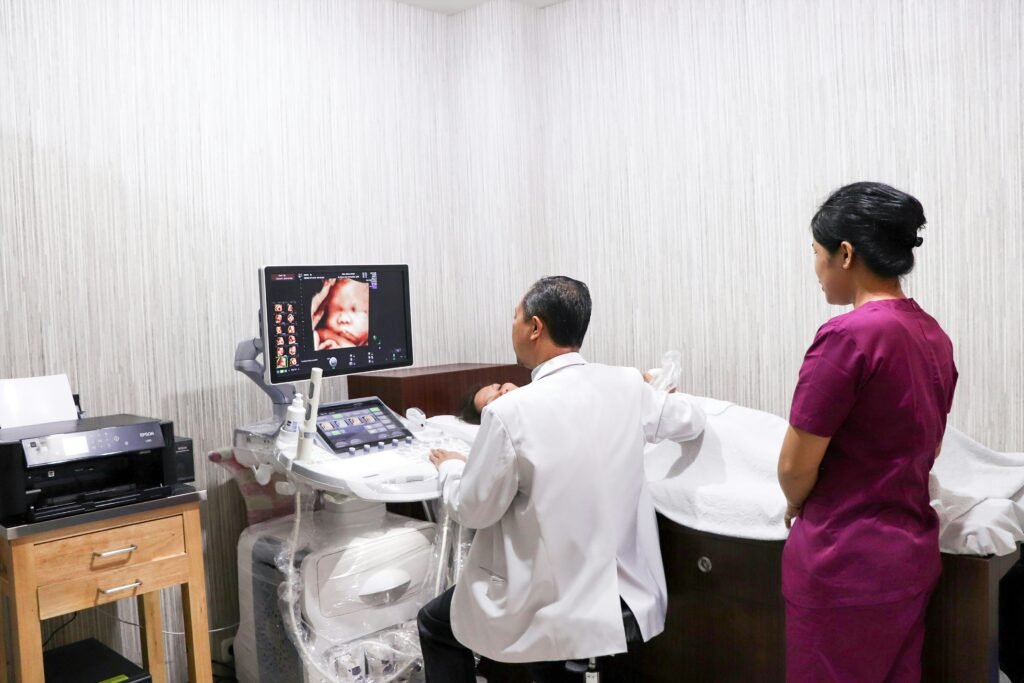
Toronto sonography programs can appeal to students seeking a specialized healthcare career without attending medical school. The profession combines patient care, medical imaging, anatomy and technology, while offering opportunities in hospitals, clinics and diagnostic facilities.
Interest in this career does not mean that admission is easy. Sonography programs can receive applications from science graduates, healthcare professionals and other academically qualified candidates competing for a limited number of seats.
Meeting the published minimum requirements may only make someone eligible for consideration. It does not necessarily make that person competitive enough to receive an offer.
Prospective students should investigate accreditation, clinical placements, certification examinations and Ontario registration before paying application fees or completing additional prerequisite courses. They should also prepare alternative routes rather than depending on admission to one Toronto program.
Why Are Toronto Sonography Programs So Competitive?
Sonography cannot be taught entirely through lectures or online modules. Students need supervised clinical education, access to ultrasound equipment and opportunities to work with patients.
A college may have enough classroom space for a larger group but only a limited number of appropriate clinical placements. Hospitals and clinics must provide qualified supervisors, suitable cases and enough training time without disrupting patient care.
This can restrict the number of students a program can accept.
The applicant pool may also include people who already possess strong academic or healthcare backgrounds. Depending on the program, applicants might have science degrees, kinesiology degrees, nursing credentials, medical radiation experience or other patient-care qualifications.
Someone can therefore satisfy every minimum prerequisite and still compete against candidates with higher grades, stronger assessments or more relevant experience.
Minimum Requirements Are Not Admission Guarantees
Applicants should distinguish between minimum eligibility and the profile of a competitive applicant.
A program may publish a minimum grade or cumulative average. That figure generally establishes who can be considered. It does not mean everyone meeting it will receive an offer.
The Michener Institute’s Toronto-based ultrasound program, for example, currently identifies academic pathways for eligible applicants and assesses admission using academic achievement and the Casper assessment. Requirements and selection methods may change between admission cycles, so applicants should review the official Michener ultrasound program information for the year in which they intend to apply.
Applicants should verify:
- The type of degree or diploma required
- Minimum cumulative grade requirements
- Required anatomy and physiology courses
- Whether prerequisite grades must reach a separate minimum
- How repeated courses are evaluated
- Whether courses expire after a certain period
- Whether an interview or situational assessment is required
- Which documents must arrive by the deadline
- Whether international transcripts need a formal assessment
A student should not assume that requirements from a previous year will remain unchanged.
Understand the Different Sonography Areas
“Sonography” is a broad term rather than one identical occupation or credential.
Programs and professional requirements may distinguish between areas such as generalist, cardiac and vascular sonography. A program’s curriculum, clinical experiences and graduate eligibility may apply to one or more of these areas.
Generalist education may cover abdominal, obstetrical, gynecological and superficial-structure imaging. Cardiac sonography focuses on the heart, while vascular sonography examines blood vessels and circulation.
Applicants should determine exactly which discipline a program teaches. Completing one type of program does not automatically qualify a graduate to practise in every sonography area.
This matters when comparing schools. Two programs using similar language in their advertising may lead to different examinations or areas of practice.
Accreditation Should Be Checked Before Applying
Program accreditation is one of the most important details to verify.
Accreditation Canada operates the EQual health education accreditation program, which evaluates educational programs in several health disciplines, including diagnostic medical sonography. Applicants can learn about the process through Accreditation Canada.
A school describing itself as registered, approved or authorized to operate is not necessarily saying that its sonography program holds the professional accreditation needed for the graduate’s intended certification and registration pathway.
Applicants should check the status of the particular program, not only the institution. They should also determine whether the accreditation status applies to the campus, delivery format and intake they are considering.
Useful questions include:
- Is the sonography program currently accredited?
- Is it accredited with conditions or under review?
- Does the status cover the applicant’s intended area of practice?
- Will graduates be eligible for the required certification examinations?
- What happens if accreditation changes while a student is enrolled?
- Is the information confirmed by the accrediting body or only stated by the school?
These checks should be completed before paying a deposit.
Certification and Ontario Registration Are Separate Steps
Graduating from a program is an important step, but it may not be the end of the professional process.
Sonography Canada administers credentialing examinations. Its entry-to-practice pathway includes a core examination alongside the applicable generalist, cardiac or vascular examination. Requirements can differ depending on an applicant’s educational background and pathway.
Prospective students should review the current Sonography Canada examination information rather than relying on informal descriptions from social media or older graduates.
Diagnostic medical sonographers are regulated in Ontario by the College of Medical Radiation and Imaging Technologists of Ontario, commonly called CMRITO. A person must hold the appropriate CMRITO registration to be legally authorized to practise the profession in Ontario.
The regulator explains the pathways for Ontario graduates, applicants from elsewhere in Canada and internationally educated applicants on its registration information page.
Prospective students should understand the distinction:
- The educational institution provides the program
- Accreditation evaluates the educational program
- Sonography Canada administers professional credentialing examinations
- CMRITO regulates professional practice in Ontario
A school’s diploma alone should not be assumed to complete every stage.
Calculate the Full Cost of the Application Path
The financial commitment may begin before tuition is due.
An applicant might pay for prerequisite courses, transcript requests, application fees, credential assessments and admission testing. Students accepted into a program may then face expenses for tuition, textbooks, uniforms, equipment, health requirements, background checks and travel to clinical placements.
Potential costs can include:
- Application and transcript fees
- Prerequisite university or college courses
- International credential assessment
- Admission assessments
- Tuition and compulsory institutional fees
- Textbooks and learning materials
- Required clothing or footwear
- Immunizations and health documentation
- Vulnerable-sector or police record checks
- CPR or other required certifications
- Transportation to clinical placements
- Parking near hospitals or clinics
- Certification examination fees
- Professional registration fees
Published tuition rarely represents the complete cost of qualifying.
Students should also consider income lost during full-time study and clinical placements. A demanding timetable may make it difficult to maintain regular employment.
Before relying on loans, grants or personal savings, applicants can review TorontoBlog.ca’s other practical education and employment resources on TorontoBlog.ca.
Clinical Placement Location Can Change the Budget
A program located in Toronto does not guarantee that every clinical placement will be close to the student’s home.
Clinical sites depend on agreements between schools and healthcare organizations. Students may be assigned to hospitals or clinics in different parts of Toronto, the GTA or farther away.
An early shift at a distant facility can create transportation challenges, particularly when transit service is limited. Students who drive may face fuel, parking and vehicle expenses. Students without cars may need to combine public transit, regional transit and occasional taxis or ride-hailing services.
Before enrolling, ask the program:
- How placement sites are assigned
- How far students may be expected to travel
- Whether students can refuse a distant placement
- Whether placements can occur outside Toronto
- Whether relocation may be necessary
- Whether parking or transportation support is available
- Whether placements include evenings or weekends
A program’s tuition could be manageable while the placement transportation costs create unexpected financial pressure.
Prepare Academically Before Reapplying
An unsuccessful application does not automatically mean the applicant is unsuitable for sonography. The program may simply have had more qualified candidates than available seats.
Before applying again, the candidate should identify which parts of the application can realistically be improved.
If grades are the problem, repeating a course may help—but only if the program accepts repeated courses and uses the new grade in the way the applicant expects. Some institutions consider every attempt, while others may use the highest or most recent result.
Applicants should obtain written clarification before paying to repeat a prerequisite.
If the program uses a situational judgment assessment, preparation should focus on understanding its format, communicating clearly and approaching scenarios thoughtfully. Applicants should avoid businesses claiming to provide leaked questions or guaranteed scores.
Students can also strengthen their understanding of the profession through approved information sessions, career research and conversations with practising professionals. Observing a healthcare workplace may be helpful where permitted, but patient privacy and facility rules must always be respected.
Avoid Collecting Credentials Without a Plan
Some applicants respond to rejection by enrolling in several short healthcare certificates. This can become expensive without meaningfully improving admission prospects.
A certificate should serve a clear purpose. It might meet a stated prerequisite, prepare the applicant for another healthcare occupation or provide useful employment while they reapply.
Applicants should not assume that an unrelated certificate will compensate for a weak academic average or missing required course.
Before enrolling, compare the certificate with the sonography program’s published selection criteria. If the admissions process does not award credit for that training, its value may lie in employment or career exploration rather than improving the application score.
Expand the Search Beyond Toronto
Applicants who can relocate or commute may find additional diagnostic medical sonography programs elsewhere in Ontario.
Expanding the search can improve the number of available options, but it should not be treated as a simple solution. Programs outside Toronto can also be highly competitive, and moving introduces rent, transportation and living expenses.
When comparing programs, consider:
- Accreditation status
- Admission pathway
- Program length
- Total tuition and compulsory fees
- Clinical placement geography
- Housing costs
- Transportation requirements
- Graduate examination eligibility
- Application deadlines
- Whether the program suits the intended sonography discipline
Students should check each institution directly. Program availability and admission requirements can change, and not every program accepts the same type of applicant.
Consider Related Medical Imaging Careers
Someone interested in sonography may also be suited to another medical imaging profession.
Related educational paths can include:
- Medical radiation technology
- Magnetic resonance imaging
- Nuclear medicine
- Cardiovascular technology
- Respiratory therapy
- Medical laboratory technology
- Radiation therapy
These careers are not interchangeable. Each has different responsibilities, training, regulation and employment conditions. However, exploring them can help an applicant determine whether the main interest is patient care, diagnostic technology, anatomy, medical imaging or one particular type of ultrasound work.
A backup program should be a career the student could genuinely see themselves completing and practising. It should not be selected only because it appears easier to enter.
Build a Backup Plan Without Losing a Year
An effective backup plan begins before admission decisions arrive.
Applicants can monitor the deadlines for several programs, confirm which prerequisites overlap and prepare documents early. Waiting for one rejection before exploring alternatives may mean that other application periods have already closed.
A practical plan could include:
- Applying to more than one accredited sonography program
- Applying to a related healthcare program
- Improving a required course
- Continuing suitable employment
- Saving for tuition and placement travel
- Reviewing the next admission cycle
- Exploring programs elsewhere in Ontario
- Confirming whether previous education qualifies for another pathway
The plan should account for the possibility of a wait-list offer. Applicants need to understand deposit deadlines and whether accepting one offer affects another application.
Be Careful With Private Program Marketing
Private colleges can offer legitimate career education, but applicants should independently verify every important claim.
Marketing phrases such as “industry recognized,” “career ready” or “approved curriculum” do not necessarily explain whether graduates can complete the certification and registration process required to work in Ontario.
Before enrolling, obtain written answers about accreditation, examination eligibility, clinical placements and graduate outcomes. Confirm important information with the relevant accreditor, certification body or regulator rather than depending solely on a salesperson.
Applicants should be cautious when a school:
- Pressures them to sign immediately
- Avoids answering accreditation questions
- Promises guaranteed employment
- Cannot explain the registration pathway
- Describes a future accreditation outcome as certain
- Provides unclear information about clinical placements
- Focuses on monthly payments without disclosing the total cost
- Refuses to provide policies before taking a deposit
A student may spend substantial time and money on training. Independent verification is worth the effort.
Internationally Educated Applicants Need a Separate Review
Someone who completed sonography education outside Canada should not assume that enrolling in a complete Toronto program is the only available route. They should first investigate how CMRITO assesses internationally educated applicants.
The regulator may require documentation concerning education, clinical experience, professional practice and other qualifications. The process is different from simply applying as a new domestic student.
International applicants should begin gathering detailed course descriptions, clinical-hour records, employment verification and professional-registration documents early. Obtaining records from another country can take time.
They should rely on instructions from CMRITO and Sonography Canada, especially when determining examination eligibility or whether additional education is necessary.
A private consultant or school cannot guarantee that the regulator will accept an international qualification.
Employment Demand Does Not Determine Program Capacity
Applicants sometimes wonder why programs remain small when healthcare employers appear to need more workers.
Workforce demand and educational capacity are connected, but they are not identical. A program cannot safely increase enrolment without sufficient instructors, laboratory equipment and supervised clinical opportunities.
A shortage of qualified workers does not automatically produce more training seats. Expanding a health program can require agreements among institutions, clinical sites, regulators and funding bodies.
Students should therefore avoid assuming that reported demand makes admission likely. They should assess the actual selection process and prepare for competition.
Employment conditions also vary by discipline and employer. Some graduates may begin with casual, temporary or part-time positions rather than immediately obtaining a permanent full-time job in their preferred Toronto hospital.
Questions to Resolve Before Accepting an Offer
An admission offer is exciting, but students should understand the practical conditions before paying a non-refundable deposit.
Confirm the program’s current accreditation status and the examinations graduates are eligible to write. Review tuition, compulsory fees, refund policies and possible increases.
Ask how often students travel outside Toronto for placements and whether a car is effectively necessary. Understand the program’s attendance rules and whether paid work is realistic during intensive academic or clinical periods.
Students should also ask about completion rates, examination outcomes and the type of support available to someone who struggles academically or during placement.
If answers are given verbally, request written confirmation or locate the information in official program policies.
A Strong Application Still Needs a Backup Path
Toronto sonography programs can offer a route into a respected healthcare profession, but the admission process may be highly selective. Strong grades and completed prerequisites can make an applicant eligible without guaranteeing a seat.
The safest approach is to verify the entire professional pathway before applying. That includes program accreditation, certification examinations, CMRITO registration, clinical placement expectations and the complete cost of training.
Applicants should apply strategically, prepare financially and identify alternatives they would genuinely be willing to pursue. A backup plan does not show a lack of commitment. It protects the applicant from losing time and money when a small program receives more qualified applications than it can accommodate.
Note: Sonography admission requirements, accreditation status, fees, assessment methods and professional registration rules can change. Confirm current information directly with the educational institution, Accreditation Canada, Sonography Canada and CMRITO before applying or paying any fees.