
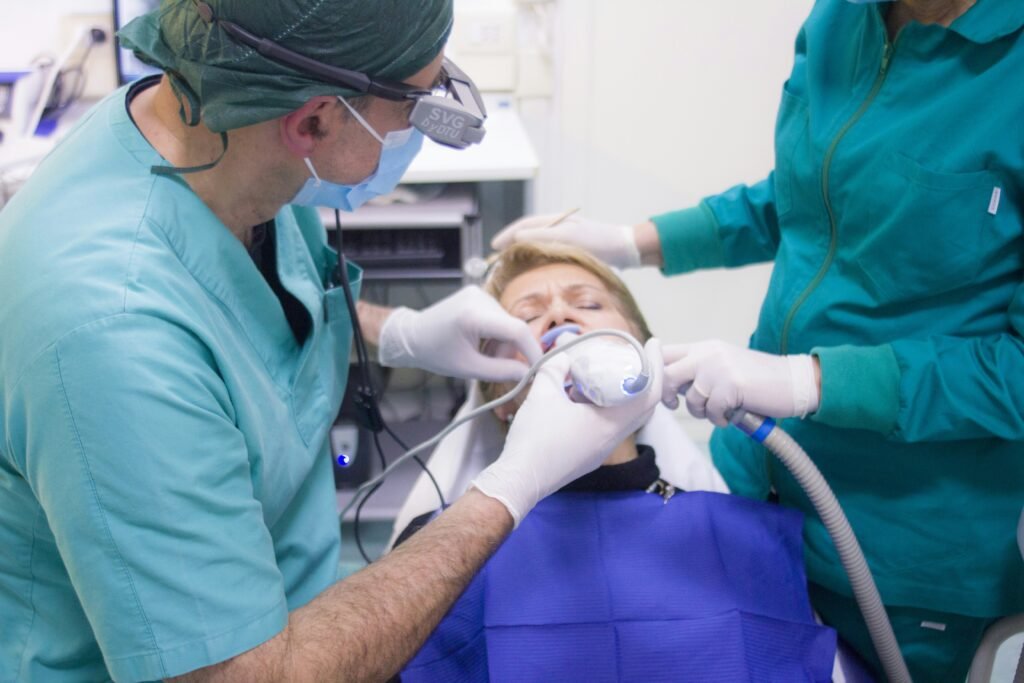
Arranging dental care for newcomers in Toronto starts with understanding how the appointment will be paid for. An Ontario health card, workplace benefits and a government dental program each serve different purposes. Before choosing a clinic, check which coverage you actually have, when it becomes active and what you may need to pay yourself.
This guide explains the practical checks for a first dental appointment, including insurance, public assistance, estimates and communication with your dentist. If you are calling about pain, swelling or an injury, mention it immediately so the clinic can advise you about urgency.
Understand OHIP and Dental Insurance in Ontario
OHIP generally does not cover dental services provided in a dentist’s office. It covers certain eligible dental surgeries in hospital, which is different from routine appointments for examinations, cleanings or fillings. Having an Ontario health card therefore does not establish that your dental visit is covered.
Our guide to applying for OHIP after moving to Toronto explains the provincial health-registration process. For dental appointments, check your separate payment arrangements against Ontario’s explanation of OHIP coverage.
If you have workplace, student or family dental benefits, contact the plan administrator before booking. Ask whether your coverage is active, whether you are enrolled and whether the proposed services have limits.
Useful questions include whether there is a deductible, how much of the annual allowance remains and whether the clinic bills the insurer directly. Request answers for your particular plan rather than relying on a general statement that the office “accepts insurance.”
Check Canadian Dental Care Plan Eligibility
The Canadian Dental Care Plan, or CDCP, has eligibility requirements that go beyond being new to Canada or having a low income.
According to the federal eligibility rules, applicants must meet four conditions:
- Have no access to private dental insurance or coverage.
- Have filed the required Canadian tax return for the previous year, with a spouse or common-law partner also meeting the filing requirement where applicable.
- Have adjusted family net income below $90,000.
- Be a Canadian resident for tax purposes, with the applicable residency requirement also extending to a spouse or common-law partner.
Access to coverage can include an employer, a family member’s benefits or a student organization. Choosing not to enrol, or not using available benefits, generally does not remove that access.
Tax Filing Matters for Newcomer Dental Coverage
If you have recently arrived and cannot meet the prior-year filing requirement, ask Service Canada how the rules apply to your circumstances. Do not assume that an immigration document alone establishes eligibility.
Our guide to your first tax return as a newcomer in Canada provides background on getting started with Canadian tax filing.
Confirm Your CDCP Start Date and Direct Billing
Applying for the CDCP is different from having active coverage. Follow the coverage start date in your approval information; the federal guidance says to book an appointment only on or after that date.
Before arranging treatment, confirm that the clinic accepts CDCP patients and will bill the plan administrator directly. Under the CDCP, patients who pay the entire bill themselves cannot claim reimbursement from the administrator afterward.
You do not need to wait for the physical member card if you have the required information. The CDCP’s after-application guidance explains what to provide, including your member ID, identification, coverage start date and co-payment level.
Coverage also requires annual renewal. Check its status again when arranging a later appointment, particularly if your household circumstances have changed.
Understand CDCP Co-Payments and Additional Dental Fees
A CDCP approval does not necessarily mean a free appointment. The income-based co-payment applies to the plan’s established fees for covered services.
| Adjusted family net income | Your co-payment on CDCP-established fees |
| Below $70,000 | 0% |
| $70,000–$79,999 | 40% |
| $80,000–$89,999 | 60% |
There can also be a difference between the clinic’s charges and the amount recognized by the plan. You may need to pay that difference, as well as charges for services outside your coverage. This can happen even with a zero co-payment.
Some treatments require approval before they begin, and coverage can have frequency limits. Ask the clinic whether the proposed treatment needs preauthorization and whether it has been approved.
Check the official CDCP coverage information, then request an estimate showing the expected plan payment and your remaining balance separately.
Explore Free and Low-Cost Dental Care in Toronto
If you do not have private benefits or cannot currently use the CDCP, Toronto Public Health is another place to ask about assistance.
The City’s free dental care information describes services for eligible children, adults and seniors through applicable government programs. Availability depends on eligibility; being a newcomer does not automatically qualify someone for free treatment.
Toronto Public Health assesses eligibility in person at its dental clinics. Call ahead to ask what documents your situation requires and whether the clinic can address the service you need.
The City also maintains a directory of low-cost dental facilities, including teaching and community clinics. Contact a listed provider to confirm current intake, fees, services and appointment availability before travelling there.
When comparing options, ask whether the first appointment is a screening or includes treatment. Also check how many visits may be needed and whether the schedule works with your job, classes or childcare.
Refugee Dental Coverage Through the IFHP
Some eligible refugees and certain other eligible groups have temporary coverage through the Interim Federal Health Program, or IFHP. This is not a general dental program for every newcomer.
The program includes eligible urgent dental care within its supplemental benefits. Since May 1, 2026, IFHP pays 70% of eligible supplemental costs and the patient pays a 30% co-payment. Confirm your eligibility, use a registered provider and ask about costs before treatment.
Review the current IFHP coverage summary rather than relying on older descriptions of fully covered refugee dental care.
Verify Your Toronto Dentist and Clinic Arrangements
Once you have identified a possible clinic, ask for the name of the dentist you will see. You can check their registration, qualifications and available professional-conduct information through the Royal College of Dental Surgeons of Ontario’s dentist register.
Then confirm the practical details that matter to you: whether the practice is accepting new patients, its accessibility arrangements and the availability of appointments that fit your schedule.
If you are booking for a child, ask whether the clinic sees children of that age. If you need a particular service, describe it when calling so the office can explain whether it can assess and treat you there.
Request an Itemized Dental Treatment Estimate
Ask what the first appointment includes and what each part is expected to cost. An examination, imaging and cleaning should be discussed clearly rather than treated as an undefined “first visit.”
For proposed treatment, request a written estimate that separates the procedures, any laboratory or material charges, the expected benefit payment and your estimated share. If the dentist cannot give a final amount before examining you, ask what the assessment itself will cost.
The RCDSO’s guidance on dental fees explains that cost discussions form part of informed consent. Estimates may give a range, and changes to treatment can require discussion of additional charges.
For a larger treatment plan, ask the dentist to explain its priorities, alternatives and the consequences of delaying a procedure. Let the dentist know your budget so you can discuss clinically appropriate options with the costs in view.
Arrange Language Support Before Giving Consent
Dental terminology can be difficult even when everyday English feels comfortable. Tell the clinic your preferred language when booking and ask whether the dentist or another team member speaks it.
If you need interpretation, discuss the available arrangements and any charges in advance. You can also ask whether a trusted person may join the discussion.
The RCDSO’s consent guidance emphasizes understanding the proposed treatment, benefits, risks and alternatives. Ask for an explanation in plain language and time to consider non-urgent decisions.
If you need help finding local support, our guide to free settlement services in Toronto explains how to connect with newcomer organizations. Ask the organization what assistance it offers; medical interpretation should be confirmed separately.
Prepare Documents for Your First Dental Appointment
To make dental care for newcomers in Toronto easier to organize, create a small appointment folder. Ask the clinic which identification and coverage documents it needs, and bring the relevant member or policy numbers.
Prepare a list of medications, allergies, medical conditions and questions you want to discuss. If you have records or X-rays from a previous dentist, including one outside Canada, ask how to send them securely and whether translation is needed. The new dentist can explain what information is usable and whether further assessment is required.
Finally, confirm the appointment length, payment methods and cancellation policy. Knowing these details before you arrive helps you plan time away from work and avoid preventable booking problems.
Note: Information checked in September 2026. Program rules, eligibility, fees and clinic availability can change. Confirm current details with the relevant government program and dental provider before booking. This article provides general information and does not replace advice from a qualified dental professional.