
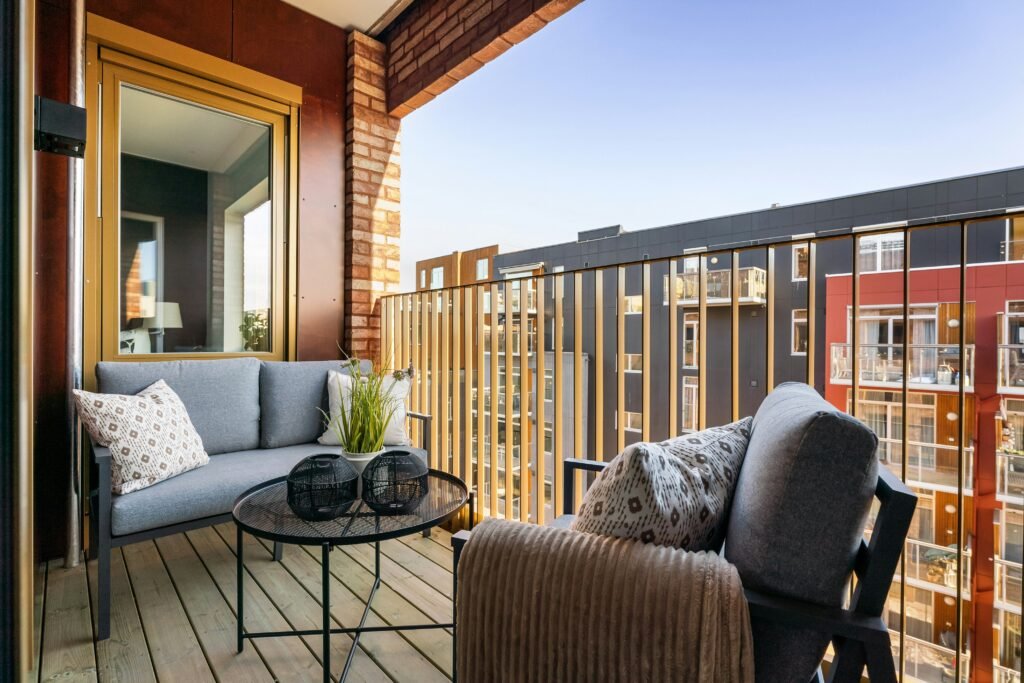
A condo balcony restoration project can turn a private outdoor space into an active construction zone for weeks or even months. Residents may lose balcony access, hear concrete drilling during the day and receive notices requiring workers to pass through their units. Owners may also worry about damage, special assessments and responsibility for removing balcony furniture.
These projects are disruptive, but they are usually more complicated than repainting railings or replacing surface tiles. Toronto’s freeze-thaw cycles, road salt and moisture can deteriorate concrete and corrode embedded reinforcing steel. Once deterioration reaches a certain point, postponing repairs may create a larger structural and financial problem for the condominium corporation.
Understanding the scope of the work helps residents prepare without assuming that every inconvenience or expense will be handled in the same way.
Why Toronto Condo Balconies Require Restoration
Balconies are exposed to rain, snow, ice, temperature changes and airborne contaminants throughout the year. Water can enter cracks in the concrete and reach the reinforcing steel. When that steel corrodes, it expands and can cause surrounding concrete to crack, loosen or break away.
A restoration project may involve:
- Removing loose or deteriorated concrete
- Cleaning or replacing corroded reinforcing steel
- Patching damaged balcony slabs
- Replacing waterproofing materials
- Repairing or replacing railings
- Applying protective coatings
- Sealing joints around walls and balcony doors
- Inspecting balcony edges and undersides
The visible work on one balcony may be part of a larger building-envelope project. Contractors may need to move vertically down the building using swing stages, which means the schedule for an individual unit can depend on weather, equipment access and conditions discovered after concrete is opened.
Read the Notice for Scope, Not Just the Start Date
A construction notice should provide more than a general statement that balcony work is beginning. Residents need enough information to understand what will be unavailable and what preparation is expected.
Look for details concerning:
- The anticipated project duration
- Daily construction hours
- The date balcony access will be restricted
- Whether balcony doors or windows must remain closed
- How workers will reach the balcony
- Deadlines for removing furniture and other belongings
- Air-conditioner restrictions
- Procedures for pets, children and mobility limitations
- Contact information for the project manager or property manager
Keep every notice, email and schedule update in one folder. Construction timelines frequently shift, and written records make it easier to distinguish the original instructions from later changes.
A broad completion date for the entire building does not necessarily show when work outside your unit will finish. Ask whether management can provide a stack-specific or elevation-specific schedule.
Condo Balcony Restoration and Unit Access
Exterior access may be possible through scaffolding, swing stages or neighbouring work areas. In other situations, workers may need to enter a unit to reach the balcony, inspect the door threshold, install protective materials or complete work around the exterior wall.
Section 19 of Ontario’s Condominium Act, 1998 allows a condominium corporation, or a person authorized by it, to enter a unit at a reasonable time after giving reasonable notice to perform duties or exercise powers. The declaration and bylaws may contain additional provisions relevant to entry. Emergencies can be treated differently.
Residents should review an access notice for the proposed date, time window, reason for entry and identity of the people who may enter. If the time creates a serious problem, contact management promptly and request an alternative. Do not simply ignore the notice or prevent access without first understanding the corporation’s authority and the consequences of delay.
Tenants should send notices to the unit owner as well. The owner generally communicates with the condominium corporation, while the tenant must still follow applicable building rules and access arrangements.
Preparing the Route Through Your Unit
If contractors will enter through the suite, clearing only the balcony may not be enough. Workers may be carrying equipment, protective sheeting and repair materials.
Create an unobstructed route between the entrance and balcony door. Remove fragile objects, floor lamps, narrow tables, shoes and anything that could be knocked over. Protect flooring in advance, especially hardwood, laminate or light-coloured carpet.
Ask who is responsible for installing floor protection. If the contractor will provide it, confirm what material will be used and how long it will remain in place.
Move personal documents, medications, electronics and valuables away from the access route. This does not imply that workers are untrustworthy; it reduces the possibility of accidental damage and avoids disputes over items that were already missing or broken.
Take dated photographs of the route, balcony door, flooring and nearby walls before the first entry. Photograph the same areas again after workers leave.
Removing Belongings From the Balcony
Management may require a completely empty balcony before construction begins. This can include furniture, planters, floor coverings, privacy screens, satellite equipment, decorative lighting and storage containers.
Residents sometimes assume that contractors will move large objects aside. That may not be permitted because items can interfere with equipment, create falling hazards or become contaminated by dust.
Artificial grass, interlocking deck tiles and outdoor rugs deserve particular attention. Moisture and debris can collect underneath them, and the materials may cover cracks that engineers need to inspect. Do not reinstall balcony flooring until management confirms that the surface has cured and the area has reopened.
If an item cannot fit through the balcony door or was installed before you moved in, notify management in writing. Do not throw it over the railing, lower it using a rope or leave it for workers to handle without authorization.
Residents with limited mobility should request assistance or an accommodation as early as possible rather than waiting until the removal deadline.
Controlling Concrete Dust Inside the Unit
Concrete removal can create fine dust even when the work occurs outside. Particles may enter through gaps around doors, window frames, ventilation openings or repeated worker access.
Before work reaches your balcony:
- Move fabric furniture away from the balcony door
- Cover nearby electronics and shelving
- Store food and cooking utensils in closed cabinets
- Check the condition of seals around doors and windows
- Replace an overdue HVAC or fan-coil filter
- Close windows when instructed
- Vacuum with suitable equipment rather than sweeping dust into the air
Avoid placing tape, plastic or foam over vents without understanding how the unit’s ventilation system works. Blocking required airflow can cause other problems.
A portable air cleaner with an appropriately sized filter may help capture indoor particles, but it cannot replace containment at the work area. If visible dust repeatedly enters the suite, photograph where it appears and report the problem to management. Ask whether the contractor has inspected the enclosure, door protection or dust-control method.
Residents with asthma, respiratory conditions or medically documented sensitivities should contact management before the work begins. Early communication gives the corporation more time to consider practical arrangements.
Noise and Working From Home
Balcony restoration can include drilling, chipping and grinding. The noise may travel through concrete and feel louder inside the building than it does at ground level.
Noise-cancelling headphones may reduce steady background sound, but they may provide limited relief from structural vibration. Residents who work from home should identify the expected high-noise periods and consider using an office, library or another location on those days.
Ask management whether especially loud work will follow a predictable schedule. Contractors may not be able to guarantee exact times, but knowing which building elevation is being worked on can help residents plan meetings.
Keep a record if work regularly occurs outside the communicated construction hours. Note the date, start time, type of activity and location before submitting a complaint. A specific log is more useful than saying the project is always noisy.
Windows, Balcony Doors and Air Conditioning
Residents may be told not to open balcony doors or certain windows while work is underway. This may be necessary to prevent dust from entering, protect workers using suspended equipment or allow coatings and sealants to cure.
Portable air-conditioning units that exhaust through a balcony door or window may become unusable during part of the project. Balcony-mounted equipment may also need to be disconnected or relocated.
Do not arrange an equipment change without written approval. The balcony, exterior wall and window assembly may be common elements even when they are used exclusively by one unit.
Ask management about restrictions before hot weather arrives. Residents who depend on cooling for medical reasons should raise the issue early and provide supporting information if an accommodation process requires it.
Who Normally Pays for Balcony Restoration
The answer depends on the condominium’s declaration, bylaws, rules, repair obligations and the nature of the work.
A balcony may be an exclusive-use common element rather than part of the residential unit. That does not automatically answer every cost question. The corporation may be responsible for major structural repairs while the owner remains responsible for certain finishes, improvements or damage caused by the owner.
Building-wide restoration may be funded through the reserve fund if the expense qualifies and sufficient money is available. If available funding is inadequate, the corporation may need to increase common expenses, arrange financing or levy a special assessment.
Owners should review:
- The latest reserve fund study
- Recent board meeting minutes
- Audited financial statements
- Notices concerning major repairs
- Information certificates
- The condominium declaration and bylaws
- Any special-assessment notices
A large project does not automatically mean that a special assessment will occur. Conversely, an apparently healthy reserve fund does not prove that every project cost is fully covered.
Anyone considering purchasing a Toronto condo should examine planned balcony or building-envelope work before waiving status certificate conditions. Restoration projects can affect finances, daily use and future resale discussions.
Costs That May Fall Directly on a Resident
Even when the corporation pays for structural work, residents may have related expenses that are not included in the construction contract.
These can include:
- Moving or storing balcony furniture
- Replacing owner-installed deck tiles
- Cleaning the interior after dusty work
- Temporarily working somewhere else
- Boarding a pet during repeated unit entries
- Relocating unauthorized fixtures
- Repairing improvements not covered by the corporation
- Paying an insurance deductible where responsibility is established
Do not assume that an inconvenience will result in compensation. Loss of balcony use, noise and temporary access restrictions may be considered part of necessary common-element repair work.
If management says a particular cost will be charged to your unit, request the reason and supporting provision in writing. Ask whether the charge relates to the declaration, a rule, damage attributed to the unit or additional contractor work requested by the owner.
Documenting Damage Before It Becomes a Dispute
Construction can expose pre-existing deterioration around a balcony door or reveal water damage that was not previously visible. It can also cause new scratches, chips or stains.
Create a photographic record immediately before work begins. Include wide photographs showing the whole room and close-ups of vulnerable areas. Record existing marks so they cannot later be mistaken for construction damage.
If you discover a problem after entry:
- Photograph it before cleaning or repairing anything
- Record the date and approximate time
- Preserve the relevant access notice
- Report it promptly in writing
- Identify the location and type of damage
- Ask management who will inspect it
- Keep receipts for urgent protective measures
Avoid making a firm accusation before the cause has been investigated. A crack near a balcony door, for example, could be related to construction vibration, earlier settlement, water penetration or a pre-existing condition.
For water-related concerns inside a condominium, our guide to Toronto condo water leaks explains the importance of documenting the source, damage and insurance communication.
Renters Should Keep the Owner Involved
Tenants experience the disruption, but the registered owner usually receives formal condominium communications and has the direct legal relationship with the corporation.
A tenant should inform the landlord about access notices, damage, air-conditioning restrictions and any demand for payment. Send photographs and written records rather than relying on phone conversations.
The lease may also determine responsibility for moving tenant-owned furniture or dealing with temporary inconvenience. A tenant should not agree to pay a condominium charge on the owner’s behalf without understanding why it was issued.
If the unit becomes unsafe or a required service is seriously affected, the issue may extend beyond an ordinary construction inconvenience. Obtain appropriate tenancy advice rather than assuming that loss of balcony access alone permits rent withholding.
Questions to Raise Before Work Reaches Your Balcony
Residents do not need to become construction experts, but they should understand how the project will affect their unit.
Useful questions include:
- Will workers enter through the suite?
- How much notice will be provided for each entry?
- Who supervises contractors inside occupied units?
- Will floor and furniture protection be supplied?
- Where should balcony belongings be stored?
- Will windows or balcony doors be sealed?
- Can the fan coil or air conditioner remain in use?
- How will residents report dust or property damage?
- Is the project being paid from the reserve fund?
- Are additional owner charges anticipated?
- When can balcony furniture be returned?
- Who confirms that the balcony is safe to reopen?
Send important questions by email so both the request and response can be retrieved later.
When to Escalate a Concern
Start with the property manager or the contact identified in the construction notice. Provide a short description, relevant dates and photographs.
If the problem remains unresolved, an owner may write to the condominium board. Depending on the dispute, residents can also review information from the Condominium Authority of Ontario about condo responsibilities and dispute-resolution options.
Immediate hazards require faster action. Report falling material, an unsecured opening, uncontrolled water entry, damaged electrical equipment or unsafe worker access as soon as it is discovered. Use emergency services when there is an immediate threat to health or safety.
Legal advice may be appropriate when there is substantial property damage, repeated entry without proper notice, a disputed charge, an accommodation issue or a disagreement about obligations under the declaration. Bring the notices, photographs, correspondence and condominium documents to the consultation.
Preparing for a Long Project Without Treating Every Day as an Emergency
Balcony restoration is easier to manage when residents separate predictable disruption from specific problems requiring action.
Noise during communicated working hours is different from unexplained entry into a unit. Temporary balcony closure is different from workers damaging interior flooring. Dust outside a protected work zone is different from repeated visible dust entering the living space.
Keep records, follow safety restrictions and ask for clarification when instructions conflict. At the same time, avoid reinstalling furniture early or interfering with equipment because the work appears inactive. Some repair materials require curing time even when no workers are present.
A well-managed project should provide residents with clear notices, safe access procedures and a reliable way to report concerns. Careful preparation cannot eliminate the disruption, but it can protect your belongings and make genuine problems easier to prove.
Note: This article provides general information and is not legal, engineering, medical or insurance advice. Balcony classifications and repair obligations vary among condominium corporations. Review your condominium documents and obtain qualified advice for concerns involving safety, liability, significant damage or disputed charges.