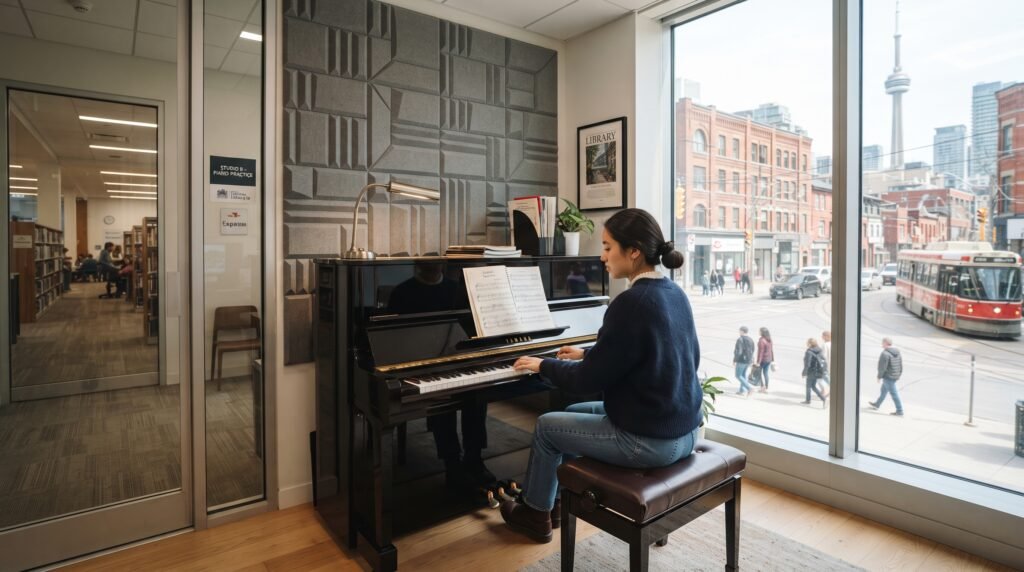
Practising piano in Toronto can be difficult when you do not own an instrument or cannot comfortably play at home. A shared apartment, limited space or concern about disturbing neighbours can interrupt a hobby you would otherwise enjoy.
Toronto library piano rooms offer another possibility. Toronto Public Library lists free piano facilities at North York Central Library, Oakwood Village Library and Arts Centre, Parkdale and Toronto Reference Library. Booking arrangements differ by location.
Before travelling, confirm the particular space, its availability and what you need to bring. A little preparation helps you spend your session playing instead of sorting out an unexpected booking problem.
Confirm That the Piano Facility Is Available
A branch being open does not necessarily mean its piano space is available.
Check the library’s current service notices and contact the branch when planning your visit. Renovations, room use and other restrictions can affect access.
At the time of writing, TPL’s piano page carries a notice that Toronto Reference Library’s practice rooms are unavailable during an August-to-October renovation period. Confirm reopening directly rather than assuming that a general end month guarantees access on your chosen date.
This matters especially if you are crossing the city for a short session. Have an alternative plan for the visit, such as browsing music materials, if availability changes.
Choose the Instrument and Setting You Need
Think about what you want from the session before selecting a branch.
You might want to work through a beginner exercise, return to familiar pieces after a long break or rehearse a particular passage. Those goals can help you decide which questions to ask about the instrument.
Confirm whether the booking is for an acoustic piano, an electric keyboard or a station in a shared digital lab. Do not assume that a photograph or an older online description reflects the current arrangement.
Ask about the seating, music stand and headphone setup if those details affect your practice. If you are preparing for a performance or examination, explain what you need without expecting the library to provide a particular instrument model or performance environment.
Check the Booking Window and Time Limit
Read the rules for your chosen branch rather than applying one location’s system to another.
For example, North York Central’s published arrangement allows reservations up to seven days ahead and one hour per person per day. Parkdale lists same-day advance booking with a two-hour weekly maximum.
When booking, repeat the date, start time, branch and facility name. Save those details in your calendar.
Ask when you should arrive, where to check in and how to cancel if your plans change. Do not build your practice plan around an extension; another person may need the next session.
A shorter booking can still be useful when you arrive with a manageable goal.
Verify Identification Before Leaving Home
Check which identification or library card the branch requires.
North York Central requires a valid TPL card for its piano facilities, while Parkdale and Oakwood Village list alternative identification arrangements.
Confirm the exact requirement if you intend to use an alternative. An account number on your phone may not answer the same question as the identification requested at the desk.
Our guide to Toronto proof of address explains the library’s broader membership-document options. For a piano visit, follow the branch’s specific booking instructions.
Keep the necessary card or document with your music so you do not discover it is missing at check-in.
Ask Before Bringing Another Person
A piano booking should not be assumed to accommodate a teacher, friend or accompanying musician.
TPL lists different occupancy and accompaniment conditions across its facilities. Some spaces allow one adult user, and certain branches require a parent or guardian to accompany minors.
Explain who would attend and what you intend to do. A solo practice session, a lesson and a duet involve different arrangements.
If someone needs to accompany you for support, discuss that requirement with staff before booking. Ask about the room’s accessibility and the route to it at the same time.
Clear information helps staff advise you without leaving the question until you arrive together.
Confirm Headphones and Equipment Compatibility
If you plan to use a digital instrument, ask whether headphones are required, supplied or available to borrow.
When bringing your own, check the connection type with the branch. Wireless headphones should not be assumed to connect to the instrument, and a phone adapter may not be suitable.
Pack only what you need and avoid changing cables or equipment settings you do not understand. Ask staff before connecting a device, recording equipment or anything beyond the ordinary practice setup.
At the beginning of the session, take a moment to find a comfortable volume and check that you can hear both hands clearly. Report a fault instead of spending the booking trying to repair unfamiliar equipment.
Confirm That Your Planned Activity Fits the Room
A piano room is not automatically a general rehearsal or recording space.
North York Central’s Piano Room is specifically designated for piano practice, with singing and other instruments prohibited.
For any location, ask before planning vocal practice, accompaniment for another instrument, filming or a lesson. Describe the activity clearly so staff can assess whether it fits.
Avoid relying on an old blog post that describes a previous policy. Use the current branch instructions.
If your activity is unsuitable, ask whether the library can point you toward information about another appropriate space. Keep the original booking for the purpose that was approved.
Bring a Small, Focused Practice Plan
You do not need to fill a session with ambitious material to make it worthwhile.
Choose one or two priorities before leaving home. You might spend a few minutes warming up, work slowly through a difficult section and finish by playing a familiar piece.
Bring printed music or download the files you are entitled to use beforehand. Number loose pages and arrange them in order so you do not spend the session searching through a bag.
If using a tablet, charge it and turn off distracting notifications. Bring a pencil or notebook for practice notes.
For someone returning after a break, a comfortable, repeatable session can be more useful than trying to recover every former skill in one visit.
Leave Time to Finish and Check Out
Set a quiet reminder before the end of your booking. Allow time to collect your belongings, return borrowed items and complete any checkout instructions.
Leave the instrument and surrounding area ready for the next person. Tell staff about a sticking key, damaged accessory or other issue you noticed, describing it without attempting a repair.
If you finish early, let staff know. If you cannot attend, cancel through the branch’s recommended method.
Afterward, write down what you practised and what you want to revisit. That small record can make your next session productive from the start.
Build a Routine You Can Maintain
Consider the full trip when choosing a location. A branch with a convenient journey may be easier to visit regularly than one with a longer possible booking.
Start with a realistic frequency and check availability each time. A previous reservation does not establish an ongoing entitlement to the same slot.
Library piano access can support an affordable musical habit, but it works best when you remain flexible about timing and prepare for each visit. For other ways to establish a regular activity, see our guide to finding an affordable weekly hobby in Toronto.
Helpful Public Library Resources
- TPL Piano Practice Rooms: Current facilities, booking rules and contact information.
- Toronto Reference Library Renovation: Renovation-related service changes.
- TPL Hours and Locations: Branch information for planning your visit.
Note: Piano availability, identification rules, booking limits and permitted activities vary by branch and may change. Confirm the current arrangements directly before travelling, especially during renovations. A piano reservation provides access to the approved facility; do not assume it includes instruction, recording permission or space for additional participants.