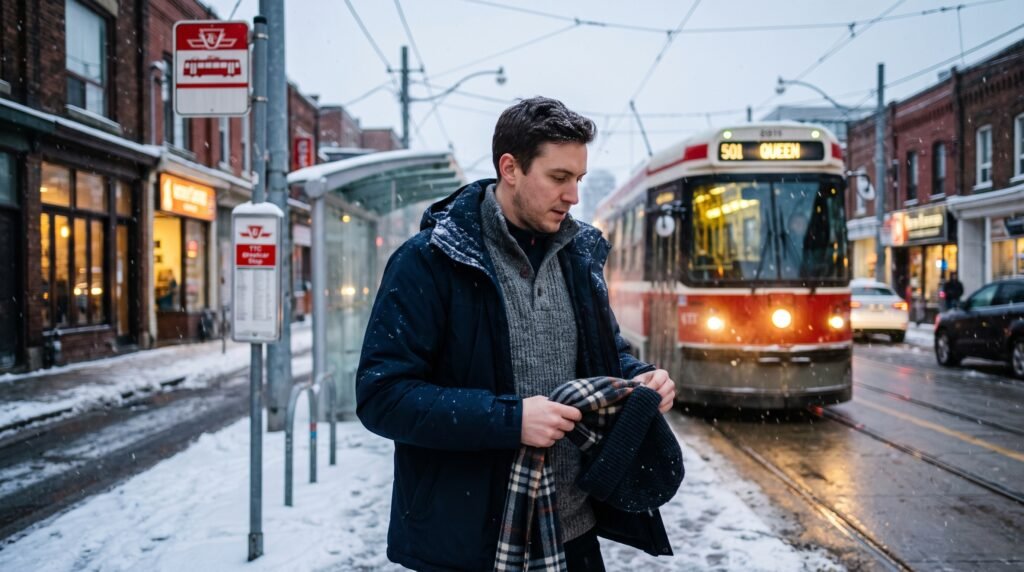
A winter commute in Toronto can involve several different environments within an hour. You leave a warm apartment, walk through slush, wait at an exposed bus stop and board a heated vehicle. After a subway connection, you may step outside again for the final walk.
Clothing that feels comfortable while standing still outdoors can become too warm during the journey. An outfit chosen only for the heated portion may leave you unprepared for a delayed connection.
Toronto winter clothing works best as an adjustable system. Plan around the outdoor sections, choose pieces you can manage while travelling and leave enough flexibility for conditions to change.
Dress for the Whole Journey
Before choosing your clothes, think through the trip from door to door.
Include the walk to your stop, outdoor transfers and the distance from your final station to your destination. A short ride can still involve considerable time outside.
Check the return forecast as well as the morning conditions. Rain, wind or falling temperatures may change what you need later.
TTC winter advisories encourage riders to allow extra travel time and check service updates before leaving. Some stops may also be temporarily taken out of service in poor weather.
Avoid building your outfit around a perfectly timed connection. Choose clothing that gives you reasonable flexibility if the journey takes longer.
Give Each Layer a Purpose
Layering becomes easier when each piece has a clear job.
An inner layer sits against your skin, a middle layer adds warmth and an outer layer helps protect against the conditions. The exact combination depends on the weather, your activity and how you experience cold.
Toronto Public Health recommends layered clothing, waterproof and windproof outerwear, and inner fabrics such as wool, silk or polypropylene.
Start with suitable pieces you already own. You do not need several heavy garments stacked together for every trip.
Try the complete outfit before leaving. Check whether you can move your arms, sit comfortably and reach pockets without struggling through tight layers.
Choose a Middle Layer You Can Remove Easily
For transit journeys, a removable middle layer can be useful when your outdoor and indoor temperatures differ.
A cardigan, fleece or zip-front sweater may be easier to manage than a bulky pullover. Choose something you can carry or place in your bag without using all the space.
Think about what you will wear at your destination. If the outfit underneath is suitable for work or class, removing the middle layer becomes a straightforward adjustment.
Avoid creating a system that requires changing several garments whenever you enter a building. The aim is practical flexibility, especially when you are carrying a backpack or travelling during busy periods.
Adjust Before You Become Too Warm
Pay attention to how you feel when moving between environments.
Federal winter guidance recommends removing layers before you begin sweating and adding them when you become cold. Wet clothing can increase heat loss when you return outdoors.
Make adjustments where you have space to do so safely. A crowded doorway or staircase is a poor place to remove a coat while balancing belongings.
You might loosen your outer layer or remove your hat once comfortably aboard, then prepare again before your outdoor transfer.
Vehicle temperatures vary. Use your own comfort and the next stage of the journey rather than following a fixed rule about when a coat must come off.
Check the Outer Layer’s Practical Features
Warmth matters, but everyday usability deserves attention too.
Check the fastening, hood, cuffs and pockets. Can you close the coat with the gloves you intend to wear? Can you turn your head comfortably when the hood is raised?
Test how the coat works with your backpack and when seated. Notice whether the hem restricts movement or catches as you climb steps.
Consider the conditions you commonly face. Someone walking a substantial distance before boarding may need a different arrangement from someone making a brief connection between buildings.
A temperature claim on a label should not replace checking fit, weather protection and suitability for your actual journey.
Plan for Slush as Well as Snow
Footwear needs to work for the walking sections, not just look appropriate beside a winter coat.
Toronto Public Health recommends warm, waterproof boots as part of cold-weather preparation.
Try footwear with the socks you expect to use. Check comfort while walking and whether you can manage stairs without your heel moving excessively.
Waterproofing and traction are separate questions. Do not assume that keeping water out guarantees grip on an icy surface.
Take care at transitions between outdoor pavement, vehicle floors and station entrances. If you bring different shoes for your destination, keep them packed so they do not drip onto other belongings.
Make Accessories Easy to Reach and Keep Together
A hat, hand protection and neck covering can make your clothing more adaptable without adding another large garment.
Toronto’s guidance recommends covering exposed skin and identifies warm mittens as an option for keeping hands protected.
Give each accessory a consistent storage place. Put removed mittens into a secure pocket rather than leaving them loose on a seat.
Arrange your fare payment so you can retrieve it without unpacking everything at the door. Check that frequently used pockets remain accessible beneath your coat or backpack straps.
Secure long scarves and loose ends so they do not trail or interfere with movement. Before leaving a vehicle, check that you have everything you removed.
Carry a Small Dry Backup When Useful
A compact spare can be more practical than carrying another complete outfit.
Depending on your trip, consider dry socks, spare mittens or a light additional layer. Prioritize items that would solve a likely problem on your route.
Keep dry clothing protected from a leaking bottle, wet umbrella or damp footwear. Store wet items separately until you can dry them properly.
The City advises changing out of clothing wet from precipitation or sweat as soon as possible.
If your clothing becomes soaked, look for an appropriate place to warm up and change. Do not treat an extra thin layer over wet clothes as a complete solution.
Have a Plan for a Longer Outdoor Wait
Check TTC alerts before reaching an exposed stop, especially during a storm.
The TTC publishes information about stops that may be suspended during significant snow or freezing rain, along with nearby alternatives. Follow current notices rather than assuming that your usual boarding point remains in service.
Identify a suitable heated place where you could wait or reassess the journey. Check its opening hours before relying on it.
During severe conditions, consider whether a non-essential trip can be delayed. Federal guidance recommends taking shelter promptly during extreme cold and considering postponement of travel when appropriate.
Clothing preparation should support your travel plan, not persuade you to remain outside when conditions become unsafe.
Prepare for Arrival and the Return Trip
Think about where your coat and boots will go once you reach work, school or another destination.
Give damp items an opportunity to dry where facilities permit. Avoid packing wet mittens tightly into a bag and discovering them unchanged before the journey home.
Keep your return layers together so you can put them on before leaving the building. Check the forecast and transit status again if conditions have changed substantially.
For a longer outing involving several destinations, our guide to Toronto public washrooms can help with planning facilities along the route.
Improve the Outfit After Real Journeys
Your first arrangement may need adjustment.
After a commute, note where you felt uncomfortable: standing at the stop, walking briskly or sitting inside. Identify the specific issue before buying another item.
Perhaps the coat worked well but the cuffs left a gap. Perhaps your feet stayed dry but the middle layer was awkward to carry. Solving that problem directly is more useful than replacing the entire outfit.
Build a routine around the journey you actually make. A manageable combination of clothing, accessible accessories and a realistic backup plan can make everyday winter travel more comfortable.
Helpful Public Resources
- Toronto Public Health: Stay Warm: Clothing and cold-weather precautions.
- Government of Canada: Prepare for Winter Weather: Layering and winter-weather guidance.
- TTC Winter-Weather Stop Changes: Stops that may be affected during poor weather.
Note: Clothing needs vary with weather, exposure time, activity and individual circumstances. Check current forecasts and TTC alerts, adjust layers to stay dry and seek a heated location when needed. No outfit guarantees protection during prolonged exposure to extreme cold.