
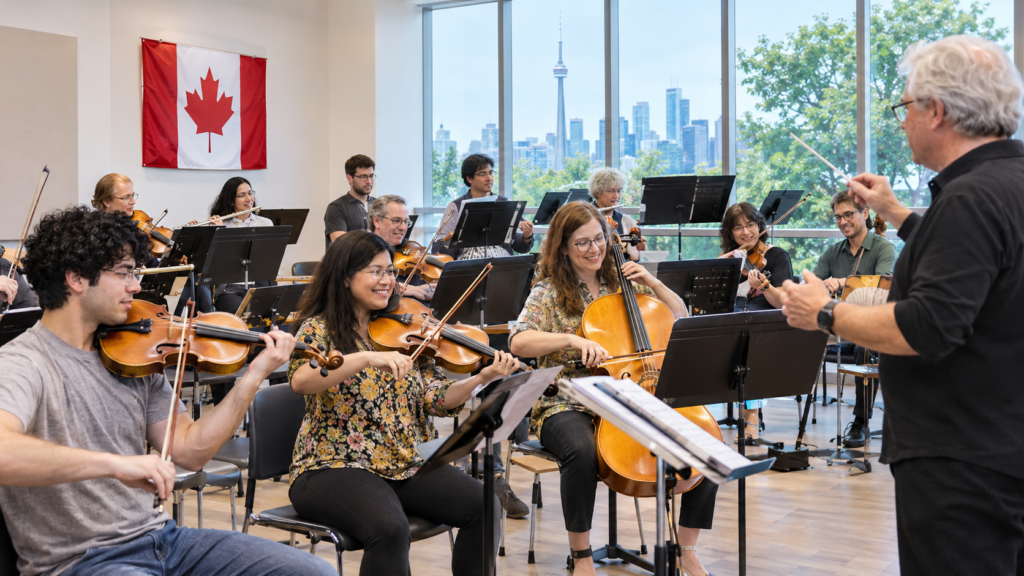
You take your instrument out of its case for the first time in years. A familiar tune comes back quickly, but playing it alone leaves a bigger question unanswered: could you keep your place when the rest of an orchestra comes in?
You don’t need to settle that question before contacting a group. Start by asking what its players are rehearsing and what it expects from someone in your section. Toronto community orchestras can differ in playing level, how they welcome new members and how much time they ask you to commit. The right fit is a part you can prepare and a rehearsal routine you can keep.
Ask About Your Instrument Before Preparing an Audition
An orchestra may be recruiting while the section you want is full. In your first message, name your instrument, describe your past ensemble experience and say how recently you started playing again. If you’re comfortable switching between related instruments, mention that too, but only offer to play something you can bring and prepare.
Ask whether there’s an opening for the current term, a waitlist or a better time to check back. Toronto Community Orchestra, a volunteer-run amateur ensemble that describes itself as mostly non-auditioned, says some woodwind and brass applicants may be asked for video samples. Its joining page also notes that players in those sections need to be comfortable with solo passages. Check the expectations for your instrument even if the group’s general description sounds like a match.
Judge the Playing Level From a Real Part
Years of lessons or a past exam grade can help explain your background, but neither tells you how an orchestral part will feel today. Ask for the name of a piece the group is rehearsing or, if it can share one, a representative excerpt from the part you might play.
Try reading a short passage without stopping. Then spend a few minutes on the difficult bars and try it again. Can you keep the pulse through a rest, enter at the right moment and recover after missing a note? A passage that improves noticeably after a little work tells you more about your readiness than a single rough run.
Look at the demands of the part as a whole. A string player might want to check how often the music shifts into unfamiliar positions. A wind player might look for exposed entrances after long rests. If the sample feels manageable but tiring, ask how much music the group typically gets through in one evening.
Find Out What the First Visit Is For
Ask whether the orchestra offers an observation visit, a rehearsal you can play in by arrangement or an audition. If you’re invited to observe, listen for how the conductor handles tricky passages and how players find their place after a stop. That can tell you whether the pace feels right even before you play a note.
If there’s an audition, ask for the current requirements before choosing music or making a recording. Confirm whether the group wants specific excerpts, pieces of your choice or a live reading. Orchestra Toronto, for example, asks interested players to contact its personnel manager about the audition waitlist. It also sets out expectations for rehearsal attendance, practice at home and helping with the organization.
If you’re invited to play at a rehearsal, ask where to sit and which music to bring. Getting the correct part ahead of time lets you spend your preparation on the music you’ll actually use.
Check the Whole Concert Calendar
A weekly rehearsal may fit your schedule while a concert or dress rehearsal does not. Ask for the dates and locations of performances before committing. If you already know you’ll miss a date, say which one and ask whether joining this term still makes sense. The answer may depend on whether another player can cover your part.
Plan the trip with your instrument in mind. A station close to the venue may still leave you with stairs, a long walk or a difficult transfer with a large case. Ask which entrance musicians use, how early you’re expected to arrive and whether performances are held somewhere else. Toronto Community Orchestra, for example, rehearses near Greenwood subway station and asks players to arrive ahead of the start time to set up and warm up.
Add Up the Cost of Returning
Ask when dues are payable and what they cover. Check for other commitments that affect the total. Orchestra Toronto, for instance, lists a membership fee as well as a minimum ticket purchase for each concert at member prices. That’s worth knowing before you compare its dues with those of another ensemble.
Then look at what you already own. If your instrument has been stored for years, find out whether it’s playable before promising a start date. Budget for any work it needs and for essentials such as replacement strings or reeds. Ask whether stands are provided before carrying one across town or buying one for rehearsals. If you’re weighing this against another regular activity, our guide to finding an affordable weekly hobby in Toronto can help you compare the full cost.
Give Yourself a Useful First Rehearsal
Before leaving home, mark a few places in the music where you can get back in if you lose your spot. Rehearsal letters, tempo changes and entries after long rests are good places to start. Bring a pencil and check whether the group expects printed music or allows a tablet.
During rehearsal, notice how easily you can hear your section and follow the conductor. If you miss an entrance, mark it and rejoin at the next place you recognize. Afterward, choose one passage to practise and one practical issue to resolve, such as getting the correct bowings or confirming which movement comes next.
The first rehearsal gives you something that practising at home can’t: a sense of how the group plays together. If you can see what to work on, enjoy the sound around you and make the next rehearsal without upending your week, you have a good basis for deciding whether to join.
Note: Openings, fees and rehearsal arrangements can change by term and instrument. For a local example of section requirements and what to include in an inquiry, see the volunteer-run Toronto Community Orchestra’s joining guide.