Walking into a dance hall alone can feel intimidating when you do not know the steps or recognize anyone. Toronto Contra Dancing offers a useful starting point because the activity involves a group, and a caller explains the movements.
You can arrive without a regular dance partner. Toronto Contra Dance welcomes solo participants, offers beginner instruction and describes partner changes between dances as part of the evening.
Before attending, check the event details and give yourself time to learn the basics. A manageable first visit is more valuable than trying to master every movement or stay until the final dance.
Understand What Contra Dancing Involves
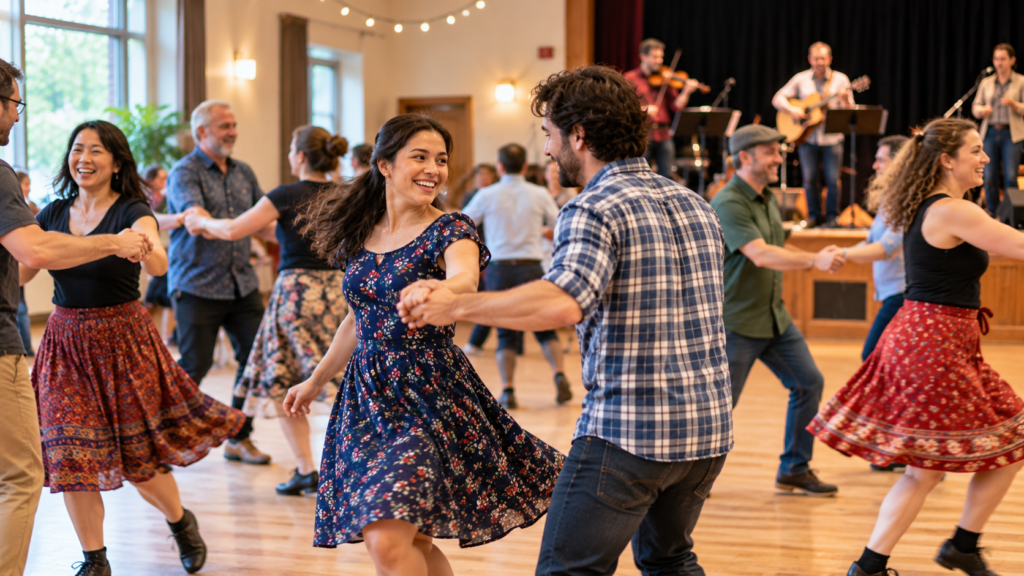
Toronto Contra dancing is a social dance built around repeating sequences performed with a partner and other people in a formation. You move through the pattern together while the caller gives instructions.
Toronto Contra Dance describes its events as featuring live music and a caller who leads participants through the steps. Each dance is taught before it begins.
Watching a short demonstration can make the format easier to recognize, but you do not need to memorize a routine beforehand. Your first task is to listen, notice where you are in the group and become comfortable moving with others.
Look specifically for contra dancing when choosing an event. English country dancing, square dancing and other social styles may appear in similar listings but have their own formats.
Confirm the Current Event Details
Use the organizer’s current schedule rather than an old event image or discussion post.
Check the date, venue, entrance, admission arrangements and beginner-session time. Read any event-specific participation requirements, including health precautions or restrictions on food and fragrances.
If you need step-free access, contact the organizer before travelling. Ask how to reach the hall and whether someone needs to assist with an entrance or lift.
Also plan your journey home. A venue close to a subway station may be convenient, but the final connection matters if you intend to stay late.
Save the event information on your phone so you can find the correct entrance without searching outside.
Arrive Before the Beginner Session
The introductory session gives you time to learn basic movements before the hall becomes busy.
Tell the welcome team that you are attending alone and have not danced contra before. Ask where to leave your belongings and how to join the lesson.
Pay attention to how the caller describes formations and where partners stand. If a term is unfamiliar, ask during a suitable pause rather than pretending you understood it.
You can also ask how beginners are paired with experienced dancers. Someone familiar with the pattern may help you settle into the first dance without requiring you to learn alongside another newcomer.
Avoid treating the opening lesson as optional simply because each dance also has a walk-through. The introduction gives you a useful foundation.
Bring Comfortable Indoor Shoes
Choose footwear that meets the venue’s requirements and feels secure on your feet.
Toronto Contra Dance asks participants to bring clean shoes to change into rather than wearing street shoes on its dance floor. Its guidance says comfortable, soft-soled shoes can be suitable; specialist dance shoes are not required.
Bring a bag for your outdoor footwear, especially during wet or snowy weather. Do not walk onto the floor with grit or moisture on your soles.
If you are unsure about a pair, ask the organizer before buying anything. Start with suitable footwear you already own and assess how it feels during the lesson.
Clothing should allow easy movement. Layers are practical because you may feel warm while dancing and cooler while sitting out.
Learn How to Ask Someone to Dance
You can make an invitation straightforward: “Would you like to dance?” Mention that you are new if you would appreciate an experienced partner.
Ask before the walk-through starts so you can hear the instructions together. If you cannot find a partner, approach the welcome team or organizer for guidance.
Accept a refusal politely and move on. Someone may be resting, waiting for a friend or simply choosing not to dance. You can decline invitations too.
Avoid interpreting each partner change as a social judgment. The format creates opportunities to dance with different people throughout the evening.
You do not need to arrange every dance in advance. Leave yourself room to rest, observe or decide what you feel ready to try.
Ask About Roles and Terminology
Dance roles describe positions and movements within the pattern. Ask which terms the event uses and how to choose a role for your first dance.
Toronto Contra Dance uses “lark” and “robin” and encourages participants to choose the role or roles they prefer, without assigning them by gender.
Before starting, confirm the role with your partner. If you become confused, say so early and ask the caller or an experienced dancer to clarify.
For your first few dances, staying with one role may make the patterns easier to recognize. You can explore another when you feel ready.
There is no need to demonstrate confidence you do not yet have. Clear communication helps everyone understand where to move.
Give the Walk-Through Your Attention
When the caller begins teaching, pause your conversation and follow the explanation.
Notice where the sequence starts, which people you interact with and how the formation changes. If you lose track, look for a safe opportunity to ask a brief question.
Once the music begins, keep movements simple. Extra turns and flourishes can wait until you understand the basic pattern and have agreed to them with the other person.
If you make a mistake, avoid rushing across the floor to correct it. Pause, listen and accept guidance about where to rejoin.
A missed movement does not require a long apology. Repeated explanations can distract you from the next instruction.
State Your Preferences Before the Dance
Contra dancing involves shared movement and physical contact. Tell your partner about preferences that affect how you want to dance.
You might say, “Gentle turns, please,” or “I’d prefer not to twirl.” Ask about their preferences as well.
Toronto Contra Dance’s code requires verbal consent before adding movements beyond those directed by the caller. It also makes clear that dancers can decline invitations and speak up about uncomfortable movement.
If someone asks you to stop a movement, stop immediately. Do not try to persuade them that it is easy or harmless.
Ask the welcome team how to identify an organizer if you need help addressing conduct.
Take Breaks Before You Need Them
You do not have to dance every set.
Bring water and use the pauses between dances to assess your energy. Sitting out gives you a chance to watch the formation and understand movements that felt confusing while participating.
If spinning makes you uncomfortable, discuss a gentler approach before the next dance. Stop if you feel unwell, dizzy or in pain.
Choose a modest first-night goal: attend the introduction, try a few dances and learn how the evening works. You can leave once you have had enough.
For help assessing travel and participation costs before making it a regular activity, see our guide to finding an affordable weekly hobby in Toronto.
Build Familiarity Through Small Conversations
Introduce yourself during a break and ask another participant how they began dancing. The shared activity gives you something concrete to discuss.
You can enjoy the evening without exchanging contact details or joining every conversation. If you return, recognizing a few faces may make the next visit feel more familiar.
Before leaving, thank anyone who helped you learn and check where future event updates are posted. Reflect on the parts you enjoyed and any practical issue you want to resolve before returning.
Your first evening can be successful even with missed steps. Understanding the format, finding a comfortable pace and feeling able to communicate are useful foundations for another visit.
Note: Schedules, admission arrangements, accessibility and participation policies can change. Confirm the details for the specific dance before attending. For a helpful community resource, review Toronto Contra Dance’s newcomer information and event guidance.