
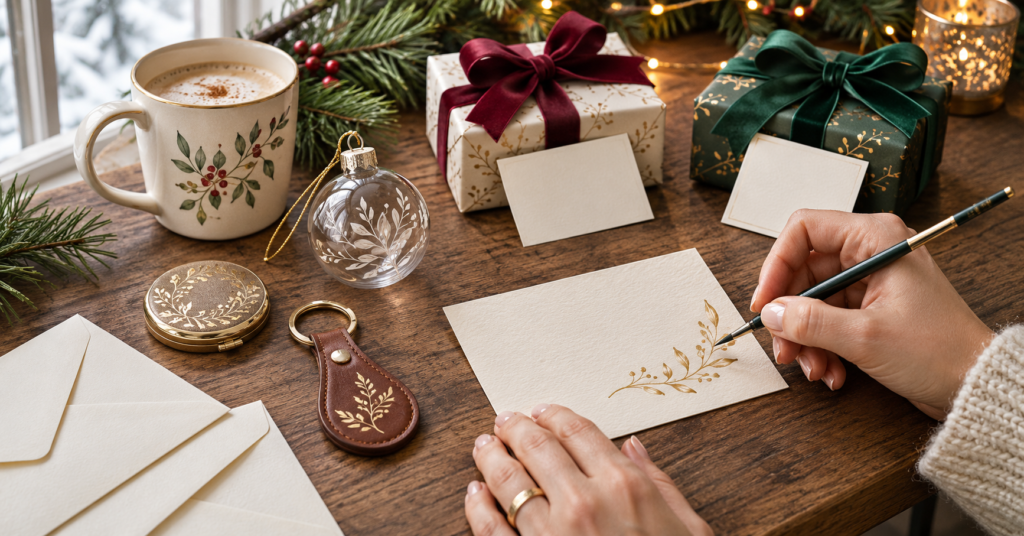
A handwritten message can make a simple gift feel personal, but ordering for several people introduces details that are easy to overlook. One recipient uses a shortened name, another prefers understated lettering, and a third would appreciate a useful everyday object more than a decorative keepsake.
Planning Toronto hand-lettered holiday gifts starts with a reliable recipient list. Decide what each person will receive, choose a suitable personalization method and make sure every message reaches the right recipient.
Build One List Everyone Can Follow
Use a spreadsheet or shared document with one row per recipient. Include the gift, exact personalization, lettering preferences and any presentation details.
Keep one person responsible for the final version and resolve conflicting suggestions before sending it.
Confirm Names and Spelling
Check preferred names, accents, initials and punctuation. Copy wording directly into the list instead of relying on a photograph of handwritten notes.
For couples or families, confirm the names and their order. Avoid assuming that everyone uses the same surname.
Separate Gift Text From Card Messages
Give the item’s wording and the accompanying card message separate fields. Include the card’s greeting and sign-off so the artist does not have to guess who is sending it.
Match the Personalization to the Recipient
Choose an object the person will enjoy using or displaying. A short name on a compact suits a different gift than a longer message inside a card.
Think about where the lettering will sit. A narrow keychain, curved bottle and flat jewelry box offer different amounts of space. Provide photographs and dimensions when discussing an item you already own.
Keep longer sentiments for a card when they would crowd the gift itself. Share a small number of style references, explaining whether you prefer delicate lettering, bold initials or a playful painted design.
Discuss the Available Techniques Before Buying Items
The material and desired finish help determine which personalization method is suitable. Contact the artist before purchasing a batch of identical gifts, particularly when the items have coatings, textures or limited writing space.
For Toronto shoppers assembling a recipient list, Nibs and Scripts offers custom engraving and etching on selected glass, metal, ceramic and plastic items. Options include perfume or liquor bottles, ornaments, mirrors, keychains, jewelry boxes, mugs, figurines, hair brushes and compacts.
Its handwritten customization options also include painted or handwritten designs and leather foiling, embossing, debossing and painting. Handwritten card messages can be added to cards purchased from the artist’s store or supplied by the client.
Send the list and item photographs through the contact page to discuss suitable techniques and available options. Confirm who supplies the objects and cards, along with the price for each part of the project, before purchasing materials or approving the work.
Approve the Wording and Placement Together
A correct name can still look different from what you imagined when placed on the finished object. Establish the intended position, approximate size, orientation and colour or finish alongside the wording.
Confirm what approval process is available. A written layout description, reference example or digital preview may serve different purposes; find out what is included rather than expecting a finished sample.
For several gifts, identify which details should remain consistent and which may vary. Record approval against the final list, and discuss how later spelling changes or added recipients would affect the agreed work and price.
Give Each Card a Message of Its Own
A personalized object can carry a name or initials, while its card explains why you chose it. Think of one detail that belongs to your relationship with the recipient: a shared memory, a particular kindness or something you appreciate about them.
For a colleague, a short thank-you for helping with a difficult project can feel more personal than a general seasonal greeting. For a relative, a familiar phrase may matter more than an elaborate message.
Write the complete text before submitting it. Include paragraph breaks where they help the message read naturally, and check that the wording fits the available card space.
When several people contribute to one gift, settle the sign-off together. Make it clear whether the card comes from named individuals, a household or a workplace team.
Keep Gifts Matched Through Collection and Wrapping
Request an easy way to match each finished item with its recipient and card. Removable packaging labels can help when several gifts look similar.
At handover, compare the items with the approved list before wrapping them. Keep any care instructions with the appropriate gift, and confirm whether protective packaging or presentation boxes are included.
Frequently Asked Questions
Can I order different gifts within one project?
Discuss the full combination before requesting a price. Different materials and techniques may need separate preparation, even when the wording follows one style.
Should I provide extra cards for handwritten messages?
Ask the artist how many cards are needed and whether spare blanks would be useful. Share the card size and finish before supplying them, and confirm whether envelopes are part of the requested work.
Can personalization include another language?
Provide the exact text and ask whether the artist can reproduce its script and characters. Have someone familiar with the language check the final wording before approval.
Note: Personalization options depend on the item’s material, surface and design. Confirm suitability, wording, pricing and care instructions with the artist before approving the commission.