
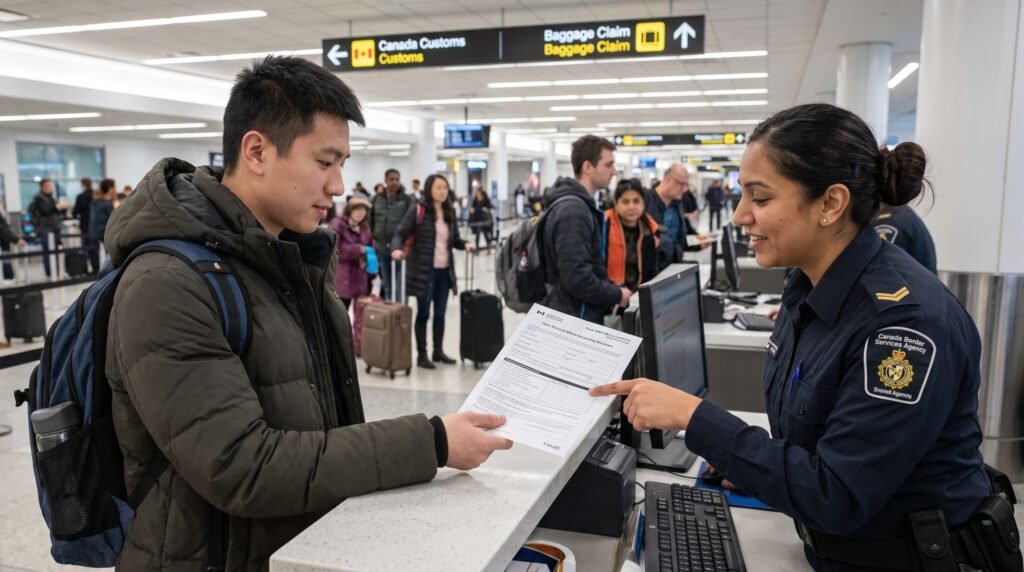
Moving to Toronto does not always mean bringing every belonging on the same flight. You might arrive with suitcases while furniture, books or household equipment remain abroad until accommodation is ready.
Those later arrivals require preparation before your first entry to settle in Canada. Toronto newcomer goods to follow are handled through federal customs rules, even when the shipment’s final destination is a Toronto home.
The important checks concern your eligibility, the inventory presented at the border and the records you retain for clearance later. A shipping company’s packing list can help organize the move, but it does not replace your responsibility to declare the goods correctly.
Confirm Which Customs Category Applies to You
“Newcomer” is a useful everyday description, but it does not determine your customs entitlement by itself.
The settler declaration on CBSA’s Personal Effects Accounting Document describes someone establishing a first permanent residence in Canada for more than 12 months. It also sets conditions concerning ownership, possession, use abroad and personal rather than commercial use.
Do not assume that every student, temporary worker, returning Canadian or person making an initial visit follows identical rules.
Explain your circumstances to CBSA if you are uncertain about your category or the timing of your move. An immigration document and eligibility for a particular customs exemption answer different questions.
Clarify this before arranging a shipment whose cost depends on duty- and tax-free treatment.
Separate Accompanying Goods From Later Arrivals
Prepare two clearly identified sections: belongings arriving with you and belongings that will follow.
The BSF186A continuation form specifically instructs people to list accompanying goods separately from goods arriving later. It includes spaces for descriptions, serial numbers where applicable and values in Canadian dollars.
Use headings that remain clear when pages are printed or separated. Number the pages and keep a complete copy for your records.
For example, your accompanying list might contain clothing and a laptop in your luggage. Your goods-to-follow list could identify books, kitchen items and furniture left at your previous home.
Check that an item has not accidentally appeared in both sections, especially if packing plans changed shortly before departure.
Make the Inventory Detailed Enough to Identify the Goods
Descriptions should help someone connect the later shipment to the original declaration.
CBSA’s settler guidance allows general household items to be grouped with an overall value, while requiring enough detail to avoid confusion, particularly for valuable belongings. Make, model and serial numbers should be included where possible.
“Kitchen utensils” may describe an ordinary household group. “Personal items” tells an officer much less about what a box contains.
List significant equipment individually. Photograph model labels and serial numbers before wrapping or packing them, when those details are accessible.
Create a working inventory early enough to check cupboards, storage areas and belongings held by relatives. Trying to reconstruct everything from memory at the airport makes omissions more likely.
Record Values Consistently
The inventory requires values, so leave time to prepare them rather than filling the column with unexplained guesses.
Record amounts in Canadian dollars and keep a note of how you estimated them. If you have receipts or other supporting information, organize those alongside the relevant entries.
Avoid mixing currencies without identifying them. A spreadsheet with a currency column and a separate Canadian-dollar value can help you check your calculations before printing the final list.
Ask CBSA for guidance if you are unsure how to value an unusual or significant item. Customs values and insurance replacement values should not automatically be treated as interchangeable.
Keep the submitted version separate from later working drafts so you can identify exactly what was declared.
Give Jewellery Its Own Attention
Jewellery can be difficult to distinguish using a short description.
CBSA recommends individually describing jewellery and using information from an insurance policy or appraisal, supported by appropriately dated and signed photographs.
Do this before items are packed away or handed to someone for later shipment.
For inherited pieces without a purchase receipt, ask what identification and supporting information would be suitable. Do not invent a purchase history to fill a gap.
Store photographs and descriptions securely. The aim is to identify the belongings accurately, not to circulate a detailed valuables list unnecessarily among everyone involved in the move.
Declare the List at Your First Canadian Entry
CBSA says you must present the goods list at your first point of entry, even when no goods accompany you. It also states that later goods qualify under your entitlement only if they appear on the original list.
For someone moving to Toronto through another Canadian airport or land crossing, that first entry may occur outside Ontario.
Keep the inventory with your travel documents rather than inside checked luggage. Federal newcomer guidance recommends bringing two copies of both lists.
Tell the border services officer that belongings will arrive later. Be ready to explain what they are and answer questions about your circumstances.
If something was omitted or your plans subsequently change, contact CBSA for instructions. Do not assume that editing your personal spreadsheet changes the declaration already recorded.
Keep the Completed Customs Documents
After accounting for the goods, retain the completed Personal Effects Accounting Document and associated inventory pages.
CBSA explains that the officer assigns a file number and provides a receipt copy. You need that copy when claiming free importation of unaccompanied goods later.
Check that you have the full set before storing it. Make readable digital copies as a backup, while keeping the documents issued to you safely.
Use a folder dedicated to the shipment so these records do not disappear among rental paperwork, banking documents and other arrival tasks.
If your documents use different versions of your name, our guide to newcomer name mismatches in Toronto can help you identify which records need clarification. Explain discrepancies before they complicate communication about the shipment.
Match the Shipping Inventory to Your Declaration
Before collection abroad, compare the final packing inventory with your declared goods-to-follow list.
Ask the person packing to identify which boxes contain individually listed items. Use consistent descriptions where practical and keep a record linking box numbers to contents.
Check for additions. Someone helping with the move might include newly purchased equipment or belongings that were never part of your inventory.
Also confirm that items removed from the shipment are reflected in your working records. This helps you explain differences without confusing the original declaration with what was actually shipped.
Arrange shipment timing with the applicable customs process in mind. CBSA’s settler guidance recommends making the goods’ arrival coincide with or follow the owner’s arrival.
Check Restrictions and Shipping Charges Separately
Appearing on the inventory does not make every item unrestricted or eliminate every expense.
CBSA warns that goods must still meet applicable import requirements. Vehicles and other regulated belongings can involve additional conditions.
Before packing food, plants, animal products or other potentially restricted items, check the relevant federal guidance.
Ask for a written explanation of transportation, handling, storage, clearance and delivery charges. Duty- and tax-free eligibility for qualifying belongings does not mean the entire shipment is free.
Finally, confirm where the goods will be delivered in Toronto and whether you can receive them. A clear customs file and a workable delivery plan address different parts of the move.
Helpful Government Resources
- CBSA: Moving or Returning to Canada: Eligibility, inventories and arrival declarations.
- BSF186: Personal Effects Accounting Document: The customs accounting form and declaration conditions.
- BSF186A: List of Imported Goods: Additional inventory pages.
- Prepare to Cross the Border as a Newcomer: Federal arrival-document guidance.
Note: Customs eligibility depends on your circumstances and the goods involved. Confirm current requirements with CBSA before travelling or shipping belongings. Listing an item does not guarantee duty-free treatment, exemption from import restrictions or freedom from shipping and handling charges.