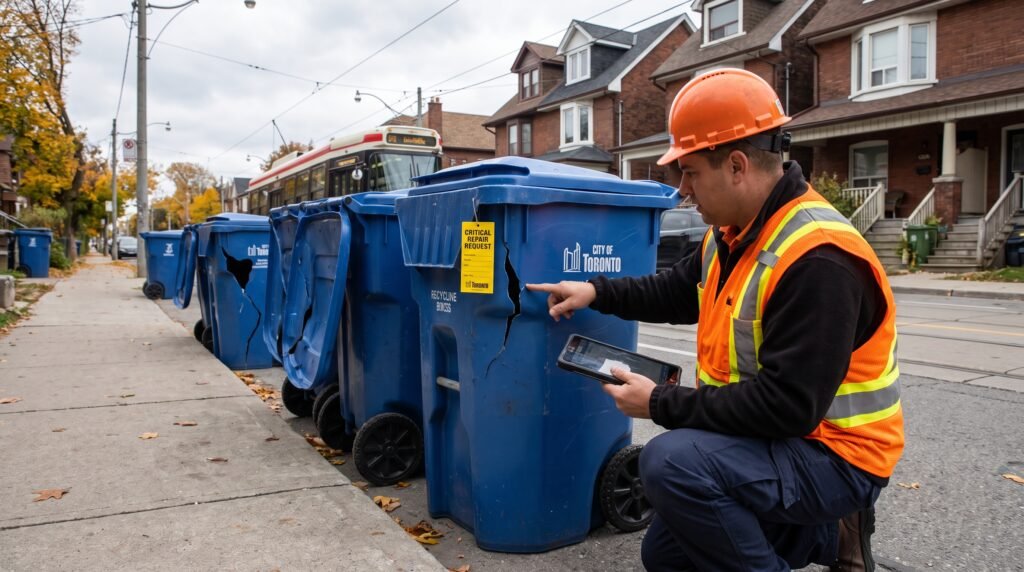
A broken wheel or cracked handle can turn taking out the garbage into an awkward weekly task. Before reporting the problem, check that you have the correct bin, can describe the damage clearly and know where to leave it for repair.
Toronto damaged garbage bins can involve several different requests. Repairing a container, finding a missing one and investigating uncollected waste each address a separate problem. Choosing the appropriate route helps you give staff the information they need without leaving an important issue unresolved.
Confirm That the City’s Repair Process Applies
Toronto’s residential repair process covers City-issued Garbage Bins and Green Bins for eligible houses and apartments above businesses receiving City collection. Repairs are free. Since January 1, 2026, blue-bin repair has been directed to the separate recycling program identified on the City’s page.
Check the container itself before completing a form. In everyday conversation, “garbage bin” can mean any waste container, but the reporting process distinguishes garbage, organics and recycling.
If you live in a building with shared containers, ask management who handles equipment problems. Describe which container is affected and where it stands rather than assuming that the household-bin process applies.
Match the Serial Number Before Reporting Damage
Find the serial number on the front of the bin and compare it with the number displayed in the repair form. Toronto instructs residents to report a missing bin if those numbers do not match.
Take a clear photograph of the number before submitting the request. This gives you something to consult if you need to discuss the problem later.
Read each character carefully. A worn label or dirty surface can make a number easy to mistype. If you cannot identify it, explain that when contacting 311 rather than entering a guess.
A handwritten address on the lid may help neighbours recognize a container, but it should not replace the serial-number check.
Describe the Damaged Part and Its Effect
The repair page separates lid, body or handle, wheel and metal-bar damage. Select the category that fits the problem.
Then describe what you can observe. “The left wheel has detached” is more useful than “the bin is broken.” For a handle problem, explain whether it is cracked, loose or missing.
Mention how the damage affects normal use. Does the lid fail to close? Does the bin tip when moved? Has a sharp edge become exposed?
You do not need to diagnose the repair. Avoid forcing a damaged component to demonstrate the fault. A photograph taken from a safe position can show the condition without making it worse.
If more than one part is damaged, include that detail in your description or ask 311 how to record it.
Choose a Repair Location Staff Can Find
Toronto asks residents to leave the bin on their property where it is accessible and visible from the street, rather than behind a gate or in the backyard. Give the exact location in the request.
Use a specific description such as “beside the driveway, immediately inside the front property line.” “Outside the house” may be unclear when several bins stand nearby.
Choose a position that does not obstruct pedestrian access, an entrance or a driveway. Keep the route to the container clear.
Tell other household members where it needs to remain. Otherwise, someone may return it to its usual storage area without knowing a repair visit is expected.
Follow the Front-of-Property Rule for Laneway Homes
Homes with laneway collection need particular care: the City’s repair instructions say to place the bin at the front of the property. On collection day, it can go to its collection location, then return to the repair position once emptied.
Plan how to move it before the appointment window, especially if the damaged wheel or handle makes transport difficult.
If you cannot safely reposition it, contact 311 and explain the access problem. Give the property layout and the component that prevents movement. Ask what arrangement is possible rather than leaving it somewhere different without updating the request.
Treat Uncollected Waste as a Separate Issue
A repair request does not automatically resolve waste left behind on collection day.
Toronto’s missed-collection guidance says residents should wait until the scheduled collection period has ended and report a missed pickup within one business day. Follow the set-out instructions associated with that request, including leaving waste at the usual collection point for laneway collection.
Record whether the entire bin was skipped or whether some contents remained. Check for any notice explaining the collection problem.
If repair and missed-pickup requests are both active, explain that to 311. Ask where the bin should stand so the instructions for one visit do not interfere with the other.
Check Whether the Bin Belongs to a Neighbour
A container found after collection may have been moved to the wrong property. Before reporting an unfamiliar bin, check with nearby neighbours.
Toronto has a wrong-delivery process for City-issued Garbage Bins and Green Bins that do not belong at your address. Its instructions require identifying information and preparation for pickup.
Do not treat an unexpected container as a replacement simply because it is the same size as yours.
Note its serial number and where you found it. If your own bin is also missing, explain both facts when reporting. This gives staff a clearer picture than submitting a damage report for whichever container happens to be outside.
Save the Request Details and Watch for a Notice
Keep the confirmation number, submission date, serial-number photograph and description of the repair location together.
Most repairs are completed within five business days. The City provides two attempts; if the first fails because staff cannot find the bin, it leaves a notice. If neither attempt results in repair or replacement, submit another request.
Read any notice carefully before following up. Check whether the bin was moved, hidden by another object or placed somewhere different from the location you supplied.
When contacting 311 again, explain what has changed. A corrected location or clearer damage description may be more useful than repeating the original report without additional information.
Inspect the Result Before Closing Your Records
Once work is completed, look at the component you reported. Check whether the lid closes and whether the bin can be moved normally without forcing it.
If the original problem remains, describe the remaining fault and refer to your earlier request. Keep any written response until the issue is resolved.
There is no need to assume how staff should repair the container. Focus on whether the reported problem has been addressed and whether you need further instructions.
Helpful City Resources
- Request Residential Bin Repair: Eligibility, damage categories and repair preparation.
- Report a Missing Bin: Instructions when your Garbage Bin or Green Bin cannot be found.
- Report Missed Waste Collection: Reporting deadlines and collection-point instructions.
- Report a Wrong Delivery of a Bin: Steps for a container that does not belong at your address.
Note: Collection responsibilities and repair procedures can change. Check the current City instructions for your container and property type. Contact 311 if damage prevents safe movement or if simultaneous repair and collection requests give you conflicting placement instructions.