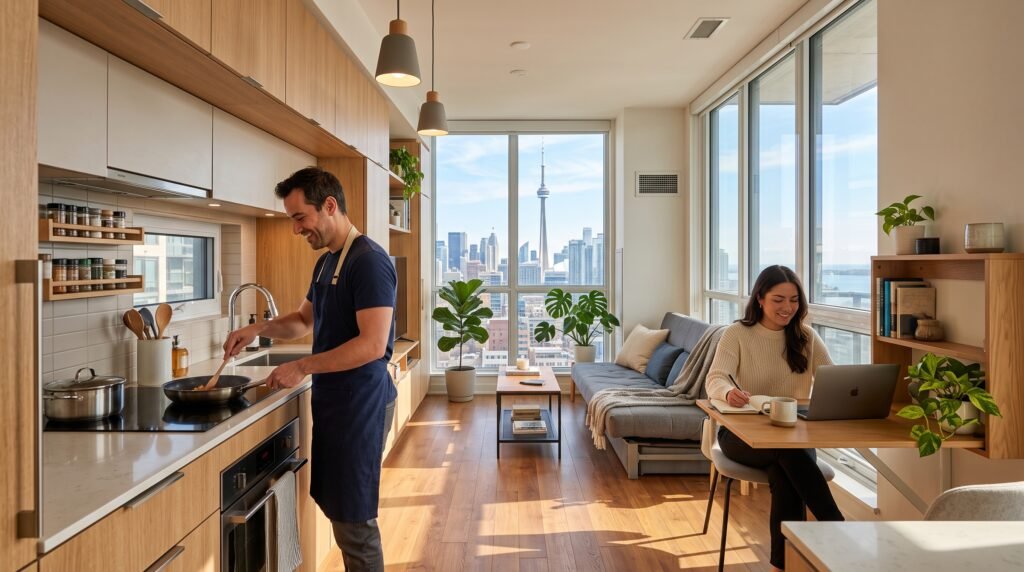
A small Toronto apartment can provide everything you need, but limited floor space may make it difficult to create separate areas for sleeping, working, eating and relaxing. Winter clothing, household supplies and work-from-home equipment can quickly make the apartment feel crowded.
Making a small Toronto apartment feel like home does not require expensive furniture or permanent renovations. Thoughtful organization, flexible room layouts and a few personal details can make a rental feel more comfortable without creating problems with your landlord or lease.
The goal is not to make the apartment appear enormous. It is to make the available space work better for your daily life.
Begin With How You Use the Apartment
Decorating should come after you understand what the apartment needs to support.
Think about your normal week. Do you work from home? Cook regularly? Exercise indoors? Host friends? Need space for a pet? Store sports equipment or several seasons of clothing?
List the activities that matter most and give them priority.
| Personal need | Possible space solution |
| Working from home | Small desk or defined section of a table |
| Cooking frequently | Accessible storage for daily ingredients and tools |
| Exercising indoors | Clear floor area that can be opened temporarily |
| Hosting friends | Flexible seating that is easy to move |
| Studying | Quiet corner with appropriate lighting |
| Seasonal storage | Containers placed under furniture or on upper shelves |
| Hobbies | One organized cabinet, shelf or portable container |
A person who rarely hosts visitors may not need a large dining table. Someone who works remotely should not treat the workspace as an afterthought.
Plan around your actual habits rather than an imaginary lifestyle.
Measure Before Buying Anything
Furniture can appear smaller in a store or photograph than it will inside your apartment.
Measure:
- The length and width of each room
- Ceiling height
- Doorways
- Hallways
- Elevator dimensions
- Window placement
- Baseboard heaters and vents
- Closet interiors
- The distance needed to open doors and drawers
Record the measurements on your phone so they are available when you are considering an item.
Use painter’s tape to mark the dimensions of a potential table, sofa or desk on the floor. Walk around the outline and check whether doors, pathways and cabinets can still open comfortably.
An item that technically fits may still be too large if it makes moving through the room difficult.
Divide the Apartment Into Functional Zones
A studio or small one-bedroom apartment may need the same room to serve several purposes.
Create visual zones for different activities:
- Sleeping
- Working
- Eating
- Relaxing
- Storage
- Entry and departure
You do not need walls to create separation. Furniture placement, rugs, lighting and changes in colour can help identify each area.
For example, a desk facing a wall can establish a work zone, while a rug and floor lamp can define the seating area. A bookcase may provide partial separation between a bed and living space, provided it is stable and does not block light, ventilation or an exit.
Keep pathways clear. A room should feel organized rather than divided into several cramped sections.
Give Every Area a Clear Purpose
Small apartments become cluttered when every surface is used for several unrelated activities.
Try to assign a primary purpose to each area. The dining table may also serve as a workspace, but it should not become permanent storage for unopened mail, clothing and household supplies.
Create a short reset routine when one activity ends. Put the laptop away before dinner, return exercise equipment after a workout and clear the sofa before relaxing.
The furniture does not need to have only one use. The space simply needs to transition deliberately.
Choose Furniture That Fits the Room
Large furniture can overwhelm a small apartment and reduce useful floor space.
Look for pieces that are appropriately scaled and serve more than one function. Examples include:
- A bed with space underneath
- An ottoman with internal storage
- A desk that can also function as a small dining table
- Nesting tables
- Folding chairs
- A narrow entry bench with storage
- A sofa with a suitable sleeping option for guests
- Stackable stools
- A wall-mounted drop-leaf surface, where permitted
Multi-purpose furniture is only useful when each function works well. A large storage sofa that blocks a doorway is not a good choice simply because it contains compartments.
Avoid filling the apartment immediately. Live in the space long enough to understand what is genuinely missing.
Use Vertical Space Carefully
Walls and upper areas can provide storage without consuming as much floor space.
Possible options include:
- Tall bookcases
- Over-door organizers
- Wall hooks
- Floating shelves
- Upper kitchen shelves
- Stacking containers
- Closet shelf dividers
Renters should review the lease and obtain permission before drilling, mounting heavy items, painting or making other alterations. Use installation methods appropriate for the wall type and weight of the object.
Tall furniture should be stable. Secure it where necessary and permitted, particularly in homes with children or pets.
Do not place heavy objects on high shelves where they could fall. Frequently used items should remain easy to reach.
Make Better Use of Closets
A small closet can hold more when it is organized around the items you actually use.
Begin by emptying the closet and grouping similar belongings. Separate clothing, shoes, luggage, cleaning supplies and seasonal items.
Then consider:
- Adding a second hanging level where suitable
- Using shelf dividers
- Storing shoes vertically
- Placing less-used items on the highest shelf
- Using the back of the door
- Keeping similar items together
- Labelling closed containers
Avoid buying storage containers before deciding what needs to be stored. Otherwise, you may simply create organized-looking clutter.
Leave some open space when possible. A closet packed completely full becomes difficult to use and may cause you to forget what you own.
Rotate Clothing by Season
Toronto residents may need winter coats, boots, sweaters, rainwear and summer clothing. Keeping everything equally accessible throughout the year can overwhelm a small closet.
At the end of each season:
- Wash and dry clothing completely
- Repair items before storing them
- Donate or dispose of items you no longer use
- Store off-season pieces in clean containers
- Keep transitional clothing accessible
- Label containers clearly
Avoid storing damp clothing or footwear because trapped moisture can create odours or damage.
Under-bed space, upper closet shelves and luggage can hold off-season items. Do not block radiators, heating equipment, vents or exits.
Control the Entryway
The entrance often becomes the most cluttered part of a small apartment because shoes, coats, bags, keys and mail arrive there.
Create a simple landing area with:
- A hook or designated place for keys
- A small container for important mail
- A limited area for everyday shoes
- Hooks for frequently used coats and bags
- A tray for wet footwear
- A waste or recycling routine for unwanted paper
Store only the shoes and outerwear needed for the current season near the entrance. Move less-used items elsewhere.
A clear entryway makes the entire apartment feel calmer and helps prevent forgotten keys or documents.
Keep the Kitchen Focused on Daily Use
Limited kitchen counters can quickly disappear beneath appliances, food packages and dishes.
Keep the most frequently used items accessible and move occasional items elsewhere. A person who makes coffee every morning may reasonably leave the coffee equipment on the counter. A large appliance used twice a year does not need permanent counter space.
Group kitchen items by purpose:
- Daily cooking
- Baking
- Food storage
- Coffee and tea
- Cleaning
- Lunch preparation
Use cabinet doors, shelves and drawers efficiently without overloading them. Store heavier items lower and avoid stacking objects in unstable arrangements.
Regularly check food expiry dates. Small kitchens lose valuable storage when cabinets contain ingredients no one plans to use.
Keep Surfaces Mostly Clear
A few clear surfaces can make a small apartment feel more spacious and easier to maintain.
Choose a limited number of items for display. Everyday belongings should have a consistent storage location.
A practical approach is to keep each major surface no more than partly occupied. This leaves room to prepare food, place a drink or complete a task without moving several objects first.
Clear surfaces also make cleaning faster. When basic maintenance takes less time, the apartment is easier to keep comfortable.
Use Lighting to Create Warmth
Rental apartments may rely heavily on one ceiling fixture, which can make the space feel harsh or unfinished.
Use different sources of light for different needs:
- General lighting for the room
- Task lighting for working, reading or cooking
- Softer lighting for relaxing
- Bedside lighting
- Natural daylight where available
Position mirrors carefully to reflect natural light, but avoid creating glare at a desk or television.
Keep windows as unobstructed as practical. Heavy furniture placed directly in front of a window may reduce light and make the apartment feel more enclosed.
Renters should avoid changing electrical fixtures without permission and appropriate expertise.
Create a Work-From-Home Area
Remote work can make a small apartment feel like an office that never closes.
Choose one defined place for work, even if it is only part of a table. Keep work equipment together so it can be removed or covered at the end of the day.
A practical workspace should consider:
- Comfortable seating
- Adequate lighting
- Access to electrical outlets
- Video-call background
- Noise
- Storage for documents
- Separation from sleep where possible
Avoid working from bed regularly. It can blur the distinction between rest and employment.
At the end of the workday, close the laptop, store documents and clear work-related items. A short physical reset can help the apartment return to being a home.
Make the Sleeping Area Feel Separate
A studio apartment may not have a separate bedroom, but the sleeping area can still feel distinct.
Possible approaches include:
- Positioning the bed away from the main entrance
- Using a rug to define the area
- Placing a stable open bookcase nearby
- Using curtains where installation is permitted
- Keeping work equipment out of the sleeping zone
- Choosing different lighting for the bed area
Do not use a divider that blocks the only exit, interferes with airflow or creates a fire hazard.
Making the bed each morning can also help the room transition from sleep to daytime use.
Add Personal Details Gradually
A rental begins to feel like home when it reflects the person living there.
Personal touches might include:
- Family photographs
- Artwork
- Books
- Cultural objects
- Travel memories
- Textiles
- Plants suitable for the available light
- A few meaningful decorative items
You do not need to cover every wall or shelf. A smaller number of meaningful objects often has more impact than filling the apartment with generic decorations.
Add items gradually. Your preferences may change after you understand the apartment’s light, layout and daily rhythm.
Use Colour Without Overwhelming the Space
Light colours can help reflect natural light, but a small apartment does not have to be completely white.
Introduce colour through items that are easy to move or replace, such as:
- Cushions
- Bedding
- Rugs
- Artwork
- Towels
- Curtains
- Small decorative objects
Using a limited colour palette can help different areas feel connected. Too many competing colours and patterns may make a small room feel visually crowded.
Ask the landlord before painting. Even when painting is permitted, you may be required to restore the original colour before moving out.
Manage Visual Clutter
Clutter is not only the number of objects you own. It also involves how much information the room presents at once.
Open shelving can be useful, but displaying every household item may make the room feel busy. Use a combination of open and closed storage.
Group similar objects rather than spreading them throughout the apartment. For example, keep books together and place personal-care items in one area.
Containers with similar colours or materials can create a calmer appearance, but do not buy containers merely to hide belongings you no longer need.
Declutter in Small Categories
Trying to organize the entire apartment in one day can become overwhelming.
Work through one narrow category at a time:
- Expired food
- Unwanted mail
- Old toiletries
- Clothing that no longer fits
- Extra kitchen tools
- Broken electronics
- Unused bedding
- Empty boxes
- Duplicate household supplies
Use four possible decisions:
| Decision | Meaning |
| Keep | You use or value the item |
| Relocate | It belongs somewhere else in the apartment |
| Donate or give away | It is usable but no longer needed |
| Recycle or dispose | It is damaged, expired or unsuitable for reuse |
Check the City of Toronto’s waste guidance before disposing of electronics, hazardous materials or other items that should not go into ordinary garbage.
Decluttering should not involve throwing away important records, immigration documents, tax information or items belonging to another household member.
Avoid Using the Balcony as General Storage
A balcony may appear to offer valuable extra space, but it should not become a crowded storage room.
Building rules may limit what can be placed on balconies. Items must also be secured against wind and should not create a fire or falling-object hazard.
Keep the balcony exit clear. Avoid storing flammable materials, broken furniture or unstable objects.
Barbecue rules depend on building policies, condominium bylaws and safety conditions. The City of Toronto’s balcony barbecue guidance explains that building owners or condominium rules may prohibit balcony barbecues.
Review your building’s rules before adding furniture, planters, screens or cooking equipment.
Protect Fire Safety
Storage and decorating decisions should never block escape routes or safety equipment.
Keep hallways, doors, windows used for emergency escape and building exits clear. Do not cover sprinklers, smoke alarms, carbon monoxide alarms or electrical panels.
Toronto landlords are responsible for installing and maintaining required smoke alarms. Tenants must not disable them and should notify the landlord when an alarm is not working properly. Toronto Fire Services provides official smoke alarm information for tenants and landlords.
Learn your building’s fire procedures, especially in a high-rise. Know:
- Where the stairs are
- Which exits are available
- What the building alarm sounds like
- Where the designated meeting area is
- What instructions apply when a fire occurs in another unit
A visually attractive apartment is not successful if the layout creates a safety risk.
Improve Privacy Without Permanent Changes
Small apartments can feel exposed, particularly when windows face another building or multiple household members share a limited space.
Privacy may be improved with:
- Curtains or blinds
- Furniture placement
- Rugs and soft materials that reduce sound reflection
- Headphones
- Agreed quiet periods
- Portable screens
- Separate storage areas for each person
Obtain permission before installing window coverings or wall-mounted dividers.
Roommates and partners should discuss work calls, sleep schedules, visitors and shared-space expectations. Furniture cannot solve every privacy issue when household boundaries are unclear.
Reduce Noise Where You Can
Toronto apartments may experience traffic, construction, hallway sounds and noise from neighbouring units.
Soft materials can reduce some sound inside your own apartment. Rugs, curtains, upholstered furniture and fabric wall hangings may reduce echo.
Place a work area or bed away from a shared wall where possible. Avoid positioning speakers directly against a neighbouring unit.
Reasonable apartment living requires consideration from everyone. Keep music, television and conversations at an appropriate volume, particularly during quiet hours.
Report persistent building-related noise or maintenance concerns through the proper building or City process rather than confronting someone aggressively.
Keep Cleaning Manageable
Small apartments can become untidy quickly, but they can also be cleaned relatively efficiently when surfaces remain clear.
A simple weekly routine might look like this:
| Day | Short task |
| Monday | Clear mail and entryway clutter |
| Tuesday | Clean kitchen surfaces |
| Wednesday | Laundry and clothing reset |
| Thursday | Clean bathroom |
| Friday | Vacuum or sweep floors |
| Saturday | Change bedding and complete deeper tasks |
| Sunday | Return misplaced items and prepare for the week |
Daily five-minute resets can prevent a large cleaning session later. Focus on the kitchen, bathroom, floors and frequently touched surfaces.
Tenants are generally responsible for ordinary cleanliness, while landlords must maintain the property and complete required repairs. The City of Toronto’s housing property standards information explains how tenants can report unresolved maintenance concerns.
Do Not Hide Maintenance Problems With Decorating
Furniture and decorations should not be used to cover water damage, mould, pests, unsafe wiring or other building problems.
Document the issue and notify the landlord or property manager in writing. Include photographs, dates and a clear description.
Avoid placing furniture directly against a damp wall or blocking access to a leaking area. Hiding the problem may allow damage to become worse.
Toronto property owners are required to repair and maintain rental properties. Tenants can contact 311 when a reported property-standards issue is not resolved appropriately.
Make Changes Within a Realistic Budget
A comfortable apartment does not need to be completed in one shopping trip.
Prioritize items according to need:
- Safety
- Sleep
- Food preparation
- Work or study
- Clothing storage
- Seating
- Decoration
Buy only after measuring and deciding where the item will go. An inexpensive purchase is not a saving when it creates more clutter or needs to be replaced quickly.
Consider whether you can repair, rearrange or repurpose something you already own before adding another item.
A Seven-Day Apartment Reset Plan
The following plan can make improving a small apartment more manageable.
| Day | Main task |
| First day | Identify the activities the apartment must support |
| Second day | Measure rooms, closets and furniture |
| Third day | Remove obvious rubbish, expired items and empty boxes |
| Fourth day | Organize the entryway and current-season clothing |
| Fifth day | Clear kitchen and bathroom surfaces |
| Sixth day | Create sleeping, working and relaxation zones |
| Seventh day | Add a few personal details and review what is still missing |
Do not purchase storage or furniture until the decluttering and measuring stages are complete.
Frequently Asked Questions
How can I make a small Toronto apartment look bigger?
Keep pathways and windows clear, use appropriately scaled furniture, reduce visual clutter and add several sources of light. The goal should be comfortable function rather than only creating the appearance of more space.
What furniture works well in a small apartment?
Furniture that fits the room and serves more than one useful purpose can work well. Examples include beds with accessible storage, folding chairs, nesting tables and appropriately sized desks.
Can a Toronto tenant paint an apartment?
Review the lease and ask the landlord before painting. Permission and restoration requirements can vary between rental properties.
How can I store winter clothing in a small apartment?
Clean and dry off-season items before placing them in labelled containers. Use upper closet shelves, under-bed space or empty luggage without blocking vents or exits.
How do I create a home office in a studio apartment?
Designate one consistent work surface, use suitable lighting and keep work supplies together. Put equipment away at the end of the day so the apartment does not always feel like an office.
Can I use my apartment balcony for storage?
Building rules may restrict balcony storage. Items should never block an exit, create a fire hazard or risk falling. Review the lease and building policies before using the balcony.
Who is responsible for repairs in a Toronto rental?
Landlords are generally responsible for maintaining the rental property and completing required repairs. Tenants should report problems promptly and are responsible for ordinary cleanliness and damage they or their guests cause beyond normal wear.
How can I decorate without damaging the rental?
Use movable decorations and obtain permission before drilling, painting or mounting heavy items. Follow the lease and choose installation methods appropriate for the wall and object.
Note: This article provides general lifestyle and rental information and is not legal, fire-safety or property-management advice. Lease conditions, building rules, permitted alterations and maintenance responsibilities can vary between properties and personal circumstances. City requirements may also change. Review your lease, obtain permission before making alterations and confirm current information with your landlord, property manager, the City of Toronto or an appropriate professional.