
Toronto can be an expensive place to live, but managing a limited budget does not require spending every evening at home or giving up everything you enjoy. The key is to control the largest recurring expenses while using the public spaces, programs and resources already available throughout the city.
Learning how to live in Toronto on a budget begins with understanding where your money goes. Rent, transportation and food usually deserve more attention than occasional small purchases because changes in these categories can affect your finances every month.
A practical budget should leave room for enjoyment. A plan that removes every social activity or personal interest may look effective on paper but can be difficult to maintain.
Start With Your Actual Take-Home Income
Build your budget around the amount deposited into your account after income tax and other payroll deductions.
Do not create a spending plan using gross salary because that money is not entirely available for rent, groceries and other expenses.
Include all reliable sources of income, such as:
- Employment income
- Regular self-employment income
- Government benefits
- Consistent financial support
- Other dependable monthly income
Treat overtime, bonuses, tips and unpredictable freelance earnings carefully. Depending on irregular income to pay fixed expenses can create a shortage when work slows down.
Someone with variable income may want to base essential spending on a conservative monthly estimate and save part of any higher-earning month.
Separate Essential and Flexible Expenses
Begin by reviewing recent bank and credit card statements. Divide spending into essential, flexible and irregular categories.
| Category | Examples | Budget approach |
| Essential | Rent, basic groceries, transportation and medication | Protect these first |
| Flexible | Dining out, entertainment, clothing and subscriptions | Set reasonable limits |
| Irregular | Dental care, gifts, repairs and annual fees | Save a small amount monthly |
| Financial goals | Emergency savings and debt repayment | Treat them as planned expenses |
An expense can be important without being fixed. Groceries are essential, but the amount may change according to where you shop and how much food is wasted.
Do not label every current expense essential simply because you are accustomed to paying it.
Focus on Housing Before Small Purchases
Housing is usually the largest expense in a Toronto budget. Saving a few dollars on coffee will not offset an apartment that is several hundred dollars beyond what you can comfortably afford.
When choosing housing, compare:
- Monthly rent
- Included utilities
- Transportation costs
- Laundry
- Internet
- Parking
- Storage
- Commuting time
- Likely rent increases
An apartment with lower rent may not be less expensive overall if it requires a long commute, frequent ride-hailing trips or separately billed utilities.
Sharing a home can reduce individual housing costs, but roommate compatibility, privacy and lease arrangements should be considered carefully. Do not agree to an informal arrangement without understanding payment responsibilities and building rules.
Avoid Moving Only for a Small Rent Difference
Moving can involve transportation, deposits, furniture, utility changes, cleaning and time away from work.
Calculate how long it would take for the lower rent to recover the total moving cost.
For example, saving $100 per month may seem helpful, but a move costing $1,500 would take 15 months to recover before producing actual savings.
A move may still make sense for safety, space, commute or quality-of-life reasons. The point is to consider the complete financial picture rather than comparing rent alone.
Build a Grocery Routine
Food spending becomes difficult to control when every meal is decided at the last minute.
Create a flexible weekly plan using ingredients you already have. You do not need to assign a different recipe to every day. Plan a few meals that share ingredients and leave space for leftovers.
A simple approach might include:
- One large meal that provides leftovers
- One quick meal for a busy evening
- One meal using freezer or cupboard ingredients
- Basic breakfast options
- Prepared lunches for work
- One planned restaurant or takeout meal, if affordable
Check your refrigerator, freezer and cupboards before shopping. Repeatedly buying products you already own ties up money and increases food waste.
Compare Unit Prices, Not Only Package Prices
A larger package may offer a lower cost per unit, but it is not a saving when part of the food expires.
Compare:
- Price per kilogram
- Price per litre
- Price per 100 grams
- Number of usable portions
- Storage space
- Likelihood that the household will finish it
Single-person households may sometimes spend less overall by choosing a smaller package, even when the unit price is slightly higher.
Bulk purchasing works best for products you use consistently and can store safely.
Create an “Eat First” Area
Dedicate one part of the refrigerator to food that should be used soon.
This area might include:
- Opened ingredients
- Leftovers
- Produce nearing the end of its useful life
- Dairy products approaching their date
- Partially used sauces
- Cooked food intended for lunch
Check this section before deciding what to cook or ordering takeout.
Preventing one or two wasted meals each week can reduce grocery spending without requiring a lower-quality diet.
Reduce Unplanned Takeout
Takeout can be helpful after a long day, but repeated ordering can become one of the largest flexible expenses.
Keep a few simple meals available for evenings when you do not want to cook. Options might include frozen portions of previous meals, eggs, soup, pasta or other foods suited to your preferences.
Decide in advance how frequently takeout fits your budget. A planned restaurant meal is easier to manage than several unplanned orders triggered by having no food ready.
Delivery charges, service fees, taxes and tips can make the total much higher than the listed food price.
Bring Food and Drinks From Home
Buying lunch and coffee every workday can create a significant monthly expense.
You do not need to prepare elaborate meals. Leftovers, sandwiches, fruit, snacks and a refillable water bottle may be enough.
Start with two or three packed lunches per week if preparing food every day feels unrealistic.
The goal is not to eliminate every purchased coffee or lunch. It is to make the expense intentional rather than automatic.
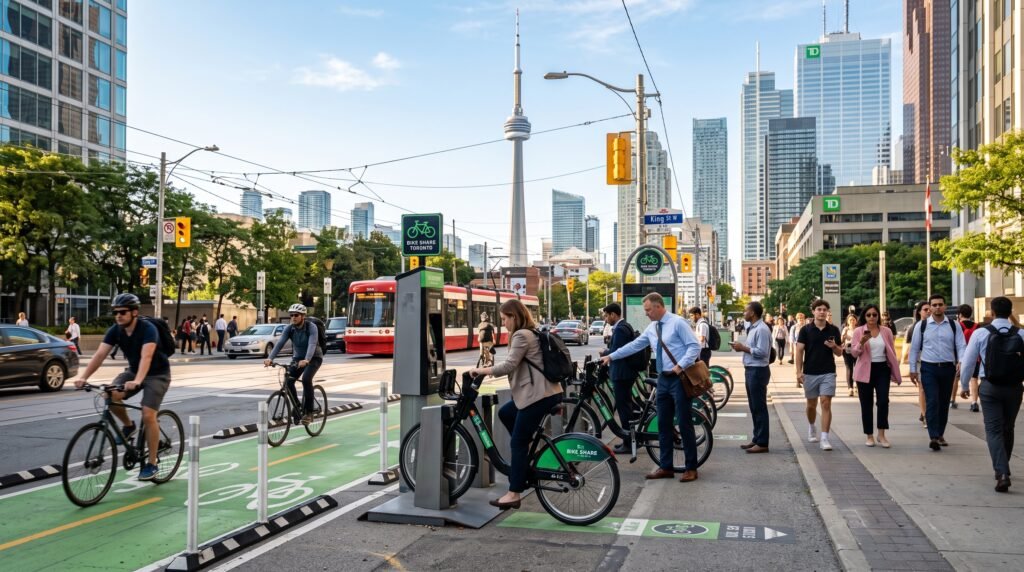
Choose the Right TTC Payment Approach
Transportation costs depend on how frequently you travel.
Someone who works remotely and uses the TTC occasionally may spend less by paying per trip. A frequent commuter should review the current fare options and discount programs.
Beginning September 1, 2026, the TTC’s monthly fare-capping program allows eligible riders to receive additional TTC trips without further charges after completing 47 paid trips in a calendar month. Riders must consistently use the same eligible PRESTO card or payment method for trips to count toward the cap.
Review the official TTC fare-capping information because requirements and trip limits may change.
Track how often you actually ride rather than assuming that one payment method is automatically cheapest.
Check Whether You Qualify for the Fair Pass Discount
Eligible low-income Toronto residents may qualify for reduced TTC fares through the Fair Pass Transit Discount Program.
Eligibility depends on factors that include age, Toronto residency, income and other program requirements. Applicants must provide the required documentation.
Review the City’s current Fair Pass Transit Discount Program information rather than assuming you qualify.
People using a youth, senior or Fair Pass fare should use the correct payment method and ensure the appropriate fare type is set.
Walk for Suitable Short Trips
Walking can reduce transportation spending while adding physical activity to the day.
Consider walking when:
- The destination is reasonably close
- The route is safe
- Weather conditions are suitable
- You are not carrying heavy items
- Time allows
- The trip fits your health and mobility needs
Combine errands in the same neighbourhood. One planned trip to the library, grocery store and pharmacy may cost less and take less time than making three separate journeys.
Walking is not practical for every resident or every season. Budgeting advice should account for disability, safety, caregiving and work schedules.
Plan Ride-Hailing Use
Ride-hailing can be useful late at night, during emergencies or when public transportation is not practical. Problems arise when it becomes the default for trips that could have been planned differently.
Set a monthly limit where possible and reserve it for situations that provide meaningful value.
Before requesting a ride, consider:
- Current TTC options
- Whether the trip can be delayed
- Whether the destination is walkable
- Whether costs can be shared appropriately
- Whether combining errands would eliminate another trip
Safety should come before savings. Do not choose an unsafe route or remain in a dangerous situation simply to avoid transportation costs.
Use Your Toronto Public Library Card Fully
A Toronto Public Library card provides more than access to printed books.
Depending on current availability and eligibility, cardholders may have access to:
- Books and audiobooks
- Digital materials
- Newspapers and magazines
- Public computers
- Internet access
- Classes and workshops
- Cultural and educational programs
- Digital Innovation Hubs
- Study and workspaces
- tpl:map cultural passes
The library’s tpl:map program allows eligible adult cardholders to reserve free passes to participating museums, cultural experiences and attractions, subject to availability and program rules.
Popular passes may be limited. Treat availability as an opportunity rather than building an entire plan around receiving a particular pass.
Replace Some Paid Entertainment With Public Programs
Toronto offers free and lower-cost ways to spend time outside the home.
Options may include:
- Public parks
- Trails
- Library events
- Community-centre activities
- Public skating
- Free swimming at selected facilities
- Public exhibitions
- Neighbourhood events
- Outdoor exercise equipment
- Volunteer activities
Free does not mean worthless or only suitable for people experiencing financial difficulty. Public programs are funded and maintained so residents can participate in city life.
Check schedules and registration requirements before travelling.
Review Free and Lower-Cost Recreation
The City offers free drop-in programs at selected locations, free recreation centres, subsidies and certain age-based discounts.
The official free and lower-cost recreation page explains current options.
Available activities vary by season and facility. Some require registration, while others operate on a drop-in basis.
Compare the distance and transportation cost as well as the program fee. A free activity requiring an expensive or lengthy trip may not be the best option when a low-cost program is available nearby.
Apply for the Welcome Policy When Eligible
Toronto’s Welcome Policy provides a recreation fee subsidy for eligible residents.
Approved participants receive a financial credit that can be used toward eligible City-operated recreation programs, memberships and other activities. Eligibility, documentation and available credit may change.
Review the current Welcome Policy requirements before applying.
Do not avoid a useful program because you assume assistance is unavailable. Check the actual rules first.
Socialize Without Making Every Plan Expensive
Friendship does not have to revolve around restaurants, bars or paid entertainment.
Lower-cost social plans can include:
- Walking in a park
- Meeting for coffee instead of dinner
- Sharing a homemade meal
- Visiting a library program
- Attending a public event
- Exercising together
- Hosting a film or game evening
- Exploring a different neighbourhood on foot
Be honest without giving a long financial explanation. You could say:
I am keeping my spending lower this month. Would you like to go for a walk and get coffee instead?
Friends may appreciate an affordable alternative, especially when they are also managing Toronto’s living costs.
Set a Separate Social Budget
Completely eliminating social spending may lead to isolation or repeated unplanned spending after the budget feels too restrictive.
Choose an amount that fits your income and priorities. Use it for the activities you value most.
For example, you might decide that one meal with friends matters more than several unplanned takeout orders. Another person may prefer several inexpensive coffee meetings.
A budget is a way to choose—not a punishment for spending any money.
Review Subscriptions Regularly
Digital subscriptions can continue for months after you stop using them.
Create a list containing:
| Subscription | Monthly cost | Last used | Keep, pause or cancel |
| Streaming service | |||
| Music service | |||
| Cloud storage | |||
| App subscription | |||
| Fitness platform | |||
| News subscription |
Look at annual subscriptions as monthly costs by dividing the total by 12.
Do not cancel something you use regularly simply because it is discretionary. Remove services that provide little value or duplicate another subscription.
Track free trials and cancel before billing begins when you do not plan to continue.
Reduce Mobile Phone and Internet Costs Carefully
Review your actual data and internet use before changing plans.
You may be paying for:
- More mobile data than you use
- Device financing
- Extra features
- Speed beyond your household needs
- Insurance or add-ons
- Services added after a promotion
Read the full agreement before switching. A lower advertised price may be temporary or exclude equipment and other charges.
Reliable phone and internet access may be essential for employment, education and communication. Avoid reducing the service to a level that interferes with important needs.
Use Electricity and Water Responsibly
Utility savings depend on which costs you pay directly and which are included in rent.
Practical habits may include:
- Turning off unnecessary lights
- Running full laundry loads
- Air-drying suitable clothing
- Reporting dripping taps or running toilets
- Keeping heating and cooling vents clear
- Closing windows when heating or air conditioning is operating
- Using energy-saving appliance settings
- Avoiding unnecessary hot-water use
Do not sacrifice health or safety to reduce a utility bill. Adequate heating, cooling, hygiene and food storage are essential.
Renters should report malfunctioning equipment to the landlord or property manager instead of attempting unsafe repairs.
Buy Clothing Based on Need
Toronto’s changing seasons can create pressure to purchase many types of clothing.
Prioritize items that affect comfort and safety:
- A suitable winter coat
- Weather-appropriate footwear
- Layers
- Rain protection
- Gloves and head covering
- Work clothing
- Everyday basics
Maintain and repair clothing before replacing it. Clean and store seasonal items properly so they remain usable the following year.
Avoid buying clothing for an imagined future lifestyle. Focus on what you wear during a normal month.
Wait Before Non-Essential Purchases
Create a waiting period for unplanned purchases.
A 24- or 48-hour pause may help you decide whether the item is genuinely useful or simply attractive in the moment.
Ask:
- Where will I store it?
- How often will I use it?
- Do I already own something similar?
- Is this replacing a necessary item?
- Can I afford it without using debt?
- Would I still want it next week?
Keep a list of desired purchases. Items that remain important after several weeks can be planned into the budget.
Avoid Using Credit to Maintain a Lifestyle
Credit cards can be useful payment tools, but they should not make unaffordable spending appear manageable.
Paying only the minimum balance can turn meals, clothing and entertainment into long-term debt with interest.
Set your social and personal budget according to available income, not the credit limit.
Seek appropriate financial guidance when debt payments are making it difficult to cover rent, food, medication or utilities.
Build an Emergency Fund Gradually
Unexpected expenses are particularly difficult in a high-cost city.
A long-term emergency fund may help cover:
- Temporary income loss
- Urgent travel
- Medical or dental expenses
- Essential repairs
- A sudden move
- Replacement of necessary equipment
Begin with a manageable goal. Saving even a small fixed amount on payday can build a useful buffer over time.
Keep emergency savings separate from money intended for holidays or routine spending. Define what qualifies as an emergency before using the fund.
Check Available Benefits and Subsidies
Toronto residents may qualify for programs related to transportation, recreation, housing, energy or other living expenses.
Eligibility depends on income, age, household composition and other conditions. Programs may also require applications and supporting documents.
The City’s programs and benefits finder helps residents explore available support.
Applying for an eligible benefit is not a failure. These programs exist to help qualified residents meet essential needs and participate in city life.
Create a Weekly Spending Limit
A monthly budget can feel difficult to monitor because overspending during the first half of the month may not become obvious until later.
After paying fixed bills and planned savings, divide the remaining flexible amount into weekly limits.
Your weekly budget might include:
- Groceries
- Transportation
- Dining
- Entertainment
- Household supplies
- Personal spending
Some weeks will cost more than others. The purpose is to identify a problem early enough to adjust.
Do not carry every small underspend into unnecessary purchases. Allow it to remain available for an expensive week or transfer it to savings.
Use a 24-Hour Budget Reset
One expensive day does not destroy the entire month.
Review what happened and adjust the next day. Avoid responding to one unplanned purchase by abandoning the budget completely.
A reset might involve:
- Checking the remaining weekly amount
- Preparing meals from existing food
- Delaying a non-essential purchase
- Choosing a free social activity
- Reviewing upcoming automatic payments
Budgeting requires flexibility. Perfection is not necessary.
A Sample Budget-Priority Framework
The following framework can help decide where to focus first.
| Priority | Area | Main question |
| First | Housing | Is the total housing cost sustainable? |
| Second | Food | Am I planning meals and preventing waste? |
| Third | Transportation | Am I using the most suitable fare and travel method? |
| Fourth | Debt | Is interest reducing money available for essentials? |
| Fifth | Recurring bills | Am I paying for services I do not use? |
| Sixth | Social life | Can I choose lower-cost plans without becoming isolated? |
| Seventh | Small purchases | Which habits add up without providing value? |
Large recurring costs deserve attention before minor occasional spending.
A 30-Day Toronto Budget Plan
| Week | Main task | Suggested action |
| First week | Understand spending | Review recent statements and list every recurring payment |
| Second week | Improve food spending | Plan meals, shop with a list and use leftovers |
| Third week | Reduce transportation and recreation costs | Review TTC options and locate nearby public programs |
| Fourth week | Build financial stability | Cancel unused subscriptions and start an emergency transfer |
Review the results at the end of the month. Keep the changes that produced meaningful savings without making daily life unnecessarily difficult.
Frequently Asked Questions
Is it possible to live in Toronto on a limited budget?
It may be possible, but housing and income are important factors. A realistic plan should prioritize rent, food, transportation and health before flexible spending.
What is the best way to reduce living expenses in Toronto?
Begin with large recurring costs such as housing, transportation, groceries and debt interest. Small spending changes can help, but they rarely compensate for unaffordable fixed expenses.
How can I enjoy Toronto without spending much money?
Use parks, trails, Toronto Public Library programs, community recreation, public skating and free or lower-cost events. Availability varies by season and location.
Can a Toronto library card help save money?
Yes. A library card can provide access to physical and digital materials, computers, internet, programs, workspaces and eligible cultural passes.
How can I reduce TTC expenses?
Track the number of trips you take, review current fare-capping rules and check whether you qualify for a discounted fare or the Fair Pass Transit Discount Program.
Should I stop eating out completely?
Not necessarily. Include an affordable amount for dining or social activities if they are important to you. Planned spending is generally easier to manage than repeated unplanned orders.
Are Toronto recreation programs free?
Some drop-in programs and facilities are free, while others charge fees. Eligible residents may qualify for the Welcome Policy recreation subsidy.
How much should I save for emergencies?
There is no amount appropriate for everyone. Begin with a manageable goal and work gradually toward enough savings to cover important unexpected expenses.
What should I do when my income cannot cover essential expenses?
Review available government benefits and subsidies, communicate with creditors before missing payments and seek qualified financial or community support. Cutting small personal expenses may not solve a major income or housing shortfall.
Note: This article provides general budgeting and lifestyle information and does not constitute financial advice. Income, housing costs, debt, transportation needs, eligibility for benefits and personal priorities vary from person to person. TTC fares, City programs, subsidies, schedules and eligibility requirements may also change. Confirm current details with the appropriate public authority and seek qualified financial guidance when necessary.