
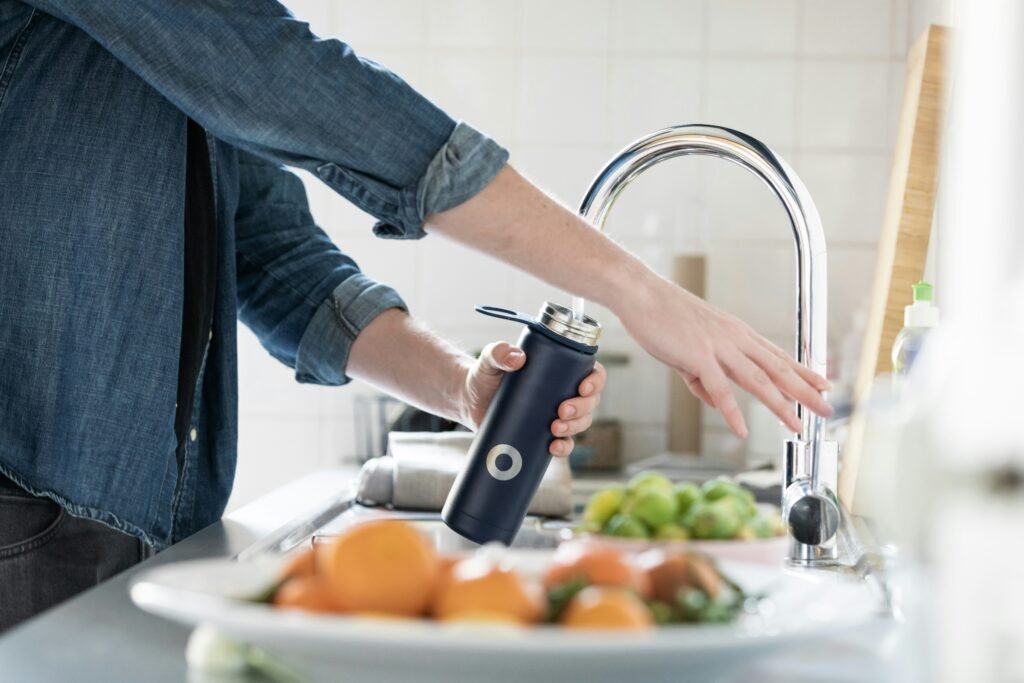
Toronto’s municipal drinking water is regularly tested and treated before it enters the distribution system. However, the water still has to travel through service lines, building pipes, fixtures and faucets before reaching your glass.
That distinction matters in older properties. Water leaving a Toronto treatment plant does not contain lead, but lead can enter it through older plumbing materials. A resident’s concern may therefore relate to the service pipe or plumbing inside the property rather than the municipal water supply itself.
Age alone does not prove that a home has unsafe drinking water. It does indicate when further questions or testing may be worthwhile.
Is Toronto Tap Water Safe to Drink?
Toronto operates a regulated drinking-water system with routine sampling, testing and public reporting. The City states that water leaving its treatment plants does not contain lead.
Lead can be introduced later through plumbing materials. The City’s lead and drinking-water guidance identifies several possible sources:
- Lead water service pipes in some homes built before the mid-1950s
- Solder used to join pipes before 1990
- Older leaded-brass faucets and valves
- Other plumbing materials inside an older property
This does not mean that every older Toronto property has a lead problem. The likelihood depends on the building type, service-line material, plumbing history and water conditions at the individual tap.
Testing is the only reliable way to determine how much lead is present in a water sample.
What Is a Water Service Pipe?
The water service pipe connects the watermain beneath the street to a building.
In Toronto, the pipe is divided at the property line. The City owns the section running from the watermain to the property line. The property owner is responsible for the section running from the property line into the home.
One side may have been replaced while the other remains lead. This is why a statement that the City “worked on the street” does not necessarily confirm that the entire service line is lead-free.
The City recommends replacing both portions at the same time when a lead service is identified. Disturbing or replacing only one section can temporarily release lead particles into the water.
Which Toronto Homes Are Most Likely to Have Lead Pipes?
Homes built before the mid-1950s are the primary concern because lead was commonly used for residential water service pipes during that period.
The date should be treated as a screening clue rather than a diagnosis. An older home may already have had its complete service line replaced. A renovated interior also does not prove that the underground service pipe was changed.
According to the City, apartment and other buildings containing more than six units do not have lead water service pipes, regardless of their age. Lead is too soft to handle the water pressure required by these larger buildings.
That distinction is helpful for residents of older apartment towers. A large building may still have internal plumbing, fixtures, solder or water-quality issues worth investigating, but its water service pipe is not expected to be made from lead.
Smaller properties require more attention. A converted house, duplex, triplex or building with only a few units may still have the type of residential service line historically made from lead.
How Can a Homeowner Check the Service Pipe?
The property’s construction date is a useful starting point. If the house was built before the mid-1950s, review renovation records, plumbing invoices and documents from previous owners.
The visible pipe entering the home near the water meter may also provide clues. The City describes a possible lead pipe as grey, easy to scratch and not hollow-sounding when tapped. Residents should not damage or aggressively scrape a pipe to test it themselves.
A licensed plumber can inspect the pipe material, usually by examining the service entry point in the basement.
Homeowners can also contact 311 and ask City staff to check available records. The City advises that a record search may take up to 30 business days. Records can provide useful information, but a physical inspection or water test may still be necessary when the history is incomplete.
What Should a Tenant Ask the Landlord?
A renter may not have access to plumbing records or the area around the water meter. The first step is to ask the landlord or property manager specific questions.
Instead of asking only whether the water is safe, ask:
- When was the property built?
- What material is the private water service pipe?
- Have the City-owned and privately owned portions both been replaced?
- Is there an invoice or plumbing record confirming replacement?
- Has the tap water been tested for lead?
- Have other tenants reported discolouration, taste or pressure problems?
A landlord may know that a pipe was replaced without knowing whether the work covered both sides of the property line. Asking for dates and records can produce a clearer answer.
Tenants should keep written copies of their questions and the landlord’s responses. If there are unresolved concerns, contact 311 or Toronto Public Health for information about available testing and next steps.
Toronto’s Free Lead Testing Program
Toronto residents living in homes built before the mid-1950s can request a free lead-testing kit from the City.
The resident collects a tap-water sample according to the provided instructions and submits it to a Toronto Water laboratory. Following the instructions is important because the amount of time water has remained in the pipes and the sampling method can affect the result.
The City’s lead-testing information explains how to request a kit, collect the sample and submit it.
Do not substitute a sales demonstration for an accredited laboratory test. Some door-to-door water tests are designed to sell filters or treatment equipment and may not measure lead accurately.
What Does a Lead Test Tell You?
A laboratory result reflects the water collected from a particular tap under the sampling conditions used. It does not automatically identify which piece of plumbing contributed the lead.
A result showing lead may lead to further investigation of the service line, household pipes, solder, valves or faucet. A low result is reassuring, but plumbing can change and particles may be released after construction or pipe disturbance.
Health Canada’s maximum acceptable concentration for total lead in drinking water is 0.005 milligrams per litre, equivalent to five micrograms per litre. The federal guidance also says there is no known safe level of lead exposure, so concentrations should be kept as low as reasonably achievable.
Residents should discuss their results with the City or an appropriate health professional rather than interpreting a number without context.
Who Is Most Vulnerable to Lead Exposure?
Lead can affect the developing brain and nervous system. Toronto Public Health identifies pregnant people, infants and children younger than six as groups at greater risk.
Formula preparation deserves particular attention because an infant may consume a large amount of water relative to body weight. If lead is suspected or confirmed, follow current Toronto Public Health guidance about filtered water, bottled water or ready-to-feed formula while a permanent solution is arranged.
Anyone concerned about possible exposure or a child’s health should speak with a qualified healthcare professional. A water test measures the sample, not the amount of lead in a person’s body.
Flushing Water From Older Plumbing
When a property has a lead service pipe, the City recommends running the cold-water tap for at least five minutes after the plumbing has been unused for several hours. This draws fresher water from the watermain into the home.
Activities such as showering, flushing a toilet or running a load of laundry also move water through the plumbing. However, the appropriate flushing time can depend on the property.
Use cold water for drinking, cooking and preparing beverages or baby formula. Hot water can dissolve lead from plumbing more readily. If hot water is needed, begin with cold water and heat it separately.
Flushing is a temporary exposure-reduction measure. It does not remove a lead pipe or permanently solve the source of contamination.
Does Boiling Remove Lead?
Boiling water does not remove lead.
Boiling is used to address certain microbiological risks, not contamination from metals. As water evaporates, the concentration of a non-volatile contaminant can remain the same or potentially increase.
A boil-water advisory and a lead concern are therefore different situations. Follow the instructions issued for the particular problem rather than assuming boiling makes every type of contaminated water safe.
Do Water Filters Remove Lead?
Some filters can reduce lead, but an ordinary pitcher or faucet filter should not be assumed to do so.
The City recommends a filter certified to NSF/ANSI Standard 53 for lead reduction. The filter must be installed, used and replaced according to its instructions. An expired cartridge or incorrectly installed filter may not provide the expected protection.
Check the certification for the exact filter model rather than relying on general packaging terms such as “cleaner water” or “improved taste.”
A filter can reduce exposure while pipe replacement is being planned. It is not considered a permanent substitute for removing a lead service line.
Toronto offers a filter-rebate program for some qualifying households with lead pipes, a pregnant resident or child younger than six, and household income below the program limit. Eligibility requirements should be confirmed on the City website before purchasing a filter with the expectation of receiving a rebate.
Understanding Brown or Yellow Water
Discoloured water is not automatically evidence of lead. Lead dissolved in water cannot normally be identified by colour, taste or smell.
Brown, yellow or orange water can result from disturbed sediment or rust in watermains and building plumbing. Construction, hydrant use, a watermain break or work inside the property can disturb these materials.
Where the discolouration appears provides useful clues.
If only the hot water is affected, the City says the issue is likely within the property because Toronto supplies cold water. A water heater or private hot-water system may need attention.
If only one faucet is affected, remove and clean the aerator, then run cold water from that tap. The City recommends running it for approximately 10 minutes before replacing the aerator.
If every cold-water tap is discoloured, the issue may extend beyond one fixture. Check whether neighbours are experiencing the same problem and contact 311 if it continues.
Avoid doing laundry while the water is discoloured because sediment can stain clothing.
Cloudy Water Is Usually a Different Issue
Water that appears milky or cloudy may contain tiny air bubbles, particularly after plumbing work or a change in water pressure.
Fill a clear glass and let it stand. If the cloudiness disappears from the bottom upward within a few minutes, trapped air is a likely explanation.
Cloudiness that does not clear, visible particles, an unusual film or a persistent odour requires further investigation. Do not assume every change is harmless simply because Toronto’s municipal supply is treated.
Taste and Odour Problems
A chlorine smell does not necessarily mean the water is unsafe. Chlorine is used during water treatment, and its taste may be more noticeable at certain times.
If taste or odour occurs at only one faucet, the source is more likely to be the fixture, aerator or nearby plumbing. Clean the aerator and compare cold water from other taps.
A problem affecting only hot water points toward the building’s water-heating equipment. A problem affecting every cold-water tap may justify contacting 311.
Do not use taste or smell to determine whether lead is present. Lead contamination requires laboratory testing.
Who Pays for Service-Line Replacement?
The City owns the service pipe from the watermain to the property line. The homeowner owns the section from the property line into the building.
Homeowners are normally responsible for arranging and paying for work on the privately owned portion. Residents who commit to replacing their side may apply to the City’s Priority Lead Water Service Replacement Program for coordinated replacement of the City-owned side.
Eligibility and timing depend on the property and current program rules. The homeowner should confirm the process before hiring anyone or beginning excavation.
Renters do not own the private service line and should not arrange replacement themselves. Concerns should be raised with the property owner or manager in writing.
For homeowners estimating recurring housing costs beyond plumbing work, our guide to monthly expenses in Toronto explains other common items that may need to be included in a household budget.
Questions to Ask Before Renting an Older Toronto Home
A water-quality conversation is especially worthwhile when considering a house, duplex, triplex or small converted building constructed before the mid-1950s.
Ask about the service-line material, previous test results, pipe replacement history and responsibility for filters. Turn on both hot and cold taps to observe colour, odour, pressure and how quickly the water clears after sitting.
A landlord’s verbal statement that “Toronto water is safe” does not answer a question about the property’s private plumbing. At the same time, an old building should not be assumed unsafe without records, inspection or testing.
The most useful information comes from the property’s history and the water at the tap.
When to Contact the City
Contact 311 when you need information about Toronto’s free lead testing, City service-line records, widespread discolouration, low water pressure or a possible watermain problem.
Contact the landlord or property manager when the issue appears limited to private plumbing, one unit, hot water or a building fixture. In a condominium, management may need to investigate shared plumbing before the problem can be traced to an individual unit.
Call 911 when someone is experiencing a medical emergency. Questions about possible lead exposure should be directed to a healthcare professional or Toronto Public Health.
Toronto tap water is treated and monitored, but the final section of its journey occurs inside individual properties. In an older home, knowing the building type, service-line material and testing history provides more useful reassurance than relying on appearance or assumptions.
Note: Drinking-water guidance, testing eligibility and City replacement programs can change. Confirm current instructions with the City of Toronto, Toronto Public Health or Health Canada. Seek medical advice for concerns about individual exposure or health effects.