
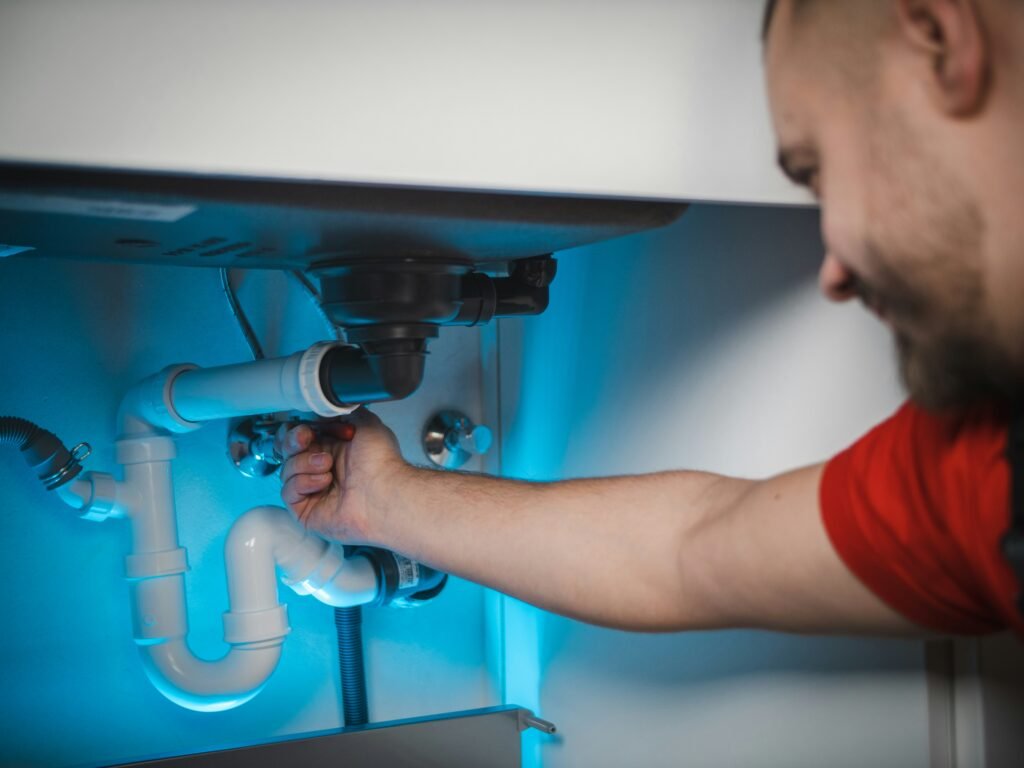
Toronto condo water leaks can turn a minor plumbing failure into a dispute involving multiple units, property management, restoration contractors and several insurance policies. Residents may know where the water appeared without knowing where it started, what the condominium corporation must repair or whether an owner could receive a substantial chargeback.
The first few hours should be focused on limiting damage and creating a reliable record. Questions about responsibility and payment can be addressed after the immediate risk is under control.
The First Response to Toronto Condo Water Leaks
Contact the concierge, superintendent or property manager as soon as water is discovered. A building representative may need to enter another unit, close a shared supply line, inspect a mechanical room or call the corporation’s emergency contractor.
If it is safe and accessible, close the local shutoff valve connected to the leaking toilet, sink, dishwasher or washing machine. Do not open walls, enter an electrical room or interfere with common building equipment.
Move portable belongings away from the affected area. Place containers under active drips and use towels to slow the spread, but avoid making permanent repairs before the source has been inspected. Evidence can disappear once flooring, drywall or plumbing components are removed.
Residents should also consider whether water has reached electrical outlets, ceiling fixtures or appliances. If there is an electrical concern, keep away from the affected area and notify building staff immediately.
The Source and the Damage Are Separate Issues
The place where water becomes visible may not reveal its origin. Water can travel along pipes, concrete slabs, wall cavities and ceiling channels before entering a unit.
A stain on the ceiling could be connected to an appliance in the unit above, a common plumbing line, a fan-coil component, exterior penetration or water travelling from a more distant location. Residents should avoid accepting or assigning responsibility based only on where the damage appeared.
Ask property management for written confirmation of:
- When the leak was reported
- Who inspected the affected areas
- Where the source was found
- Whether the failed component serves one unit or multiple units
- What emergency work was completed
- Which areas require further inspection
- Whether an incident report is available
The plumbing or restoration report may become important if insurers disagree about the origin of the loss.
Documents That Define Repair Responsibilities
Ontario condominium responsibilities cannot be determined using a universal rule such as “everything inside the unit belongs to the owner.” The corporation’s declaration, bylaws and definition of a standard unit can affect what must be restored and whose insurance may respond.
The Condominium Authority of Ontario’s insurance guidance explains that condominium corporations require property damage and liability insurance, while owners should carry coverage for their own property and exposures.
An affected owner should request or review:
- The condominium declaration
- The standard-unit bylaw or applicable standard-unit description
- The corporation’s current insurance certificate
- Any insurance-deductible bylaw
- Rules covering access, maintenance and in-suite equipment
- The most recent status certificate package available to the owner
- Written notices concerning the plumbing or mechanical system involved
The standard-unit definition is particularly important. The corporation’s policy may insure the unit only to that defined standard. Improvements such as upgraded flooring, custom cabinetry or renovated fixtures may fall under the owner’s policy.
Understanding the Corporation’s Insurance Deductible
The corporation’s insurance deductible is the portion of an insured loss that must be paid before its policy responds. Water-damage deductibles can be much larger than the deductible on an individual condo policy.
Section 105 of Ontario’s Condominium Act, 1998 addresses condominium insurance deductibles. Whether an amount can be added to an owner’s common expenses depends on the legislation, the circumstances and the corporation’s governing documents.
A notice saying that water originated in a particular unit should not be treated as a complete explanation of a charge. The owner should ask for the legal and factual basis used to calculate it.
Useful questions include:
- Did the corporation submit an insurance claim?
- What is the applicable water-damage deductible?
- What repair costs have actually been incurred?
- Which section of the declaration or bylaws supports the charge?
- How was the source of the leak established?
- Is the requested amount a deductible chargeback, an uninsured repair cost or another expense?
- Will an itemized invoice and incident report be provided?
Owners should forward a chargeback notice to their insurer promptly, even if they disagree with it. Waiting to report the matter could complicate the claim or reduce the insurer’s opportunity to investigate.
Individual Condo Insurance Still Matters
The corporation’s policy does not replace personal condo insurance. An owner’s policy may address belongings, unit improvements, additional living expenses, personal liability and eligible assessments or deductible chargebacks. Coverage and limits vary between policies.
Owners can ask their broker or insurer whether their policy includes:
- Coverage for the corporation’s deductible
- Water escape from plumbing and appliances
- Sewer backup
- Damage to improvements and betterments
- Additional living expenses
- Personal liability
- Loss-assessment protection
- Vacancy or extended-absence conditions
The deductible-chargeback limit should be compared with the deductible shown on the corporation’s current insurance certificate. A limit selected several years ago may no longer match the building’s exposure.
Insurance should be reviewed alongside regular Toronto housing costs. The guide to monthly expenses in Toronto provides broader context for expenses that can sit outside a mortgage payment or monthly condo fee.
What Renters Should Do After a Leak
A tenant should report the leak to both property management and the landlord. The landlord owns the unit and will generally need to participate in discussions involving the corporation, permanent finishes and the unit owner’s insurance.
Tenant insurance may cover the renter’s belongings, additional living expenses and certain liability claims, depending on the policy. It does not normally replace the landlord’s coverage for the unit itself.
Tenants should document their own property separately. Create a list of damaged items, their approximate purchase dates and any available receipts. Photograph labels, serial numbers and visible damage before disposing of anything.
A renter should not agree to pay a building invoice simply because management says the leak involved the rented unit. The cause, the lease, the applicable insurance policies and the condominium documents may all matter. Toronto renters considering the wider cost of changing homes can also read Leaving a Rent-Controlled Toronto Apartment.
Creating a Useful Damage Record
Take wide photographs showing the affected room, followed by close images of stains, swollen flooring, damaged furniture and the suspected source. Short videos can capture active dripping, pooling water and unusual sounds.
Keep a written timeline that records:
- When the water was first noticed
- When management was contacted
- Who entered the unit
- What each person inspected
- When the water stopped
- What materials were removed
- Which contractors attended
- What instructions were provided
Save emails, building notices, work orders, estimates and invoices in one folder. If instructions are given verbally, send a polite follow-up email summarizing the conversation and asking the recipient to correct anything inaccurate.
Do not discard a failed hose, valve or appliance component unless the insurer or investigator confirms it is no longer required. If a contractor removes it, ask whether it can be labelled and preserved.
Emergency Work and Permanent Repairs
Emergency mitigation and permanent restoration are different stages. Mitigation may include extracting water, placing drying equipment, opening limited sections of drywall and preventing mould growth. Permanent work may include rebuilding walls, replacing flooring or reinstalling cabinetry.
Before approving non-emergency restoration, clarify who hired the contractor and who is expected to pay. An owner may not automatically have the right to select contractors working on common elements or another unit.
Ask for an itemized description of the work. It should distinguish emergency attendance, demolition, equipment rental, drying time, environmental testing, disposal and reconstruction. This makes it easier to compare the invoice with the reported damage and the applicable insurance coverage.
Residents should continue photographing the area during restoration. Images taken after drywall or flooring is removed may reveal the route of the water and the condition of concealed components.
Temporary Relocation During Restoration
A unit may be difficult or unsafe to occupy if water affects electrical systems, removes essential bathroom access, produces significant contamination or requires extensive demolition.
Ask the insurer what conditions must be met before additional living expenses are covered. Do not assume every hotel stay or meal will be reimbursed. Coverage may require confirmation that the unit is uninhabitable, and daily or total limits may apply.
Keep receipts for accommodation, transportation, laundry, storage and additional food expenses. Record the reason for each expense so it can be connected to the loss.
Residents should also ask management about elevator bookings, contractor access, disposal rules and working hours. Building procedures can affect how quickly contents are removed and repairs are completed. Similar restrictions are common when residents use shared amenities, as explained in the guide to Toronto condo party rooms.
Responding to a Disputed Charge
A large invoice or chargeback should be addressed in writing. Request the incident report, source determination, relevant bylaw, insurance information and itemized costs. State clearly which parts of the charge require clarification without making unsupported admissions about fault.
Send the documents to the appropriate insurer. The adjuster may need to communicate with the corporation’s insurer, another resident’s insurer or the restoration company.
If the evidence is incomplete or the amount is significant, an Ontario condominium lawyer can review whether the corporation followed the legislation and its own governing documents. Legal advice may also be appropriate when a lien warning has been issued, an insurer denies coverage or several parties provide conflicting explanations.
Reducing Future Water-Damage Risk
Prevention begins with components that residents can inspect without interfering with common systems. Look for corrosion, moisture, staining or swelling around toilets, sinks, appliances and mechanical equipment. Replace aging appliance hoses when recommended by the manufacturer or a qualified professional.
Residents should know the location of accessible in-suite shutoff valves and confirm how to report an emergency outside regular management hours. When leaving for an extended period, review the insurance policy’s absence requirements and arrange any inspections the policy requires.
Condo owners should also review the corporation’s insurance certificate whenever it is updated. If its deductible increases, ask an insurance professional whether the personal policy still provides enough protection.
A water leak can involve more paperwork than plumbing. A quick report, careful documentation and early contact with the appropriate insurers give Toronto condo residents a stronger foundation for resolving the damage and any resulting charges.
Note: This article provides general information for Toronto condo residents and is not legal, insurance or technical advice. Coverage and responsibility depend on the facts, the condominium’s documents and the applicable policies. Consult qualified professionals about a specific loss or chargeback.