A Mississauga car accident can leave an injured passenger uncertain about what to do next. The passenger was not driving, may not own a vehicle and may have little control over how either driver reports the collision. Despite that uncertainty, passengers can take independent steps to protect their health, document what happened and begin the appropriate insurance process.
This guide explains the practical issues an injured passenger may face after a collision in Mississauga. It does not assume that the passenger was riding in their own vehicle or travelling with a family member. The same basic concerns may arise in a friend’s car, a coworker’s vehicle, a taxi or an app-based rideshare.
Safety Comes Before Determining Fault
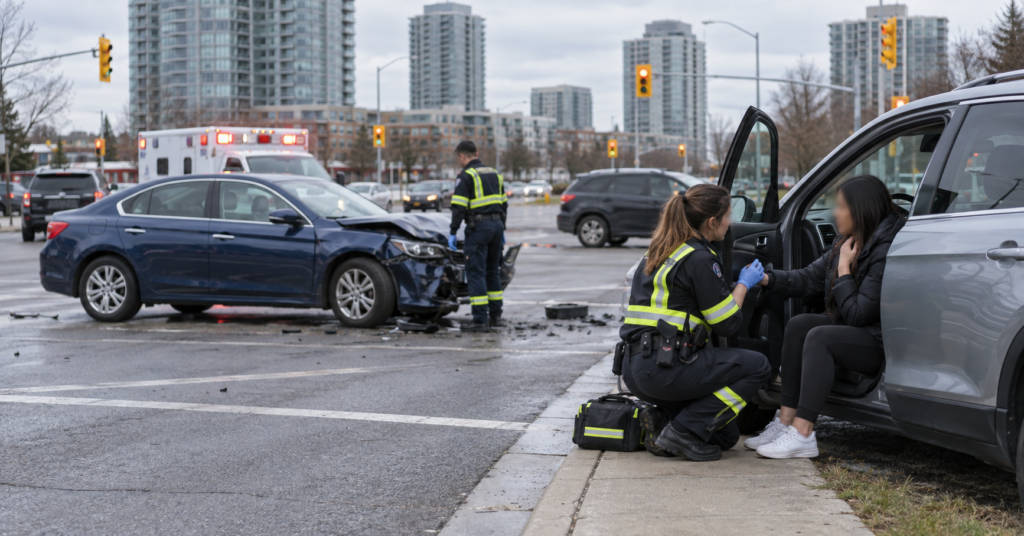
Move away from traffic if it is safe and physically possible. If anyone may be seriously injured, call 911 and wait for emergency assistance.
Passengers should not minimize symptoms simply because they can walk or speak normally. Shock and adrenaline can temporarily hide pain. Headaches, dizziness, nausea, neck stiffness, back pain and difficulty concentrating may not become obvious until later.
Tell responding paramedics or police officers about every symptom you notice. If your condition changes after leaving the scene, obtain appropriate medical attention rather than waiting to see whether it disappears.
Do not attempt to decide which driver was responsible while emergency needs remain unresolved. Fault can be examined after the immediate safety concerns have been addressed.
A Passenger Should Collect Independent Information
Drivers usually exchange information, but an injured passenger should keep their own record whenever possible. A passenger may later discover that the driver did not save photographs, recorded an incorrect licence plate or failed to obtain a witness’s contact details.
Useful information includes:
- The drivers’ names and contact information
- Licence-plate numbers
- Insurance companies and policy information
- Vehicle makes, models and colours
- The collision location and approximate time
- Photographs of the vehicles and surrounding area
- Names and contact details for witnesses
- The police occurrence or collision-report number
- The name of the rideshare platform or transportation company, when applicable
Take wide photographs showing the road, intersection, traffic signals and final vehicle positions. Closer images can record impact points, broken glass, deployed airbags and damage inside the passenger compartment.
A passenger who cannot gather evidence because of an injury can ask a trusted person to preserve available photographs, messages and trip information.
Preserve Digital Trip Records
Digital information can establish where the passenger was, who provided the ride and when the journey occurred. This can be especially important when the driver is not a relative or close friend.
Save rideshare receipts, booking confirmations, text messages, location history and any communication with the driver. Take screenshots before an app updates or removes access to older trip details.
If a friend arranged the ride, ask that person to retain the original booking record. Avoid editing photographs or placing all evidence on a device that could be lost or replaced.
Create a backup in a secure location. Evidence preservation does not require posting collision details publicly.
Reporting a Mississauga Car Accident
Peel Regional Police provides collision-reporting information for incidents occurring in Mississauga and Brampton. The correct procedure depends on factors such as injuries, vehicle condition, suspected criminal activity and the seriousness of the collision.
Call 911 from the scene when emergency assistance is required. Less urgent collisions may be directed to a collision-reporting centre rather than receiving an officer at the roadside.
Passengers should ask the driver whether the collision was reported and request the report number. If the driver refuses to provide that information or appears unwilling to report an injury collision, the passenger can contact Peel Regional Police directly for instructions.
Addresses, hours and reporting procedures can change, so confirm them through the official Peel Regional Police collision-reporting information rather than relying on an old directory or social-media post.
Medical Documentation After the Collision
Medical records connect the reported symptoms to a timeline. They can also help health professionals understand whether the passenger’s condition is improving, changing or becoming more complicated.
Explain that the symptoms began after a motor-vehicle collision. Describe where you were sitting, whether you wore a seat belt, which side of the vehicle was struck and whether your body or head contacted anything.
Mention cognitive and emotional changes as well as physical pain. Depending on the person and the collision, relevant concerns may include:
- Persistent headaches
- Sensitivity to noise or light
- Interrupted sleep
- Memory or concentration problems
- Neck, shoulder or back pain
- Numbness or weakness
- Anxiety while travelling
- Reduced ability to work or study
- Difficulty performing household or caregiving activities
Accurate reporting is more useful than exaggerating or minimizing symptoms. Follow the treatment recommendations provided and ask questions when restrictions or follow-up instructions are unclear.
Seek urgent medical assistance if serious or rapidly worsening symptoms develop.
Keep One Mississauga Car Accident File
Information can quickly become scattered among emails, medical portals, text messages and paper forms. Keep one physical or digital folder for the collision.
The file can contain:
- Collision photographs and videos
- Police or reporting-centre information
- Medical visit summaries
- Prescription and treatment receipts
- Insurance correspondence
- Transportation expenses
- Work absence records
- Notes about missed classes or appointments
- Rideshare or travel receipts
- Messages from either driver
Maintain a simple symptom journal, but do not turn it into a repeated list of identical complaints. Record meaningful changes, new limitations, medical visits and activities that could not be completed.
Receipts should be retained even when it is unclear whether an expense will be reimbursed. Eligibility can be assessed later, but a missing receipt may be difficult to reconstruct.
Which Insurance Company Should the Passenger Contact?
The answer depends on the passenger’s insurance circumstances. A passenger who has an automobile policy should generally notify that insurer promptly. Coverage through a spouse, parent or another household policy may also affect where an application is submitted.
A passenger who does not own a vehicle and is not listed on another policy should not assume that no coverage is available. Ontario has rules governing which insurer receives an accident-benefits application. The vehicle’s insurer, another involved insurer or the Motor Vehicle Accident Claims Fund may become relevant, depending on the circumstances.
Ask the insurer to explain why it is accepting the application or directing it elsewhere. Record the representative’s name, the date of the conversation and the claim or reference number.
Do not rely solely on the driver to communicate with the insurer. The driver’s vehicle-damage claim and the passenger’s injury-related claim involve different information.
Ontario Accident Benefits Changed in 2026
Ontario’s accident-benefits system changed on July 1, 2026. For policies entered into on or after that date, medical, rehabilitation and attendant-care benefits remain mandatory, while several other benefits may depend on optional coverage purchased under an applicable policy.
This distinction matters to passengers. Two people injured in similar collisions may have access to different benefits because their applicable policies and personal circumstances are not identical.
The Financial Services Regulatory Authority of Ontario states that a person without their own automobile policy, and who is not listed on someone else’s policy, may still apply for mandatory medical, rehabilitation and attendant-care benefits after being injured.
Possible optional benefits can involve income replacement, caregiver expenses, lost educational expenses, housekeeping, visitor expenses, funeral expenses and other losses. Availability should be confirmed from the applicable policy rather than assumed.
FSRA’s official accident claims guide explains the claims process and the distinction between mandatory and optional accident benefits.
The Driver’s Fault Does Not Automatically Decide Benefits
Ontario accident benefits are not determined solely by which driver caused the collision. An injured passenger may be able to apply for applicable benefits even before fault has been resolved.
A separate claim against an at-fault party may raise different legal questions. That process can involve evidence about negligence, the seriousness of the injury, financial loss and available insurance.
Passengers should therefore avoid statements such as “I cannot claim anything because my friend caused the crash” or “the other driver will pay every expense.” Neither conclusion should be reached without reviewing the actual insurance and legal circumstances.
Passengers Riding With Friends or Relatives
A passenger may hesitate to report an injury because the driver is a friend, partner, relative or coworker. Some worry that taking action means personally suing someone they care about.
In many cases, insurance is central to how accident claims are handled. The existence of a personal relationship does not remove the passenger’s medical needs or reporting obligations.
Do not agree to keep the collision unofficial in exchange for a promise that the driver will pay future expenses. The full effect of an injury may not be known immediately, and an informal agreement may leave important losses unaddressed.
The passenger does not need to accuse the driver at the scene. They can provide an accurate account, preserve the evidence and obtain advice about the available options.
Rideshare, Taxi and Work-Related Trips
A passenger injured during a paid ride should preserve the booking and payment record. Insurance questions may depend on whether the driver was logged into an app, had accepted the trip and was actively transporting the passenger.
Do not assume that the platform has automatically opened an injury claim. Report the incident through the available process, save the confirmation and notify any insurer that may apply to you.
A collision occurring during work-related travel can create additional questions. Employment insurance, workplace benefits or workers’ compensation issues may intersect with automobile coverage depending on the passenger’s role and why the trip occurred.
Report a work-related collision to the employer promptly and keep the workplace report separate from the police and insurance records.
Lost Income and Interrupted Education
A passenger who misses work should ask the employer for written confirmation of the dates absent, regular hours and any reduced duties. Self-employed people can retain invoices, contracts, appointment calendars and earlier income records.
Students should document missed classes, examinations, placements and paid educational expenses. Schools may have their own accommodation process, but academic accommodations are not a substitute for submitting an insurance claim.
Because several income- and education-related accident benefits became optional for newer Ontario policies in July 2026, eligibility depends on the applicable coverage. Preserve the records even when coverage has not yet been confirmed.
Communicating With Insurance Adjusters
An adjuster may request a description of the collision, medical information or completed forms. Answer accurately, but ask for clarification when the request is broad or confusing.
Before signing an authorization, identify what records it covers, who will receive them and how long the authorization remains valid. Keep a copy of every completed form.
Avoid guessing about speed, distance or medical diagnoses. It is reasonable to say that you do not know or that a health professional is still assessing the injury.
Do not post photographs suggesting that you have fully recovered when that conclusion has not been reached. Social-media content can be viewed without the context surrounding the image.
Settlement Offers Require Careful Review
An early settlement can appear attractive when the passenger is facing treatment expenses or lost income. Accepting a settlement may affect the ability to seek additional compensation later.
Before agreeing, understand:
- Which claim is being settled
- Which benefits or rights are being released
- Whether future treatment has been considered
- Whether the medical condition has stabilized
- How legal fees, disbursements or repayment obligations would be handled
- Whether the agreement affects another insurance claim
A passenger should not feel pressured to make a final decision before understanding the document. The insurer’s deadline and any legal limitation period are different issues and should both be verified.
When to Contact a Lawyer
Legal advice may be useful when the injuries are serious, symptoms continue, an insurer denies treatment, the drivers dispute how the collision occurred or the passenger is unsure which insurer should receive the claim. It may also help when the collision involves an uninsured driver, a hit-and-run, a rideshare trip, lost income or a proposed settlement.
When choosing counsel, ask whether the lawyer regularly handles Ontario automobile-injury and accident-benefit matters, who will manage the file, how fees are calculated and what costs could remain payable.
Affinity Lawyers handles car-accident, accident-benefit and personal-injury matters in Mississauga and across the GTA. An injured passenger can contact the firm to discuss the circumstances and determine whether legal representation is appropriate. This mention is provided as a relevant local resource, not a guarantee about the outcome of any claim.
Readers can find additional local housing, transportation and community information through TorontoBlog.ca.
Note: This article provides general information about passenger injuries following a Mississauga car accident. It is not legal, medical or insurance advice. Reporting requirements, coverage and deadlines depend on the collision, the applicable policy and current Ontario law.