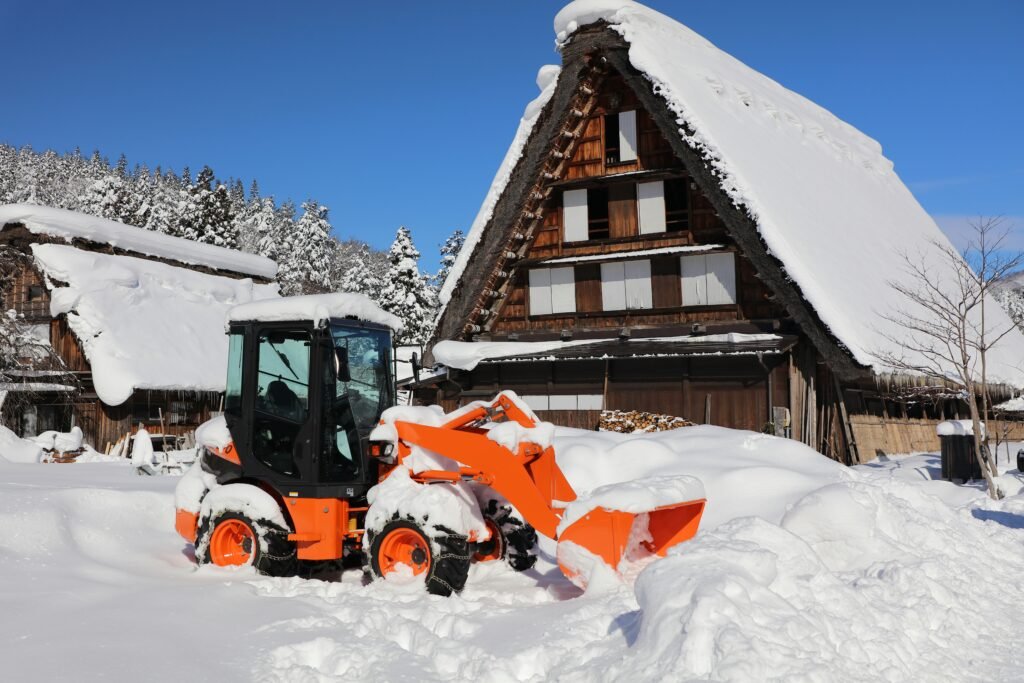
You shovel your driveway, head inside to warm up, and return to find a packed ridge of snow across the entrance. A road plow has passed, leaving your vehicle trapped behind a barrier that may be harder to move than the snow you cleared earlier.
Toronto driveway windrows can create understandable frustration, especially when you need to leave for work, an appointment or school pickup. However, a blocked driveway does not automatically mean a City crew missed a scheduled service.
Before reporting the problem, check whether your address qualifies, what the clearing service covers and when the road was plowed. Those details help you describe the situation accurately and avoid confusing a driveway opening with other winter maintenance work.
Identify What Is Blocking the Entrance
A windrow is the ridge of snow deposited along the roadside during plowing. At a driveway, it can form a barrier between the privately maintained surface and the street.
First, establish where the snow came from. A ridge left by a street plow is different from drifting snow, snowfall covering the full driveway or a pile created while someone cleared a neighbouring property.
Toronto’s driveway windrow service applies to snow deposited by street plowing operations. The City’s current guidance provides for openings approximately three metres wide at eligible driveways. On eligible collector and arterial roads, the published threshold is a windrow exceeding 25 centimetres. Its residential-street guidance does not state that same threshold. Check the City’s salting and plowing service information before applying one rule to every street.
Describe the actual obstruction rather than simply reporting that your driveway is snowy. The distinction matters because it identifies which operation may need attention.
Confirm Eligibility for Your Specific Address
Do not assume that every Toronto driveway receives windrow clearing. The City describes the service as applying to eligible streets, and the ability to operate equipment depends on local conditions.
A neighbour’s experience can provide useful context, but it is not a reliable answer for your property. Another driveway may have a different layout or be located on a different section of road.
If eligibility is unclear, contact 311 with your full address and ask whether the driveway entrance is included in the windrow clearing program. For a corner property, identify the street where the driveway actually exits. A mailing address alone may leave that detail uncertain.
Also mention unusual arrangements, such as a shared entrance, rear access or a driveway reached through a lane. Asking about the precise entrance is more useful than asking whether your entire neighbourhood receives service.
Check When the Road Plow Passed
Seeing a road plow does not necessarily mean the driveway-opening operation has finished.
The City currently aims to clear eligible windrows within two hours of road plowing. It also explains that route length, accumulated snow, parked vehicles and other obstructions can affect completion time. Treat this as a service target rather than a guaranteed appointment at your address.
Record when you observed the plow or first noticed the new ridge. If you were away, say that the time is approximate instead of presenting a guess as a confirmed observation.
For example, “The entrance was clear at 7 a.m. and blocked when I returned at 10 a.m.” gives useful information without claiming you witnessed the operation.
Fresh snowfall or another plowing pass can change conditions after an entrance has already been opened. Explain whether the blockage appeared again, particularly if you saw clearing equipment visit earlier.
Understand What a Cleared Opening Looks Like
The purpose of windrow clearing is to provide access through the roadside ridge. It does not mean crews will shovel the driveway from the street to your garage, expose every centimetre of pavement or remove all snow from the frontage.
When assessing the result, look at the opening itself. Is there a usable passage through the ridge, or does a continuous barrier still prevent access?
A thin layer of snow remaining across an otherwise open entrance is a different situation from a substantial packed obstruction. Likewise, snow beside the opening may remain even when the access work has been completed.
Be specific if the opening appears incomplete. Describe its location and approximate width, and explain what still blocks the vehicle’s path. This gives the person handling your request more information than a general statement that the work was unsatisfactory.
Look for Equipment Obstructions
Before reporting a missed visit, check whether something near the entrance could have prevented equipment from reaching it.
Parked vehicles, bins or objects close to the driveway can make access difficult. Observe the area from a safe position and mention any obstruction that was present when crews passed.
Move your own portable items where it is safe and appropriate. If another vehicle is involved, record its location without approaching the driver or stepping into traffic.
Do not interpret every nearby object as proof of why service was missed. You may not know what the operator encountered. Instead, distinguish what you observed from what you suspect.
If you remove an obstruction after an apparent missed visit, tell 311 that access conditions have changed.
Prepare a Clear Report for 311
A useful report allows someone unfamiliar with the property to locate the entrance and understand the problem.
Have the following details ready:
- The full address and the street serving the driveway.
- Whether eligibility has already been confirmed.
- When the road was plowed, if known.
- Whether the entrance remains completely blocked or partly open.
- Any relevant photographs or nearby obstructions.
- An existing service request number, if you have already reported it.
Take photographs from your property or another safe location. A wider image showing the entrance and street can establish context, while a closer image can show the remaining ridge. Do not stand in the roadway to measure snow.
You can use the City’s 311 service request page or call 311 within Toronto. The contact centre operates around the clock and can help when you cannot find the appropriate request.
Explain any time-sensitive access difficulty clearly, but do not assume that submitting a request guarantees immediate attendance.
Keep Private Property Responsibilities Separate
Waiting for a windrow opening does not resolve every snowy surface between your door and the street.
Toronto’s current guidance states that property owners must clear snow and ice from private driveways, parking spaces, steps, ramps and landings within 24 hours after snowfall ends. It also prohibits pushing snow from private property onto roads, sidewalks or bike lanes. The City’s sidewalk and private property clearing guidance explains these responsibilities.
Plan where shovelled snow will go before piles become difficult to manage. Shared driveways benefit from an agreed storage area so one household does not repeatedly block another household’s access.
If you rent or live in a managed property, ask who coordinates private clearing and who will contact the City about the roadside entrance. Clear communication can prevent multiple people assuming someone else has reported the problem.
Recognize When the Issue Is Larger Than Your Driveway
A blocked entrance, an obstructed sidewalk and a snow pile affecting visibility may need different descriptions.
After major storms, Toronto may conduct separate snow removal operations that collect accumulated snow and transport it away. Temporary orange no-parking signs can accompany that work, and restrictions remain until removal is completed and the signs are removed. This is distinct from creating an opening through a driveway windrow.
If your concern involves a pedestrian route or an intersection sightline, identify that hazard directly. Do not describe everything as a missed driveway visit.
A delayed departure can also affect your working day. Toronto Blog’s guide to workplace closures during snowstorms explains why checking your employer’s instructions and communicating early matters when winter conditions disrupt travel.
Follow Up With the Original Request Details
Keep your service request number, submission time and photographs together. If the issue remains, use that information when asking for an update rather than submitting several identical reports.
Describe any change since the first report. The entrance may have been partly opened, blocked again by another pass or affected by freezing conditions.
Once access is restored, keep watching the private surfaces you use to reach the vehicle. Meltwater and falling temperatures can create a separate slipping hazard even after the roadside barrier has been addressed.
Note: This article reflects City of Toronto guidance checked in October 2026. Eligibility, service targets and storm-specific instructions may change. Confirm the current requirements for your address through the City’s winter maintenance pages or 311.