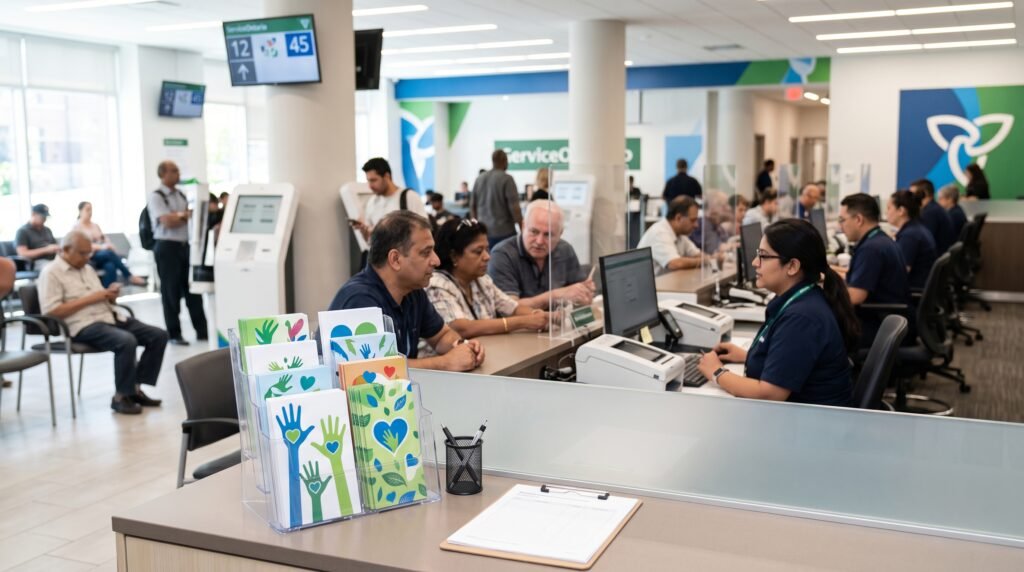
You may remember signing a donor card years ago or mentioning organ donation when renewing identification. That memory does not necessarily tell you what is currently recorded in Ontario’s donor registry.
Toronto organ donor registration uses the provincial system. Checking the record helps you understand whether your decision is registered and whether it still reflects your wishes.
This is a personal choice. The practical steps are to review the official information, confirm your recorded status and communicate your decision clearly to the people close to you.
Check the Provincial Record Rather Than Relying on Memory
Ontario advises people to register their consent even if they previously signed a donor card. The provincial record is used when donation may be possible.
Start with the official registration page and choose the option to register, check or update consent.
Do not assume that carrying an old card means a current registration has been processed. Likewise, a conversation with family does not replace checking the government record.
If the system does not show what you expected, review the available options calmly. Ask ServiceOntario for help if you cannot establish whether an earlier submission was completed.
Gather the Required Information
Ontario’s guidance identifies requirements including being at least 16 years old, providing your date of birth and having a health card with your current address on file.
Have the relevant information ready before starting.
If your address has changed, resolve that issue through the appropriate ServiceOntario process. Avoid assuming that updating another organization automatically updates your health card record.
Toronto Blog’s proof of address guide explains why address information can serve different purposes across organizations.
If you do not have the required information or cannot use the online system, ask what alternative route applies rather than entering guessed details.
Understand What This Registration Covers
Organ and tissue donor registration concerns donation after death. It is separate from the process of becoming a living donor.
Ontario Health’s donation guidance explains that living donation, such as donating a kidney or part of a liver, follows a separate hospital-managed process.
If your intention is to help a particular person through living donation, the provincial deceased-donor registration does not complete that assessment.
For deceased donation, read the consent options presented in the official process. Ask questions about anything you do not understand before recording a choice.
Keep the distinction clear when discussing registration with family.
Read the Choices Before Confirming
Take time to review the wording shown on the registration form.
Check whether your selected options match the decision you intend to record. If the process offers choices or limitations, understand what they mean rather than selecting them hurriedly.
You do not need to decide while another person is watching or pressuring you. It is reasonable to pause and obtain information.
If you have questions about donation practices, use Ontario Health’s educational resources or ask its donation information team.
Write down your questions beforehand. A specific question about consent or the donation process is easier to answer than a broad statement that you are uncertain.
Do Not Decide Medical Suitability Yourself
People sometimes assume that age, illness or an inability to donate blood means organ and tissue registration is pointless.
Ontario Health’s guidance says potential donors are assessed individually for medical suitability. Blood donation rules also differ from organ and tissue donation rules.
Registration records your wishes; it does not guarantee that donation will be possible.
Avoid making promises to family about which organs could be used. That decision requires assessment at the relevant time.
If a medical concern is influencing your choice, seek reliable information about the process without treating a general explanation as a prediction of your own eligibility.
Review Your Decision With Family
Tell close family members or the people likely to be contacted what you have decided.
Ontario explains that the donation team reaffirms registered consent with family. Clear knowledge of your wishes can therefore help them during a difficult situation.
Choose a calm time for the conversation. Explain whether you have registered, what you understand your decision to mean and where reliable information is available.
The goal is clarity, not persuading everyone to make the same choice.
Invite questions, but distinguish your personal decision from concerns that require an answer from the donation team.
Make the Conversation Specific
A vague statement such as “do whatever seems right” may leave others unsure what you wanted.
You could explain:
“I checked my Ontario donor registration and confirmed my current decision. I want you to know about it so you are not trying to guess later.”
If your wishes have changed, say that explicitly. Do not assume relatives remember the latest conversation rather than an earlier one.
Where language differences make the discussion difficult, use an explanation everyone understands and consult official materials together.
There is no need to share your health card number with relatives simply to explain your choice.
Keep Registration Separate From a Will
A will may address property and other legal matters, but it should not be your only way of communicating donation wishes.
Ontario Health explains that a will may be reviewed too late to assist the donation decision. Its guidance emphasizes official registration and conversations with loved ones.
If you also want donation wishes reflected in other planning documents, ask an appropriate professional how to do that.
Keep the provincial record current rather than assuming an estate document updates it.
Similarly, avoid treating a note stored on your phone as equivalent to registered consent.
Update or Withdraw Consent Through the Official Process
Ontario provides options to register, check, update or withdraw donor consent, including online and other submission routes.
If your decision changes, use that process and verify the outcome.
Keep any confirmation provided. For a mailed request, ask how to check that the change has been recorded rather than relying only on the date you posted it.
Tell family about the revised decision so an earlier conversation does not remain their only reference.
You do not need to justify a personal change of mind to acquaintances or make a public announcement.
Review Privacy and Assistance Arrangements
Use the official website reached through Ontario’s government guidance. Avoid providing health card information through an unsolicited message or unfamiliar form.
If someone helps you navigate the process, remain involved in reviewing the consent choices. Assistance with a website should not become someone else making the decision for you.
If you cannot independently complete the process, contact ServiceOntario about the appropriate way to obtain help.
Store confirmation securely. There is little reason to keep an unprotected photograph of your health card with a general household planning checklist.
Set a Sensible Review Reminder
Consider revisiting your registration after a significant change in your wishes or when you are reviewing other personal records.
The purpose is to confirm your decision, not repeatedly complete a new registration without checking the existing status.
A short reminder can say “check donor consent” without containing sensitive information.
After reviewing, make sure the record and family conversation remain consistent. That combination is more useful than collecting several old cards or forms with potentially different instructions.
Official Resources
- Ontario: Organ and tissue donor registration
- Ontario Health: Registration guidance
- Ontario Health: Donation questions and answers
Note: This article provides general information about recording donation wishes. Registration does not establish medical suitability or guarantee donation. Confirm consent procedures with ServiceOntario and medical-process questions with Ontario Health’s donation team.