Once wildlife has been removed from an attic, homeowners may still need to deal with nesting material, droppings, damaged insulation and repairs. Booking that work requires a clearer description than “attic cleanup.”
When comparing Toronto attic cleanup services, establish where animal removal ends and restoration begins. A detailed scope should explain which materials will be removed, how waste will leave the property and who will handle the work needed before the attic is ready to be insulated again.
Separate Animal Removal From the Cleanup Quote
Ask whether the original wildlife removal price includes any cleanup. If it does, request an itemized description. Removing a nest near an entry point may be a much smaller job than clearing contaminated insulation across the attic.
Distinguish animal removal, exclusion work that helps prevent re-entry, and interior cleanup. Confirm whether these are separate charges, stages within one contract or services provided by different companies.
Before cleanup proceeds, ask who will confirm that animal removal is complete. The City of Toronto’s raccoon guidance advises checking that all raccoons have left before closing an opening, including any young animals.
Request the total in Canadian dollars, with applicable taxes, assessment fees and optional work clearly identified.
Define the Areas and Materials Included
An attic inspection should lead to a description of the affected areas. Ask whether the proposed work covers selected sections or the entire accessible attic, and what findings support that recommendation.
The written scope should distinguish nesting debris, droppings, contaminated insulation and damaged building materials. It should also identify anything excluded, such as inaccessible cavities or items requiring another trade.
Ask the contractor to explain access limitations before agreeing to the price. A low-clearance area beneath the eaves may require a different approach from the space beside the hatch.
If further damage becomes visible during removal, agree on how it will be documented and priced before additional work is approved.
Identify the Existing Insulation Before Disturbing It
The type of insulation can affect the removal plan. Provide any inspection reports or renovation records you already have, and ask how the contractor will identify materials that require specialist handling.
Health Canada advises that vermiculite insulation may contain asbestos and should not be disturbed or removed by homeowners.
If suspected asbestos-containing material is found, ask whether work will pause for professional assessment and whether testing or specialist removal requires a separate quote. Do not assume that an ordinary wildlife cleanup price includes those services.
How Guard More Pest Control Can Help
Guard More Pest Control provides attic wildlife remediation, contaminated insulation removal and cleaning services in Toronto. Its attic services also include insulation replacement options, allowing homeowners to discuss the work needed after animal removal.
Contact the team with details of the wildlife problem, the removal work already completed and any existing inspection photographs. Ask for an assessment of the affected attic areas and a written explanation of the proposed service.
Before booking, confirm which stages Guard More will perform, whether another contractor is needed for specific repairs, and how the appointments will be coordinated. Discuss the total cost and request photographs of the completed work as part of the agreed scope, rather than assuming every service is included automatically.
Confirm Who Handles Waste and Disposal
Ask whether the price includes bagging or otherwise containing removed material, carrying it out, loading it, transportation and disposal charges.
The contractor should explain how contaminated debris will be moved through or around the house. Discuss protection for the hatch area, floors and access route, along with who cleans those areas afterwards.
If waste will remain temporarily on the property, confirm where it will be stored and when it will be collected. Do not assume the crew will take everything away on the cleanup day.
Any extra charge based on waste volume or weight should be explained before work begins.
Clarify What Cleaning Actually Includes
Ask what happens after the contaminated material is physically removed. Which exposed surfaces will be cleaned, what products or methods are proposed, and why are they appropriate for the conditions found?
Terms such as cleaning, deodorizing and disinfecting should be explained individually. An odour treatment does not tell you whether debris has been removed or damaged material addressed.
Request any preparation, ventilation and re-entry instructions that apply to the products used. Also ask whether surfaces must dry before the next stage can start. These details help coordinate the job without treating a spray application as a complete description of the service.
Arrange Replacement Insulation and Other Repairs
Insulation removal and replacement should be addressed separately in the scope, even when the same company offers both. Confirm whether new insulation is included, who installs it and what material and performance level are proposed.
If a separate insulation contractor is required, decide who arranges the appointment and confirms that the attic is ready. Avoid leaving this decision until the cleanup crew has finished.
Natural Resources Canada’s attic guidance discusses insulation condition, air sealing, vapour barriers and moisture problems. It advises addressing the moisture source before covering wet insulation.
Ask who handles any damaged wiring, roof leaks, ventilation problems or building repairs discovered during cleanup. Those tasks may require a qualified trade and a separate agreement before replacement insulation is installed.
Agree on Access and the Appointment Schedule
Clarify whether inspection, cleanup and insulation work will take place on different days. Ask for the expected duration of each stage and what could change the schedule.
Explain where the attic hatch is located and whether access involves a bedroom, closet or narrow hallway. Ask what you should move beforehand, where equipment will be placed and whether vehicle access is needed.
If the attic is reached through an occupied rental unit or shared area, arrange access with the relevant occupants or property manager. Confirm who will receive updates if the job pauses or requires another visit.
Request Photographs and a Completion Review
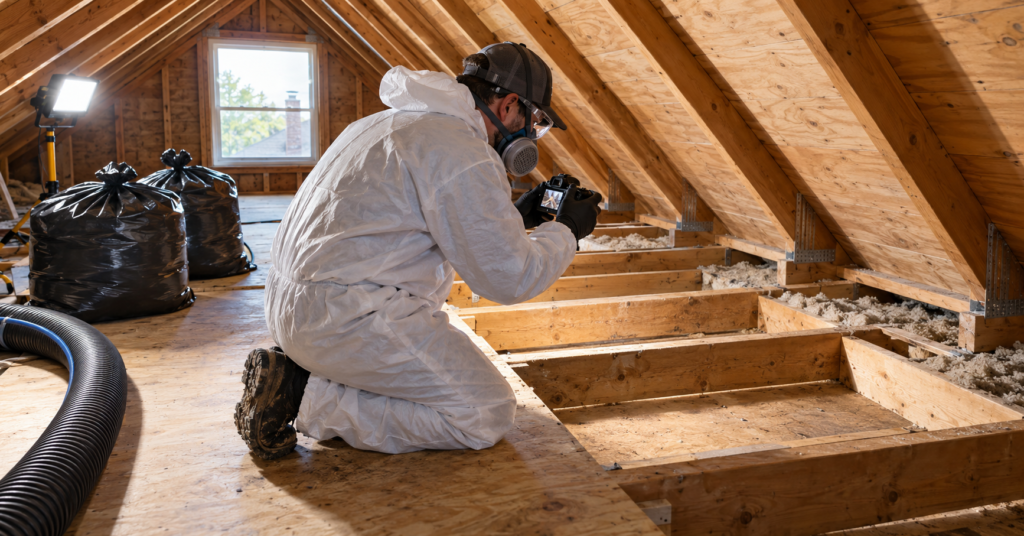
Arrange photographs before booking, particularly if you cannot safely inspect the attic yourself. Ask for images showing the initial condition, the areas after material removal and the finished work, including replacement insulation where applicable.
Photos should be labelled clearly enough to connect them with the quoted areas. Ask for any inaccessible sections or unresolved issues to be recorded as well.
Review the final invoice against the agreed scope and any approved changes. Keep the photographs, work summary and applicable warranties together. Photographs document visible work; they do not independently establish that every contaminant has been eliminated.
Note: Cleanup methods, disposal arrangements, insulation work and costs depend on the property and inspection findings. Confirm inclusions, exclusions, scheduling and any separate specialist work directly with the service provider before booking.