
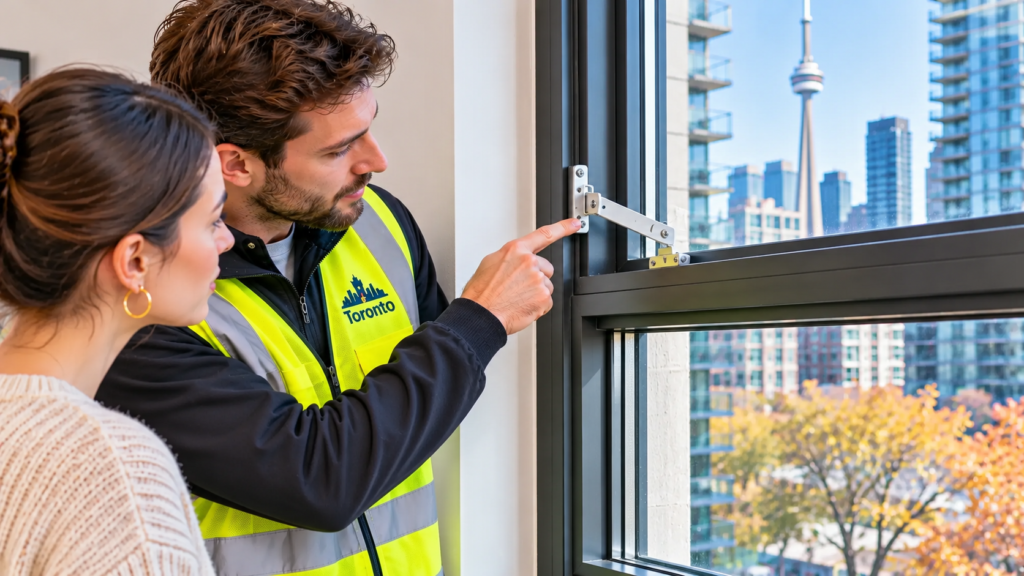
A window that opens only a short distance may be working exactly as intended. In an apartment, a restrictor can limit the opening to help prevent a fall. Removing that hardware to improve airflow can change an important safety feature.
Toronto apartment window restrictors deserve attention when you move in, notice loose hardware or discover that a window opens differently from before. The useful checks are straightforward observations—not strength tests, adjustments or attempts to defeat the mechanism.
Understanding what to report, and who should assess it, helps you address a concern without creating another hazard.
Understand What the Device Is Supposed to Do
A restrictor limits how far a window opens. Depending on the window, the mechanism may look like a stop, arm, cable or another piece of hardware.
It serves a different purpose from a handle that closes the window or a screen that keeps insects outside. Several components can be present on the same window, each performing a separate job.
Toronto’s rental-building guidance explains that window safety devices limit openings to no more than 10 centimetres where the applicable requirements call for them. The guidance also addresses window height, location and common-area guards. Ask management or the City to assess applicability rather than assuming every window requires identical hardware.
If you cannot identify the mechanism, request an explanation from the building’s maintenance staff.
Make Observations From a Safe Position
Look at the window from inside the room with your feet on the floor. Do not climb onto furniture, lean outside or remove a screen to inspect the exterior.
Visible concerns worth reporting include:
- A detached or broken restricting component.
- Screws that appear missing or loose.
- A damaged mounting point.
- A window that suddenly travels farther than previously.
- Hardware left disconnected after maintenance.
- Difficulty closing or securing the window normally.
Describe what you see without trying to establish the device’s load capacity. Pulling hard on a restrictor does not provide a reliable safety assessment and could damage it.
If the window appears insecure, keep people away and contact management promptly. Do not force a jammed window or manipulate broken glass.
Compare Changes Rather Than Guessing at Compliance
A useful report might say that the bedroom window opened only a short distance yesterday but now slides past the stop.
That observation gives maintenance staff a specific problem to investigate. You do not need to identify the manufacturer or declare a bylaw violation before requesting help.
Do Not Treat a Screen as Fall Protection
An intact insect screen can make an open window look more protected than it is.
The Canadian Paediatric Society warns that window screens cannot support a toddler’s weight and do not prevent falls. A screen should never be treated as a substitute for an appropriate guard or opening restriction.
Avoid pressing against a screen to see whether it feels secure. Its appearance and apparent firmness do not establish that it can stop someone falling.
Report screen damage separately from restrictor damage. Replacing one component does not necessarily resolve a concern involving the other.
Review Furniture and Climbing Opportunities
Look at how the room is used, not only at the window hardware.
A sofa, storage chest, chair or low shelf can provide access to an opening that would otherwise be difficult for a child to reach. The Canadian Paediatric Society recommends keeping furniture, including cribs, away from opening windows.
Consider movable objects as well. A lightweight stool may be carried from the bathroom into a bedroom even if the usual furniture arrangement leaves the window clear.
Check Sleeping and Play Areas Carefully
Public Health Agency of Canada guidance advises placing cribs away from windows because babies may climb toward them or become caught in window coverings.
Review the arrangement when a child starts climbing or the room’s purpose changes. A spare bedroom used occasionally by visiting family may need the same attention as a child’s everyday room.
Leave Hardware Changes to the Responsible Professionals
Do not unscrew a stop, disconnect a cable or modify a frame because the opening feels inconvenient.
Toronto identifies property owners as responsible for installing and maintaining required window safety devices and screens. Tenants must keep them in place and functioning.
If an air conditioner, cleaning task or other work appears to require removal, contact management first. Ask how the work will be completed while preserving the window’s safety arrangements.
Avoid installing improvised barriers or drilling additional hardware yourself. Suitability depends on the window and its intended operation, not simply whether a device can be attached to the frame.
Report the Problem With Enough Detail
Send a written maintenance request identifying the exact window.
Include the room, the visible issue and when you first noticed it. A photograph taken safely from inside can help staff distinguish the problem from a routine screen replacement or handle repair.
Keep the message factual. For example:
“The living-room window’s restricting arm appears detached from its mounting point. Please arrange an inspection and advise how the window should be kept secure until repaired.”
Save the request, any reference number and subsequent replies. If someone gives instructions by telephone, make a brief written record afterward.
For broader move-in observations, our guide to inspecting an older Toronto rental can help you organize other maintenance questions without overlooking the window issue.
Follow Up Through the Appropriate Channel
Toronto’s window-safety guidance directs tenants to notify the property owner in writing and contact 311 if no response is received.
When following up, explain the current condition rather than sending only the original complaint date. Tell staff whether the window can close, whether anything has changed and whether someone has inspected it.
Ask which reporting process applies to your property type. A rental apartment building, rented condominium and other housing arrangements may involve different management contacts.
If there is an immediate threat to someone’s life, use emergency services rather than waiting for a routine maintenance response.
Recheck After Work Is Completed
Ask maintenance staff to explain what was repaired and how to operate the window normally. Observe the demonstration from a safe position.
Confirm that the reported issue has been addressed, the screen is back in place where applicable and no hardware has been left disconnected.
Keep the completion message with your original request. If the window still behaves unexpectedly, report that specific remaining problem.
This is also a useful opportunity to ask about ventilation concerns. Explain the room’s conditions so management can assess them without relying on removal of a safety device.
Frequently Asked Questions
Does every Toronto apartment window need the same restrictor?
No. Requirements depend on the window and applicable standards. Ask management or the City to assess the particular opening rather than copying hardware from another unit.
Can an insect screen stop a child from falling?
No. Screens are not fall protection and cannot be relied upon to support a child.
Can I remove the restrictor temporarily for fresh air?
Do not disable required safety hardware. Report ventilation concerns and ask management for an appropriate solution.
What should I include in a repair request?
Identify the room and window, describe the visible problem and record when you noticed it. Add photographs only if they can be taken safely.
What if the restrictor appears damaged after maintenance?
Report it promptly and refer to the recent work. Ask for inspection and instructions for keeping the window secure until the issue is resolved.
Note: This article provides general observation and reporting guidance, not an inspection or compliance assessment. For current requirements and responsibilities, consult the City’s rental-building guidance under Window Safety.