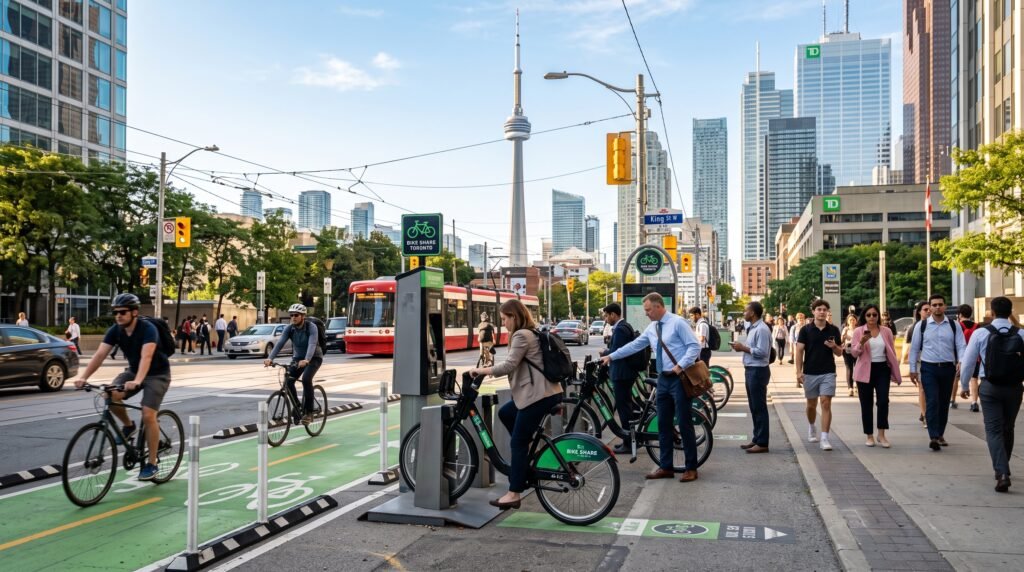
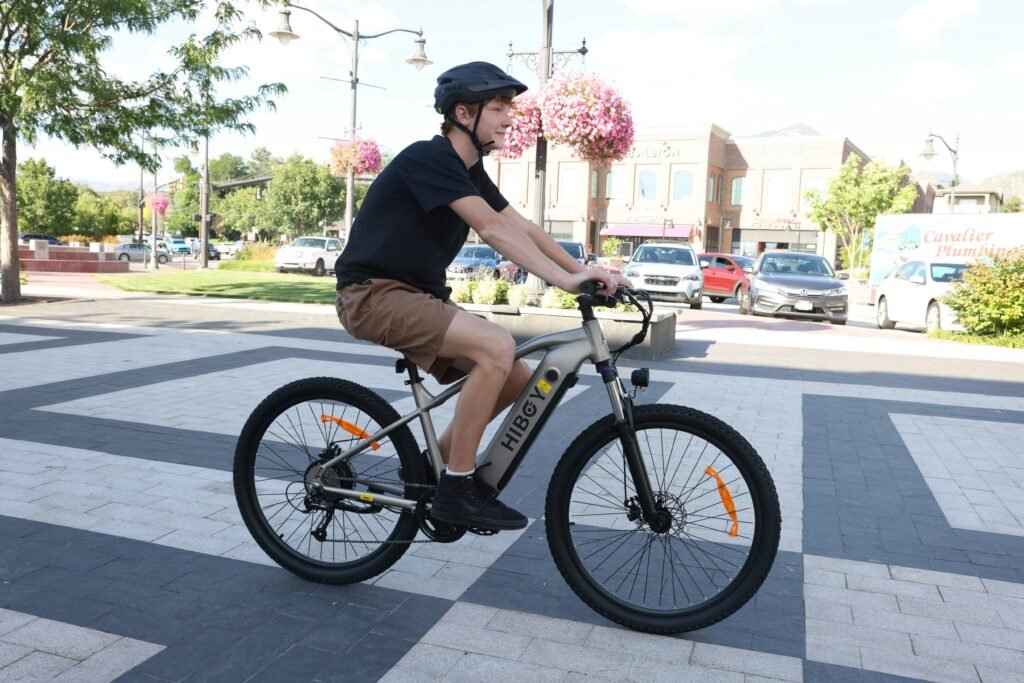
A pedestrian struck by an e-bike in Toronto can suffer injuries as serious as those caused by a motorcycle or small car. However, the insurance and compensation process may be much less obvious.
Ontario does not generally require a licence, registration or automobile insurance for a legal power-assisted bicycle. If the rider has no liability coverage or leaves the scene, the injured pedestrian may not know who will pay for treatment, lost income and other losses.
E-bike pedestrian injuries also raise an important classification question. A device described as an e-bike may actually be a modified or non-compliant vehicle that should be treated differently under Ontario law.
The steps taken immediately after the collision can determine whether the pedestrian can identify the rider, establish how the crash happened and locate a possible source of compensation.
Safety and Medical Care Come First
Move away from traffic only when it is safe and physically possible. Someone with possible head, neck, back or spinal injuries should avoid unnecessary movement while waiting for emergency assistance.
Call 911 when the collision causes a serious injury, creates an immediate danger or requires police and paramedics. Do not assume the injury is minor simply because the collision involved a bicycle-shaped vehicle.
Adrenaline can temporarily hide pain and other symptoms. Obtain appropriate medical attention and describe every affected area, including dizziness, confusion, numbness, weakness or reduced movement.
Follow-up care is also important. Return for medical assessment if symptoms appear or become worse after leaving the scene.
E-Bike Pedestrian Injuries: Report the Collision
Ask police how the incident will be documented and obtain the occurrence or report number when one is created.
A police report can help preserve information about:
- The identities of the pedestrian and rider
- The collision’s time and location
- Witnesses
- Statements made at the scene
- Visible injuries
- The device involved
- Traffic signals and road conditions
- Possible offences or charges
A police finding or charge does not automatically decide a civil injury claim. However, the report can provide important evidence and help identify the person responsible.
If police do not attend, ask how the collision should be reported. Do not rely only on an informal exchange of telephone numbers.
Identify the Rider and the E-Bike
Obtain the rider’s full name, address and contact information when it can be done safely. Ask whether the person owns the device and whether they were working or making a delivery when the collision occurred.
Photograph the e-bike before it is removed. Capture:
- The entire device from several angles
- Manufacturer and model markings
- Pedals
- Motor and battery information
- Display screens
- Speed settings
- Damage caused by the collision
- Licence plates or identifying numbers, if present
- Bags, uniforms or delivery equipment
Do not physically inspect, operate or alter the device. Photographs taken from a safe position can later help determine what kind of vehicle was involved.
If the rider refuses to provide information or attempts to leave, call police. Record a physical description, direction of travel and identifying features without placing yourself in danger.
Why the Vehicle’s Classification Matters
People use “e-bike” to describe many different devices. Ontario law is more specific.
The province’s current e-bike rules set requirements involving assisted speed, weight, pedals, braking and other equipment. A compliant power-assisted bicycle can generally be operated without a driver’s licence, vehicle registration or automobile insurance.
A device may require closer legal examination when it has been modified, exceeds legal operating limits, lacks functional pedals or operates more like a moped or motorcycle.
Classification can affect:
- Whether automobile insurance should have been required
- Which insurance legislation may apply
- Whether statutory accident benefits are available
- Whether uninsured-vehicle coverage is relevant
- Which defendants may be responsible
- Which limitation and notice rules govern the claim
The device’s appearance is not conclusive. A large, heavy machine with decorative pedals may still fail to meet the legal definition of an e-bike. Conversely, a powerful-looking bicycle may comply with the applicable requirements.
Preserve evidence instead of trying to resolve the classification yourself.
Toronto Sidewalk Rules Can Provide Important Context
Toronto sidewalks are intended for pedestrians. The City’s Rules for Rideables state that motorized rideables such as e-bikes are not permitted on sidewalks. Mobility-assistive devices are treated differently.
Evidence that the rider entered a crosswalk against a signal, travelled on the sidewalk or approached at an unsafe speed may be relevant when fault is assessed.
A rule violation does not automatically determine the entire injury claim. The actions of everyone involved, visibility, signals, road design and the circumstances immediately before impact may all be examined.
Do Not Confuse an E-Bike With an E-Scooter
An electric kick scooter normally has a standing platform and handlebars rather than the structure of a conventional bicycle.
Toronto has not opted into Ontario’s electric-scooter pilot. According to the City’s current electric-scooter information, electric kick scooters cannot legally be operated on Toronto public streets, sidewalks, bicycle lanes, trails, paths or parks.
That prohibition does not eliminate the possibility of a civil claim after a collision. It also does not automatically create insurance coverage.
Record the exact device rather than assuming all electric two-wheelers follow the same rules.
Preserve Video Evidence Immediately
Video can disappear quickly. Nearby businesses, condominiums, transit vehicles, residences and traffic systems may overwrite recordings automatically.
Look for cameras facing:
- The intersection
- The sidewalk or bicycle lane
- Building entrances
- Parking areas
- The rider’s approach and departure route
Write down each camera’s location and the name of the property. Ask the owner or manager to preserve footage from the relevant date and time.
A preservation request does not guarantee that the organization will release the recording directly to you. Privacy rules, internal policies or legal procedures may affect disclosure. The immediate objective is to prevent routine deletion while access is being addressed.
Save any video recorded by witnesses in its original form. Avoid editing, adding music or relying only on a compressed social-media copy.
Collect Witness Information
Witnesses often leave before police finish responding. Ask for their names, telephone numbers and email addresses.
A useful witness may have observed:
- The traffic signal
- The rider’s speed or direction
- Whether the rider used a horn or bell
- Whether the pedestrian was already in the crossing
- Statements made after the impact
- Attempts to leave the scene
- The condition of the e-bike
Do not coach witnesses or ask them to agree with your version. Record their contact information so they can describe what they independently remember.
Photograph the Scene
When your condition allows, take wide and close photographs showing the collision area.
Include the crosswalk, bicycle lane, sidewalk, traffic signals, signs, obstructions, lighting and weather conditions. Photograph personal property damaged in the collision, such as clothing, glasses, a telephone or mobility equipment.
Return to the location later only when medically safe. Taking photographs at the same time of day may help show visibility and traffic patterns, although later conditions will not perfectly reproduce the incident.
Do not delay medical care to create a complete photo collection. Ask a witness, friend or family member to help.
What If the Rider Was Making a Delivery?
A delivery bag or uniform may indicate that the rider was working, but it does not establish the legal relationship between the rider and a platform, restaurant or other business.
Record:
- Any visible company name
- The order or delivery number, if known
- Screenshots or messages connected to the delivery
- Statements about who assigned the trip
- Where the rider collected the order
- The direction and destination of travel
Whether a business or platform could share responsibility depends on the facts and the applicable law. Issues may include control over the rider, employment status, ownership of the device and whether the collision occurred during assigned work.
Do not assume that a logo automatically makes the company liable. Do not assume the rider’s description as an independent contractor ends the inquiry either.
Where Might Compensation Come From?
A pedestrian’s potential recovery depends on the device classification, available insurance and identities of the parties involved.
Possible sources requiring investigation may include:
- The rider personally
- Liability insurance available to the rider
- Coverage associated with the device’s owner
- A household or other applicable insurance policy
- A business or organization connected to the trip
- Automobile insurance when the device legally qualifies as an automobile
- The pedestrian’s own applicable automobile coverage
- Ontario’s Motor Vehicle Accident Claims Fund in qualifying automobile cases
These sources are not automatically available. For example, a homeowner or tenant policy may contain exclusions, and a business may dispute responsibility for a rider.
The Motor Vehicle Accident Claims Fund is intended as a last-resort source in certain accidents involving uninsured or unidentified automobiles. Whether an e-bike collision qualifies can depend on whether the device is legally considered an automobile for the relevant purpose.
This is one reason vehicle classification should be investigated early.
Accident Benefits Are Not Automatic in Every E-Bike Collision
Ontario’s statutory accident-benefit system applies to accidents involving automobiles as defined by the applicable legislation and policy.
A pedestrian struck by an insured car would normally begin with a different insurance analysis from someone struck only by a compliant power-assisted bicycle. The absence of a licence plate does not resolve the issue because the physical and legal characteristics of the device still matter.
Ontario also changed the structure of automobile accident-benefit coverage beginning July 1, 2026. The Financial Services Regulatory Authority of Ontario explains that medical, rehabilitation and attendant-care benefits remain mandatory, while several other benefits became optional for policies issued or renewed under the new system.
The applicable policy, renewal date and the injured person’s relationship to an insured household may need review. FSRA’s post-accident claims guidance provides general information, but it does not determine whether a particular e-bike incident qualifies.
Notify any potentially relevant automobile insurer promptly and ask for a written coverage position. Do not assume you are ineligible merely because you were walking or do not personally own a car.
Newcomers who are still organizing Ontario licensing and insurance records can also review our guide to bringing foreign driving records to Toronto. Those records do not establish coverage for an injury claim, but they can matter when arranging future Ontario insurance.
Document the Injuries and Recovery
The seriousness of a claim is not measured only by the emergency-room diagnosis.
Maintain a record of:
- Medical appointments
- Diagnoses and referrals
- Medication
- Physiotherapy and rehabilitation
- Assistive equipment
- Pain and physical limitations
- Sleep disruption
- Missed work or school
- Tasks you can no longer perform
- Help provided by family members
- Transportation and treatment expenses
Photograph visible injuries as they develop and heal. Keep receipts and employment records. Ask your employer to document missed shifts, reduced duties and lost earnings.
Do not exaggerate symptoms. Accurate, consistent records are more useful than dramatic descriptions created months later.
Be Careful With Early Settlement Offers
An injured pedestrian may be contacted directly by the rider, an insurer, a business or another representative.
Do not sign a release simply because someone offers to reimburse immediate expenses. A serious injury may create future treatment costs, income loss or permanent limitations that are not yet understood.
Before accepting a settlement, determine:
- Which claims the release would end
- Whether future losses are included
- Whether insurance benefits are affected
- Whether the full nature of the injury is known
- Whether other responsible parties exist
A payment that covers an ambulance bill or damaged phone may be inadequate if the pedestrian later requires surgery or cannot return to work.
Do Not Post Detailed Commentary Online
A social-media post may seem useful for locating witnesses, but public statements can also create problems.
Avoid posting speculation about speed, fault, diagnosis or the amount of compensation you expect. Do not upload edited clips that omit relevant moments.
If you use a neighbourhood group to find witnesses, keep the request factual:
Seeking witnesses or video of an e-bike collision involving a pedestrian at this intersection on this date and time.
Save useful responses privately and provide them to the appropriate investigator or legal adviser.
Deadlines Can Be Shorter Than Expected
Ontario civil claims commonly involve limitation periods, but not every situation follows one simple deadline.
Special notice requirements may apply when a municipal road, sidewalk, traffic signal or other public condition is alleged to have contributed to the injury. Claims involving a government body, unidentified party, insurer or minor can also require different analysis.
Do not wait until recovery is complete before investigating the legal deadlines. Evidence may disappear long before the general limitation period expires.
Choosing a Toronto Personal Injury Lawyer
An e-bike case may require more than general experience with car collisions.
Useful questions include:
- Have you handled injuries involving e-bikes, bicycles or other micromobility devices?
- How will you investigate whether the device was legally an e-bike?
- Could automobile accident benefits apply?
- What insurance policies should be investigated?
- How will video evidence be preserved?
- Could a delivery business or device owner be involved?
- What fees and disbursements could I owe?
- Who will communicate with insurers?
- Which deadlines apply to my case?
Bring the police information, photographs, medical records, witness details and insurance documents to the consultation. A lawyer cannot assess the available options accurately without knowing how the collision occurred and what device was involved.
Transportation During Recovery
A serious pedestrian injury can make ordinary Toronto travel difficult. Keep receipts for taxis, accessible transportation, parking paid by caregivers and other medically necessary trips.
If you later resume public transit, record any physical limitations that make stairs, standing or transfers difficult. Our Toronto TTC fare-capping guide explains how eligible paid trips accumulate, although fare rules are separate from whether transportation expenses can be claimed.
Speak with your medical providers about mobility restrictions and obtain appropriate documentation rather than relying only on personal notes.
The Most Important Evidence May Be the E-Bike Itself
In an ordinary car crash, vehicle registration and insurance records usually help identify the vehicle. E-bike collisions may not offer the same paper trail.
The device’s motor, controller, pedals, settings, weight and modifications may determine whether it was a compliant power-assisted bicycle or another kind of motor vehicle. If it is repaired, altered, sold or discarded, crucial evidence can disappear.
A legal professional may consider sending a preservation notice requesting that the rider or owner retain the device in its post-collision condition. The appropriate wording and recipient depend on the case.
A Toronto pedestrian injured by an uninsured e-bike rider should therefore focus on two parallel tasks: documenting the harm and preserving evidence about the machine that caused it.
Insurance options cannot be determined reliably from the rider’s statement that the device was “just an e-bike.” Its legal classification, how it was being used and the policies connected to the people involved all require careful investigation.
Note: This article provides general information and is not legal advice. E-bike classification, insurance coverage, liability and filing deadlines depend on the facts and the law in effect when the collision occurred. Anyone seriously injured in a Toronto e-bike collision should obtain medical care and consider prompt advice from a qualified Ontario personal injury lawyer.