
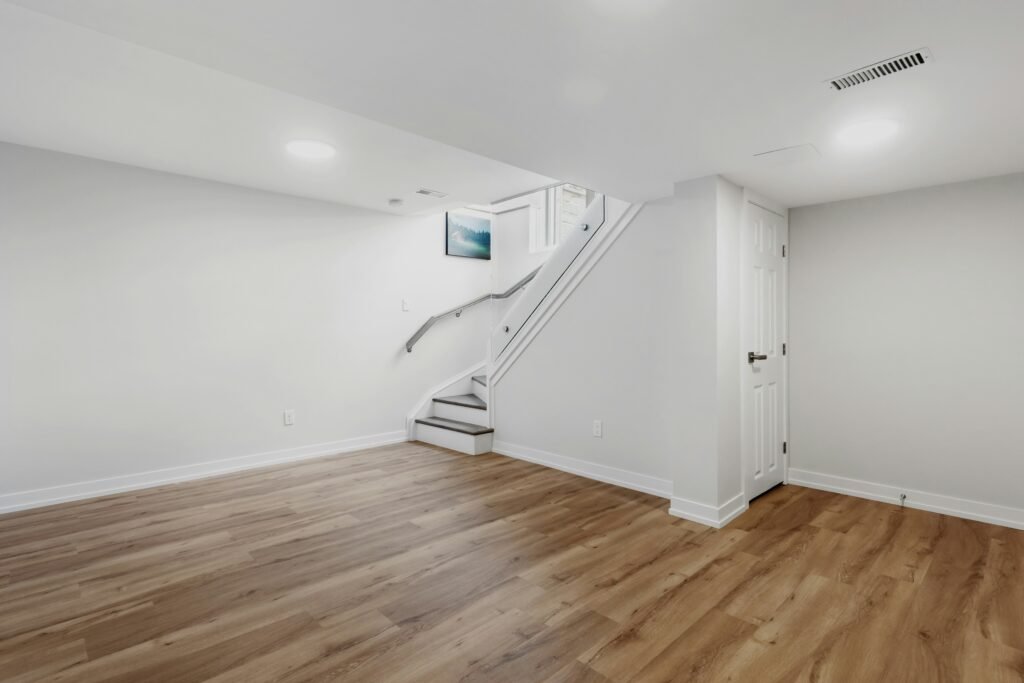
Mississauga basement apartments can be an attractive option for renters seeking more space, access to residential neighbourhoods or a lower monthly rent than they might find in a newer apartment building. However, renters should not assume that every finished basement advertised as an apartment is an approved second unit.
A basement can look modern and still lack the permits, inspections or registration required by the City of Mississauga. Cosmetic features such as new flooring, recessed lights and stainless-steel appliances do not establish that the unit meets zoning, building and fire-safety requirements.
Before signing a lease or paying a deposit, renters should check the municipal registry, ask the landlord for documentation and inspect the apartment for visible safety and maintenance concerns.
What Is a Second Unit in Mississauga?
The City of Mississauga describes a second unit—also called a basement apartment, accessory dwelling or in-law suite—as a self-contained living space within a detached house, semi-detached house or townhouse.
A self-contained unit generally provides its own cooking, sleeping, living and bathroom facilities. Although many second units are located in basements, an additional unit can also occupy another part of a house.
Mississauga requires second units to satisfy the applicable Ontario Building Code, Ontario Fire Code and municipal zoning requirements. A qualifying second unit must also be registered with the City under its Second Units Registration By-law.
Registration matters because it indicates that the unit has been through the municipal approval process. A landlord’s statement that an apartment is “legal,” “up to code” or “grandfathered” should not replace verification.
Search the Mississauga Second Units Registry
The most direct check is to search the City’s official Second Units Registry List.
Look for the complete municipal address shown in the rental advertisement. Pay attention to the street number, street name and directional details. A similar address on the same street does not confirm the status of the apartment you are considering.
If the property appears in the registry, save a screenshot or copy for your records. Ask the landlord to confirm that the advertised basement apartment is the unit covered by the registration.
The City says the list is updated during the second week of every month. Consequently, a recently registered unit may not appear immediately. If you cannot find the address, ask the landlord whether registration is pending and request written evidence.
An address missing from the registry should lead to further investigation before you sign or pay. The City’s second-unit registration page directs people to call 311, or 905-615-4311 from outside Mississauga, when reporting an unregistered second unit.
Ask for Registration and Permit Information
A landlord offering a legal basement apartment should be able to answer reasonable questions about its municipal status.
Ask whether the unit is registered, when the registration was completed and whether the landlord can provide confirmation. You can also ask if building permits were obtained for the conversion and whether the required inspections received final approval.
According to the City, registering an existing second unit requires a building permit signed off by the relevant City inspectors. If the necessary permit was never obtained, the owner must apply for one as part of bringing the unit into compliance.
Be cautious when a landlord responds with statements such as:
- “It has always been rented.”
- “The previous owner built it.”
- “Every basement on this street is the same.”
- “Registration is only necessary for new apartments.”
- “The contractor said it meets code.”
- “You do not need to worry about permits as a tenant.”
These statements do not provide evidence of approval. A long rental history does not automatically make a unit legal, and professional-looking renovations do not prove that inspections were completed.
Review the Property’s Permit History
Mississauga provides an online property information tool that allows users to search an address for zoning information, building-permit application history, development applications and other property details.
Permit history can help you determine whether work related to a second unit appears in the municipal record. However, a permit application does not necessarily mean that the work was completed or received final approval.
The City also warns that online property information may contain errors, omissions or updating delays. Treat it as another verification tool rather than conclusive proof. Contact 311 when the information is missing, unclear or inconsistent with what the landlord has told you.
Registration Is Important, but It Is Not a Complete Inspection
Finding an address in the registry is reassuring, but it should not end your investigation.
Conditions inside a house can change after registration. An owner might remove a required door, alter a bedroom, cover an alarm, change an exit route or complete additional renovations without approval. Maintenance problems can also develop over time.
Registration confirms that a second unit entered the City’s registration process. It does not guarantee that every part of the apartment remains safe, undamaged or suitable for your needs.
Inspect the physical condition of the unit and document anything that concerns you.
Examine the Entrance and Emergency Exit
A basement tenant needs a safe and reliable way to leave during an emergency. The appropriate exit arrangement depends on the building, layout and code requirements that apply to the property.
Walk from each bedroom and living area toward the exterior. Consider whether the route would remain usable in darkness, during a fire or if smoke entered the apartment.
Warning signs can include:
- A door that can be locked from the other side
- Furniture or stored items blocking the exit
- A route that depends on access through the landlord’s private space
- Narrow stairs with loose or missing handrails
- Windows that are painted shut
- Window wells filled with debris
- Security bars without a clear release mechanism
- An advertised bedroom with no apparent emergency escape option
Do not rely solely on window measurements taken from a general article. Requirements can differ according to the building’s age, design, construction history and applicable code provisions. Ask the landlord how the unit’s emergency-exit requirements were addressed during inspection.
Check the Smoke and Carbon Monoxide Alarms
Look for smoke alarms and carbon monoxide alarms during the viewing. Ask the landlord to demonstrate that the installed alarms work.
The presence of an alarm casing does not necessarily mean that the device is operational. Inspect it for missing batteries, open covers, visible damage, paint or an expired replacement date.
Other concerns include alarms that chirp continuously, a lack of alarms near sleeping areas or a landlord who refuses to test them.
Ontario publishes official information about fire safety at home and carbon monoxide safety. Carbon monoxide protection is especially important in properties with fuel-burning appliances, fireplaces or attached garages.
Tenants should never disconnect an alarm because of cooking smoke or repeated nuisance alerts. The problem should be reported so that the landlord can investigate and provide a safe solution.
Look for Visible Problems With Fire Separation
Fire separation is intended to slow the movement of fire and smoke between the basement apartment and the rest of the house. It can involve approved walls, ceilings, doors and other construction components.
A renter cannot normally inspect the materials concealed behind finished surfaces. However, visible problems may suggest that further questions are necessary.
Look for unfinished openings around plumbing and wiring, missing ceiling panels, large holes leading into utility areas, damaged drywall or doors that do not close properly. Exposed insulation, improvised wall coverings and extensive recent construction without permit documentation also deserve attention.
A visible defect does not automatically prove that the apartment is illegal. It does provide a reason to ask whether the alteration was included in the permitted plans and inspected by the City.
Inspect the Stairs, Ceiling Height and Bedrooms
Basement layouts often contain low ceilings, ducts, bulkheads and tight stairways. Walk through the entire apartment rather than viewing it only from the entrance or main living space.
Check whether you can move safely through the unit without repeatedly ducking under obstructions. Examine stair lighting, railings, floor-level changes and doors that interfere with one another.
Pay particular attention to every room advertised as a bedroom. A landlord cannot make a storage room into a suitable bedroom simply by placing a bed inside it.
Ask whether each advertised bedroom appeared on the approved plans. Look for a practical exit, ventilation, heating and sufficient room to use the door safely. If the listing advertises more bedrooms than the approved layout appears to contain, request an explanation in writing.
Check for Water Damage and Mould
Even a registered apartment can experience moisture problems. Basements are vulnerable to foundation seepage, drain backups, plumbing leaks, condensation and flooding during severe weather.
A musty smell, bubbling paint or flooring that appears newly replaced in only one area can indicate a current or previous moisture problem. A continuously running dehumidifier is not proof of damage, but it is worth asking why it is needed.
Inspect areas around windows, exterior walls, baseboards, bathrooms and sinks. Look inside closets located against foundation walls when the landlord allows it. Examine the area around the furnace, water heater, floor drain and sump pump.
Ask whether the basement has flooded, whether an insurance claim was made and what was repaired afterward. You can also ask whether the home has a sump pump or backwater valve and who responds when heavy rain causes water to enter.
If you rent the unit, photograph existing marks, stains and damaged materials during the move-in inspection. The same documentation principles discussed in How Do You Inspect an Older Toronto Rental Before Signing? can be applied to an older Mississauga property.
Find Out Who Controls the Temperature
Basement apartments may remain cool during summer but become uncomfortable in winter. Ask how the unit is heated and whether you have direct control over its temperature.
When the basement and upper unit share one heating system, the upstairs occupant or landlord may control the only thermostat. Find out how temperature complaints are handled and whether the basement has heating vents or radiators in every principal room.
Portable space heaters should not be presented as the apartment’s normal permanent heating system. They can increase electricity expenses and create safety risks when used improperly.
Also check for windows that open, a working bathroom exhaust fan and adequate kitchen ventilation. Persistent condensation, strong cooking smells moving between units and blocked vents can indicate ventilation problems.
Clarify Utilities Before Signing
Ask whether heat, electricity, water, air conditioning and internet access are included in the rent. If tenants must pay a portion of shared utilities, the lease should clearly explain how that portion is calculated.
Do not rely on a verbal promise that utility costs will be “about the same every month.” Request previous bills when appropriate, and ask what equipment is connected to the meter serving the basement.
A shared meter can create confusion when one resident uses substantially more electricity, when the landlord charges an unexplained percentage or when exterior equipment is connected to the tenant’s supply.
Any utility-sharing agreement should be reviewed carefully and recorded in writing before the tenancy begins.
Confirm the Parking Arrangement
Parking is a frequent source of conflict in houses containing more than one household. A listing may advertise one parking space without explaining that vehicles must be arranged in tandem or moved whenever another resident needs to leave.
Ask the landlord to show you the exact space. Find out whether another vehicle can block it, whether winter vehicle swapping will be necessary and who is responsible for clearing snow.
The lease should identify whether parking is included in the rent and whether an additional fee applies. Do not assume that overnight street parking will always be available as a backup because municipal parking restrictions and temporary permission requirements may apply.
Make Sure the Lease Describes the Actual Unit
Read the complete lease before signing it. Confirm that it identifies the basement apartment at the correct municipal address rather than simply describing a room in the house.
Most private residential tenancies in Ontario are supposed to use the provincial standard lease, subject to certain exceptions. Ontario’s official renting guide explains basic rights and responsibilities for landlords and tenants.
The written agreement should accurately identify:
- The landlord and tenant
- The full rental address
- The monthly rent and payment date
- Included utilities and services
- Parking arrangements
- Laundry access
- Shared areas
- Key or access-device deposits
- The tenancy start date
- Rules affecting the use of the property
Promises that matter to you should appear in writing. This includes commitments about repairs, repainting, furniture removal, parking, internet access or use of outdoor space.
Verify the Landlord Before Sending Money
Competitive rental conditions can pressure applicants into paying before they complete basic checks. Scammers and irresponsible landlords often use urgency to discourage questions.
Whenever possible, view the actual apartment in person. Confirm the identity of the person offering it and ask how that person is connected to the property. If an agent or relative is collecting money, verify that they have the owner’s authority.
Search the address in the second-unit registry, review the lease and clarify exactly what a requested payment represents. Obtain a receipt for every amount paid.
Ontario generally permits a rent deposit of no more than one rental period, which is applied to the final rental period. A refundable key deposit may also be allowed when it does not exceed the expected replacement cost. Requests for application fees, damage deposits or other charges should be checked against Ontario’s rental rules.
Warning Signs That Justify a Pause
A single maintenance issue does not establish that a basement apartment is unlawful. Several unanswered questions or safety concerns appearing together should make you pause before committing.
Be cautious when:
- The address is missing from the registry and the landlord has no documentation
- The landlord claims registration is unnecessary
- You cannot inspect or operate the exit
- An advertised bedroom has no apparent emergency escape route
- Smoke or carbon monoxide alarms are missing or disabled
- The landlord cannot explain recent structural changes
- There are strong signs of flooding or mould
- The apartment contains exposed wiring or unfinished openings
- The lease does not match the unit shown
- The landlord demands a large cash payment without a receipt
- The advertiser refuses to prove their authority to rent the property
It is safer to continue searching than to enter a tenancy without understanding the unit’s condition and municipal status.
What to Do When the Address Is Missing From the Registry
Ask the landlord whether registration was recently completed or is still being processed. Request supporting documents rather than relying on a verbal explanation.
Because the City updates its registry monthly, timing may explain why a recently registered property does not appear. You can contact Mississauga through 311 to ask how to verify the address or report an apparently unregistered unit.
Municipal registration and tenancy rights are related but separate matters. The absence of an address from the registry does not provide a simple answer to every question about a current tenant’s lease, rent obligations or right to occupy the apartment.
Tenants considering withholding rent, ending a tenancy or taking legal action should obtain advice based on their circumstances. The Landlord and Tenant Board provides information about Ontario’s rental process. Community legal clinics and qualified Ontario legal professionals may also offer guidance.
Basement Apartment Viewing Checklist
Bring a simple checklist when viewing Mississauga basement apartments:
- Search the full address in the Second Units Registry
- Ask for registration confirmation
- Ask whether permits received final approval
- Examine the entrance and emergency-exit route
- Check for smoke and carbon monoxide alarms
- Inspect stairs, doors, railings and windows
- Look for stains, mould and moisture damage
- Ask about previous basement flooding
- Confirm how heating and ventilation work
- Determine who controls the thermostat
- Clarify included and shared utilities
- Identify the exact parking space
- Confirm laundry and storage access
- Read the lease before sending money
- Save the listing, messages, documents and receipts
A Legal Unit Must Also Be a Suitable Home
Municipal registration is one of the most important checks a prospective tenant can make, but legal status is not the only consideration.
Noise transfer, natural light, ceiling height, temperature control, privacy, moisture and parking can affect daily life in a basement apartment. The landlord’s willingness to answer questions and address maintenance concerns can also reveal what the tenancy may be like.
Start with the official registry, examine the physical space and put important promises in writing. These steps will give you a clearer understanding of whether a Mississauga basement apartment is properly registered, reasonably safe and suitable for your needs.
Note: This article provides general information and is not legal, building-code or fire-safety advice. Municipal requirements and property records can change. Confirm the status of a specific unit with the City of Mississauga and seek qualified advice before making a legal or financial decision.