A narrow driveway, a garage pillar or a low entrance can affect whether a mobile tire appointment can go ahead. The technician needs to reach the vehicle, position equipment and work around the wheels, while other people can still move safely through the property.
Before booking mobile tire service in Toronto, give the provider a clear picture of the parking space and the work you need. Photographs, access details and accurate tire information help the team assess the location before travelling to you.
Describe the Surface and Layout
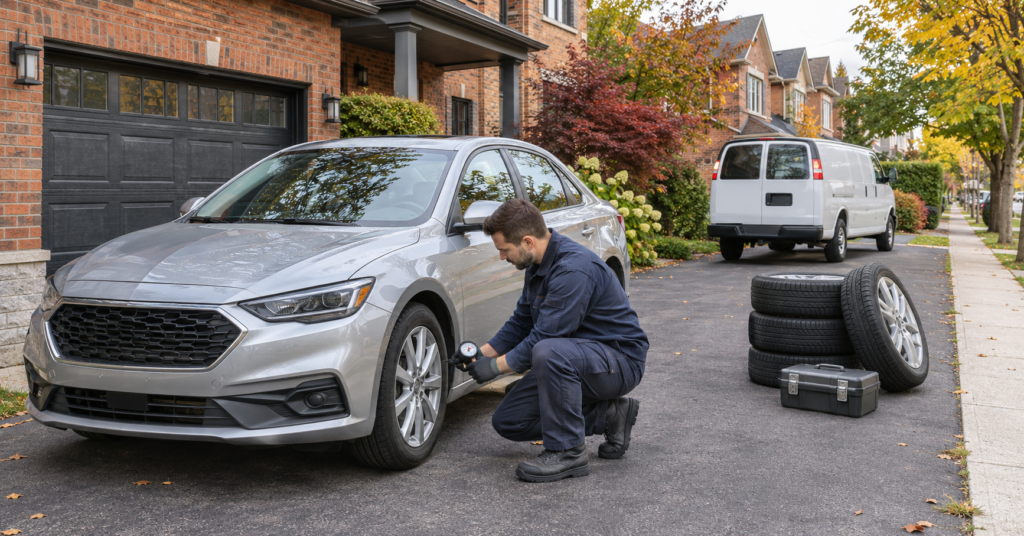
Start by identifying the space: a private driveway, detached garage, underground parking bay, shared lot or workplace parking area. Explain whether it is level or sloped, covered or exposed, and paved or gravel.
Mention surface problems such as broken pavement, drainage channels, standing water or ice. The Canadian Centre for Occupational Health and Safety advises parking on a hard, level surface for vehicle repairs and placing jacks on a dry, level, clean surface. Let the technician determine whether your proposed location is suitable.
Send a wide photograph showing the vehicle’s surroundings, followed by closer views of any obstruction. A photo of the car alone may hide the retaining wall beside it or the slope toward the street.
Explain whether the vehicle can be repositioned before work begins. If a tire is flat or the car cannot move, report that when booking so the provider can plan accordingly.
Ask How Much Working Clearance Is Needed
Describe the actual gaps around the parked vehicle. Include the distance to walls, fences, garage shelving, neighbouring cars and any fixed posts.
Ask the provider what clearance its equipment requires on each side and at the front and rear. Do not rely on a general measurement found online: the vehicle, equipment and requested work need to be considered together.
The service vehicle also needs a suitable place to stop. Ask whether it must park beside your car, immediately behind it or within another specified distance. Explain any restrictions on occupying adjacent spaces or blocking the driveway.
For shared parking, confirm that any space needed for the appointment will remain available throughout the work. An empty neighbouring bay is not automatically yours to use.
Check Garage Access and Building Permission
For underground or enclosed parking, provide the posted height clearance and describe the entrance ramp, tight turns, gates and route to your bay. Ask whether the mobile vehicle needs to enter or whether the provider can bring suitable equipment to the car another way.
Check permission separately from physical access. The Condominium Authority of Ontario notes that condo governing documents can include vehicle-size restrictions and prohibitions on repairing vehicles on the property. Ask management whether the planned tire service is permitted in your parking area.
Confirm any contractor check-in process, approved working hours and requirements for using shared space. At a workplace, ask the person responsible for the parking lot rather than assuming your parking authorization covers vehicle servicing.
Share these conditions with the provider before choosing a time. Arrange who will open the gate or meet the technician, especially where phone reception underground is unreliable.
Discuss the Location With the Service Team
Khanexction Auto offers mobile automotive services across the Greater Toronto Area, and its tire services include mounting, balancing, rotation and flat repair. Drivers can contact the team to discuss the work they need and ask which services are available through a mobile appointment at their location.
Its mobile-service contact number is 416-520-1710. Explain whether the vehicle is in a driveway, garage or shared parking area, and ask how to provide photographs or measurements for review.
Describe any access limits before confirming the visit. Ask the team to clarify the proposed service, required preparation and estimated cost, including whether the vehicle or location needs an on-site assessment before the work can be approved.
Have the Tire and Wheel Details Ready
Provide the vehicle’s year, make and model, along with the service you want. A seasonal wheel swap, tire rotation and puncture assessment involve different tasks, so “I need my tires changed” may leave important details unanswered.
For a seasonal changeover, explain whether the replacement tires are already mounted on a separate set of wheels. Loose tires need mounting work; ask whether the mobile appointment includes the required mounting and balancing.
Photograph the tire-size markings and identify any different front and rear sizes. Mention aftermarket wheels, wheel locks, tire-pressure warning lights and any known damage.
Ask whether a locking-wheel-nut key or separate wheel hardware needs to be available. Locate those items beforehand and tell the provider if anything is missing, rather than waiting until the technician arrives.
Arrange Access to the Stored Tires
Tell the provider where the incoming set is stored. A stack beside the car presents a different access task from tires in a basement, locker or storage room several floors away.
Ask whether carrying tires to and from storage is included, available for an additional charge or something you must arrange yourself. Describe stairs, elevators and locked doors so the answer reflects the actual route.
Agree on where the removed set will be placed afterward. Keep that destination clear and accessible, particularly when the tires must be returned to bags or moved into a locker.
Also ask what the technician needs from you during the appointment, including access to the keys and permission to reposition the vehicle.
Plan for Weather and an Unsuitable Space
Ask how the provider handles rain, snow, ice or other conditions that affect outdoor work. Confirm who makes the decision to postpone and how much notice you can expect.
An indoor alternative needs its own approval. A garage that provides shelter may still have limited clearance, access restrictions or unsuitable working conditions.
Discuss a backup location before the appointment if your preferred space is uncertain. Ask whether changing the address affects availability, travel charges or the service scope.
Find out what happens if the technician arrives and cannot proceed. Clarify any assessment, travel or cancellation charge, and whether another visit or a shop appointment would need to be booked separately.
Confirm the Booking and Total Cost
Request confirmation showing the service address, arrival window, vehicle details and agreed work. Include the parking level, bay number or driveway entrance where relevant.
Check whether the quoted amount includes travel, labour, balancing, replacement parts, applicable taxes and any agreed tire handling. Ask which findings could require a revised estimate and how additional work will be approved.
On the day, make the agreed space available, remove movable obstacles and keep children and pets away from the work area. Stay reachable so questions about access or the vehicle can be resolved promptly.
Note: Mobile tire-service availability depends on the vehicle, requested work, equipment, property rules and conditions at the location. Confirm access requirements, fees and cancellation arrangements directly with the provider; photographs do not replace the technician’s assessment on arrival.