Your first visit to a Toronto skatepark does not need to involve a ramp or a trick. Learning where to stand, watching how riders move and finding an appropriate place to practise are worthwhile first steps.
A skatepark can look intimidating when experienced riders are moving quickly through unfamiliar features. However, you do not need to match their speed or ability to begin learning.
Toronto skateboarding for beginners works best when the location, conditions and practice goals fit your current skills. Prepare for a manageable session, understand how the space is being used and leave room to progress gradually.
Choose a Park for Its Usable Space
The largest skatepark is not automatically the best starting point. Look for a setting where you can work on basic control without crossing busy routes between obstacles.
The City’s skatepark directory describes facilities across Toronto, including their surfaces, features and nearby amenities. For example, it identifies Beach Skatepark as a large plaza-style facility with an 11-foot bowl, while West Lodge is described as a small concrete spot with ramps and ledges. Those descriptions help explain the layout; they do not establish that every part suits a first-time rider.
Before travelling, identify what you need: accessible flat space, a short journey and somewhere to take a break. On arrival, assess whether that space is available without interfering with others.
Separate Learning to Ride From Using Obstacles
A skatepark visit should not become pressure to attempt a feature before you can control the board.
If you are completely new, consider instruction before practising independently. Toronto Public Health recommends considering lessons when starting a wheeled sport.
Ask an instructor to help you learn balance, controlled movement and stopping before progressing to slopes or obstacles. Explain your experience honestly, including whether you have ridden any type of skateboard before.
Being comfortable on flat ground does not mean you are ready to enter a bowl. Treat each new feature as a separate learning decision rather than the next compulsory step.
Check the Board Before Each Session
Examine your skateboard somewhere safe before riding.
Look for visible deck damage, worn grip tape, loose components and wheels that do not move as expected. If the board is borrowed, ask whether it has been maintained and whether anything about its setup needs explanation.
Do not make unfamiliar adjustments simply because another rider prefers a particular setup. Ask a knowledgeable person to help identify a problem.
Wear footwear that stays secure and gives you reliable contact with the board. Tie laces so they cannot trail into moving parts.
A board that feels unstable because of damage or a maintenance problem should be checked before you use it to practise.
Prepare Protective Gear That Fits
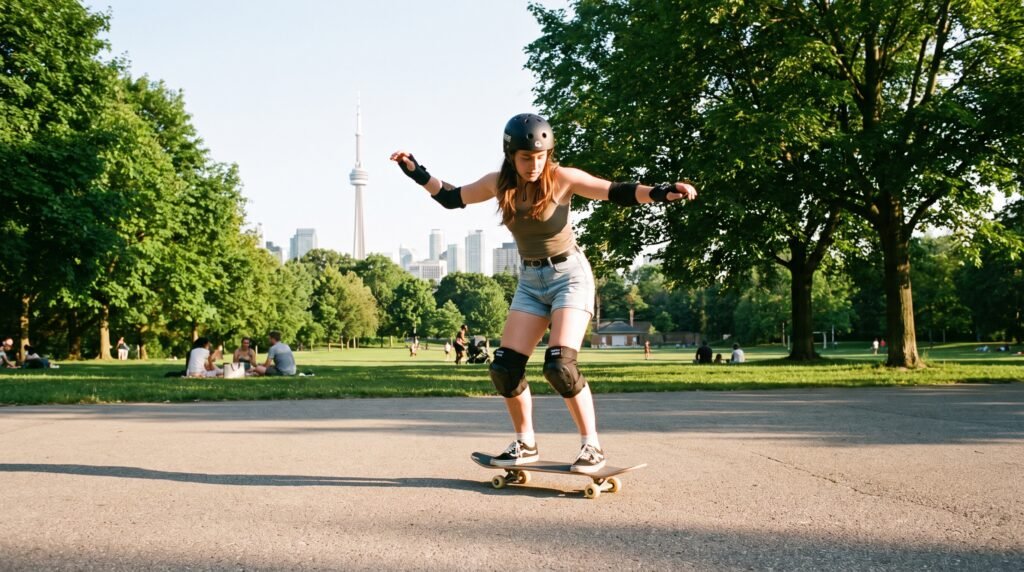
Toronto Public Health recommends helmets for skateboarders of all ages and abilities. Its skateboarding guidance also identifies wrist guards, elbow pads and knee pads as protective equipment.
Choose a helmet intended for the activity and follow its fitting instructions. Toronto’s helmet guidance emphasizes matching the helmet to the sport and checking its condition and replacement requirements.
Try your equipment on before leaving home. Pads that slide around or fasten uncomfortably may distract you throughout the session.
Protective gear supports your preparation, but it does not make every obstacle appropriate. Keep the difficulty of the session within your ability.
Inspect the Surface Before Putting the Board Down
Walk around the area from a position that does not interrupt riders. Check for moisture, ice, loose debris, damaged surfaces and anything that could interfere with wheels.
The City’s wheeled-sport guidance recommends clear, even, paved surfaces.
Toronto weather can make an outdoor session unsuitable even when the park remains accessible. Shade may leave part of a surface damp after the surrounding area looks dry.
A covered location is not a guarantee of dry conditions either. Inspect the area you intend to use rather than judging it from the entrance.
If the surface is unsuitable, change the plan. Avoid practising around a hazard that leaves you little room to manoeuvre.
Watch the Flow Before Joining In
Spend a few minutes observing how people approach and leave each feature.
A rider may travel across several obstacles in one run, so a clear-looking gap may still form part of an active route. Avoid standing at the bottom of a ramp, inside a bowl or where someone will land.
Choose a waiting position outside those routes. If you are unsure whether someone is about to start, make eye contact or ask briefly.
Take turns without treating the space as a rigid queue that applies everywhere. Different layouts work differently, and observation helps you understand the local rhythm.
If the park is too busy for you to follow what is happening, return another time.
Communicate Clearly and Respect Shared Space
A short conversation can make a first visit easier. You can say that you are new and ask where you would be least likely to interrupt anyone.
Keep questions brief when someone is preparing for a run. Other riders may be helpful, but they are not automatically available to provide lessons or supervision.
Keep bags, drinks and spare equipment away from riding areas. Step aside before checking your phone or watching a video.
If your board rolls away, warn nearby people and retrieve it when the route is clear. Avoid rushing across someone else’s path.
Small habits like these help everyone use the park more predictably.
Confirm Indoor Sessions Before Travelling
Indoor options can support practice during colder months, but access depends on the facility and scheduled session.
The City lists Jimmie Simpson Recreation Centre’s indoor skateboarding for ages 13 to 24 during fall, winter and spring. It also describes Phil White Arena as a seasonal skatepark.
Do not assume that “indoor” means available throughout winter or open to every age.
Contact the facility to confirm the current timetable, eligibility, admission arrangements and equipment requirements. Ask whether the session is supervised practice, instruction or another format.
If you need to borrow equipment, confirm availability explicitly before leaving home.
Make the First Session Short and Specific
Choose one manageable goal rather than arriving with a list of tricks.
You might focus on becoming comfortable with the board, following an instructor’s stopping exercise or learning how the skatepark operates. Take breaks before tiredness makes concentration difficult.
Keep a brief note afterward: what felt comfortable, what needs instruction and whether the location suited you.
A convenient park that you can revisit may be more useful than a famous spot requiring a long trip. Our guide to finding an affordable weekly hobby in Toronto explores how to build a routine around realistic time and travel commitments.
Plan Amenities and the Return Journey
Check washroom access, drinking water and the route home. A nearby community-centre washroom may depend on that building’s opening hours.
Pack water and keep essential belongings secure. Carry your board where riding is unsuitable, particularly through crowded entrances and transit areas.
For younger beginners, establish who is supervising and where breaks will happen. Do not assume that a public skatepark provides staff supervision.
End the visit while you still have enough energy to pack up and travel comfortably. Progress is easier to sustain when the first session leaves you interested in returning.
Helpful Public Resources
- City of Toronto: Skateboarding, BMX and Mountain Biking: Facility descriptions and indoor options.
- Toronto Public Health: Wheeled Sport Safety: Equipment and beginner safety guidance.
- Toronto Public Health: Helmet Safety: Helmet selection, fit and care.
Note: Facility access, schedules and age requirements can change. Confirm current details and inspect conditions before riding. This article is a planning guide, not a substitute for practical instruction; progress within your ability and follow posted rules.