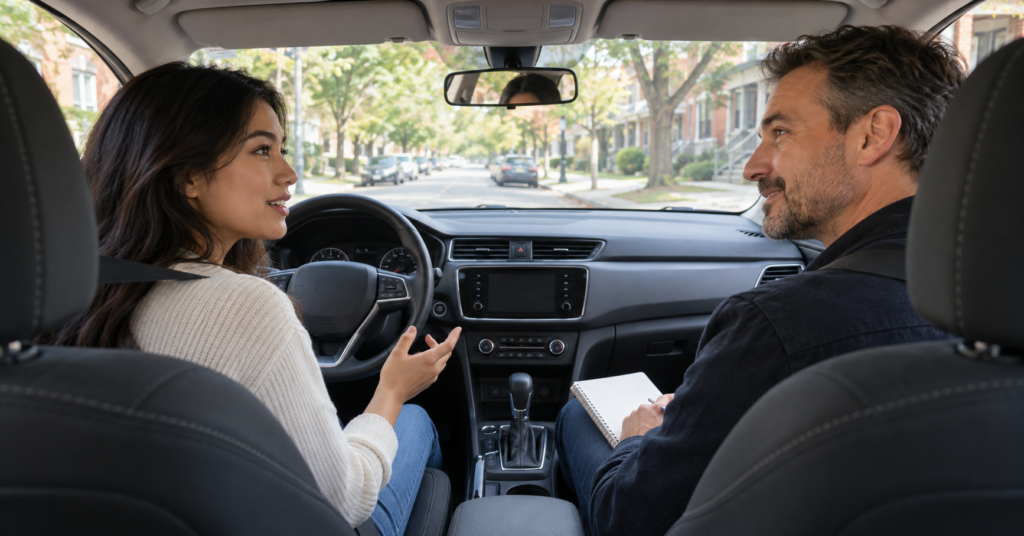
A driving lesson works best when you understand what is being taught, how instructions will be communicated and what you are expected to practise. Those details deserve attention before you buy a package.
When choosing a driving instructor in Toronto, explain how you prefer to receive information and ask what support is available. This is particularly relevant when seeking specialist instruction for learners with ADHD or autistic learners, or accessible communication for Deaf or hard-of-hearing drivers. The conversation should focus on your individual needs and the arrangements that would make lessons clear and usable.
Start With Specific Examples of What Helps
Describe situations in which you find instructions easy or difficult to follow. Perhaps several directions delivered together are hard to remember, while a short explanation followed by a demonstration is clearer. You might want unfamiliar terms explained before practising a manoeuvre.
A useful starting point is: “I understand a new task better when we discuss the steps before I try it. Can you teach that way?”
Avoid assuming that a diagnosis or description of your hearing automatically tells an instructor what you need. Learners with similar backgrounds can have different preferences. Explain the practical arrangement you are requesting and ask how the instructor would apply it during a lesson.
Ask About Step-by-Step Explanations and Repetition
Ask how the instructor introduces a skill that is new to you. Would they explain its purpose, break it into manageable steps and check your understanding before practice begins?
Clarify what happens if the first explanation does not make sense. Repeating the same words may be less useful than rephrasing the instruction or showing the manoeuvre from another perspective.
You can also ask for consistent terminology throughout the lesson. If an instructor uses several phrases for the same action, tell them when that becomes confusing. Agree on how to request clarification and when a fuller explanation can take place safely.
Discuss Written, Visual and Accessible Communication
Written notes and visual guidance can take several forms: a diagram reviewed before driving, a brief lesson outline or a summary of feedback afterwards. Ask which materials are available and whether they can be adapted to the skill being practised.
For Deaf and hard-of-hearing learners, discuss communication directly with the school before booking. Explain whether you use sign language, written communication or another method, and confirm what the assigned instructor can provide.
Review diagrams, written explanations and extended signed discussions while safely parked or outside the vehicle. Ask the instructor to explain the communication plan for when the car is moving, including urgent safety directions. Avoid relying on an arrangement that requires looking away from the road to read instructions.
Consider Lesson Structure and the Driving Environment
If predictable sessions would help, ask whether each lesson can follow a familiar structure: a short introduction, focused practice and a closing review.
For learners seeking support related to ADHD or autism, this discussion can include the amount of verbal information provided, opportunities for repetition and environmental distractions. Describe your own preferences rather than expecting a standard approach for every neurodivergent student.
Ask how the instructor adjusts the difficulty of practice and introduces unfamiliar conditions. A planned route may change because of Toronto traffic or construction, so discuss how changes will be explained when circumstances allow.
Specialist Support From Driving 101 Driving School
Driving 101 Driving School provides specialist instruction for neurodivergent students, including learners with ADHD and autistic learners, alongside dedicated training for Deaf and hard-of-hearing drivers.
Lessons can incorporate step-by-step explanations, repetition, visual demonstrations and written guidance. Structured lesson plans and adapted communication methods help instructors address each student’s learning needs, with opportunities to discuss goals and revisit unfamiliar skills.
Before enrolling, contact the team with your licence level, previous driving experience and the support you need. Whether you would like signed communication, visual materials or a consistent lesson routine, ask which instructor and arrangements would be suitable. Confirm how these needs will be accommodated before booking your lessons.
Agree on Goals Before Each Lesson
Ask whether the instructor can explain the session’s priorities before setting off. A useful goal identifies the skill being practised and the behaviour the instructor will be observing.
For example, a parking lesson could include an explanation of the manoeuvre, guided attempts and a review of which steps still need prompting. Ask how the instructor will recognise when you are ready to practise with less assistance.
At the end, review what improved and what needs more work. A short written summary may help you remember the discussion. Progress should reflect demonstrated driving skills and judgement, alongside your own account of how the lesson felt.
Plan How Feedback and Breaks Will Work
Explain when you find detailed feedback easiest to understand. You might prefer one correction at a time, followed by a longer discussion once the vehicle is safely parked.
The instructor still needs to act promptly when safety requires it. Ask how immediate directions will be distinguished from feedback that can wait, and how you can revisit a moment you did not understand.
Discuss how to request a pause if you become overwhelmed or lose track of the lesson. Confirm how the instructor will guide you to a safe stopping place and how breaks fit within the booked time.
Confirm the Instructor and Booking Arrangements
Find out who will teach you and whether continuity with that instructor is available. If a substitute is needed, ask how your agreed communication arrangements and progress notes will be passed on.
Check the lesson length, pickup area, price, cancellation terms and any charges associated with the requested arrangement. Ask what options exist if the teaching approach needs adjustment after the first session.
If you are buying a full beginner driver education course, review Ontario’s information on government-approved driving schools and confirm the package contents.
Your first enquiry can be simple:
“I’m looking for driving lessons in Toronto. I would like a brief explanation of the goals beforehand, instructions broken into short steps and time to repeat unfamiliar skills. I also need to discuss my communication arrangements. Can we review these needs before I enrol?”
Adapt the message to your circumstances. A clear response should explain what the instructor can provide and how it will work in practice, giving you a useful basis for choosing lessons.
Note: Specialist instruction should be arranged around the individual learner. Confirm instructor availability, communication support, lesson arrangements and fees directly with the school. Teaching adaptations do not replace applicable licensing requirements or the need to demonstrate safe driving skills.